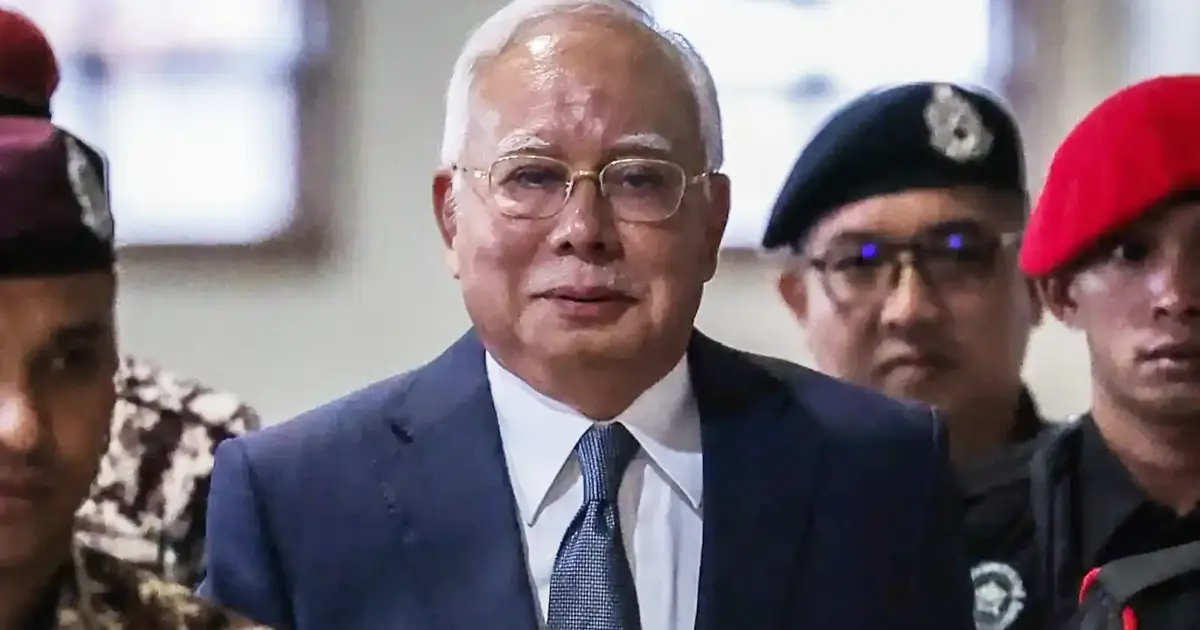
The political temperature around former Prime Minister Najib Razak's legal status has intensified, with DAP politician Ong Hui Xue now directly questioning whether the MCA supports persistent calls from Umno leaders for his full pardon. The demand for clarity reflects growing tension within Malaysia's coalition politics as questions mount about which parties align with efforts to overturn Najib's convictions.
Ong Hui Xue's intervention marks an escalation in scrutiny of the MCA's position on a matter that sits at the intersection of legal accountability and partisan interest. As Umno leaders continue their campaign for a presidential pardon on Najib's behalf, Ong has pressed the Chinese-majority party to move beyond silence and state unambiguously where it stands. This challenge cuts to the heart of coalition dynamics, forcing component parties to either distance themselves from or openly embrace the pardon agenda.
The question carries significant weight in Malaysian politics because the MCA's answer will signal how willing non-Malay dominated parties are to support measures that could be perceived as protecting a Malay-Muslim leader facing multiple convictions. For DAP, pressing this issue serves a dual purpose: it highlights what critics view as selective accountability and tests whether coalition partners maintain independent positions or defer to Umno's wishes.
Najib's legal predicament has been a persistent challenge for Umno since his conviction on corruption charges related to the 1Malaysia Development Berhad scandal. Party leaders have consistently argued for redemption and rehabilitation, suggesting that a presidential pardon would reflect mercy and national healing. However, this narrative has faced resistance from quarters concerned that overturning convictions could undermine faith in judicial independence and send wrong signals about accountability for high-level misconduct.
The MCA's historical role as Umno's primary coalition partner has made its neutrality on this question conspicuous. Unlike smaller parties that can afford clearer positions, the MCA operates in a space where speaking too loudly for or against Umno priorities risks internal complications. Yet silence itself has become a form of answer, with critics interpreting the absence of public opposition as tacit acceptance.
Ong Hui Xue's push for MCA clarification reflects DAP's broader strategy of using parliamentary and public scrutiny to expose what it views as inconsistencies between coalition partners' public commitments to rule of law and their private willingness to accommodate power-preserving initiatives. By naming the issue directly, DAP forces the MCA into a corner where neutrality becomes untenable.
For Malaysian voters, particularly those concerned with institutional integrity and the precedent set by altering convictions of former leaders, the MCA's response will carry implications beyond internal coalition mechanics. It will suggest something about whether Malaysian political parties view rule of law as genuinely binding or as a principle subject to adjustment based on partisan convenience.
The pardon debate also touches on broader regional concerns about judicial independence. Across Southeast Asia, autocratic backsliding often begins with erosion of constraints on executive power, particularly the power to overturn or reduce sentences. Malaysia's continuing grappling with these questions demonstrates ongoing tension between institutional stability and pressure for political accommodation.
Umno leaders pressing for Najib's pardon operate from the belief that continued pursuit of the matter could eventually succeed, particularly if political conditions shift. By maintaining consistent pressure through various channels and leaders, they create an environment where the possibility seems less extraordinary. The MCA's silence or acquiescence would substantially strengthen this dynamic.
Ong's intervention also reflects DAP's role as parliamentary opposition during phases when Umno-led governments held power. The party has maintained focus on accountability questions and institutional independence even as broader coalition politics have sometimes required pragmatic compromises. Calling out potential contradictions in partner parties' positions serves as a check against gradual normalization of exceptions to principle.
The timing of this challenge matters too. As Malaysia navigates post-pandemic political realignment and successive election cycles, questions about leadership accountability remain unresolved. The Najib pardon question represents merely one case, albeit a high-profile one, in determining whether Malaysia's institutions will hold their ground or whether political expediency will progressively override them.
Ultimately, the MCA's response—whether it comes—will reveal something important about the durability of Malaysia's commitment to the rule of law and the extent to which legal accountability for former leaders remains inviolable across different political groupings. For now, Ong Hui Xue's challenge hangs in the air, a direct question awaiting an answer that has proven remarkably difficult for the party to provide.

