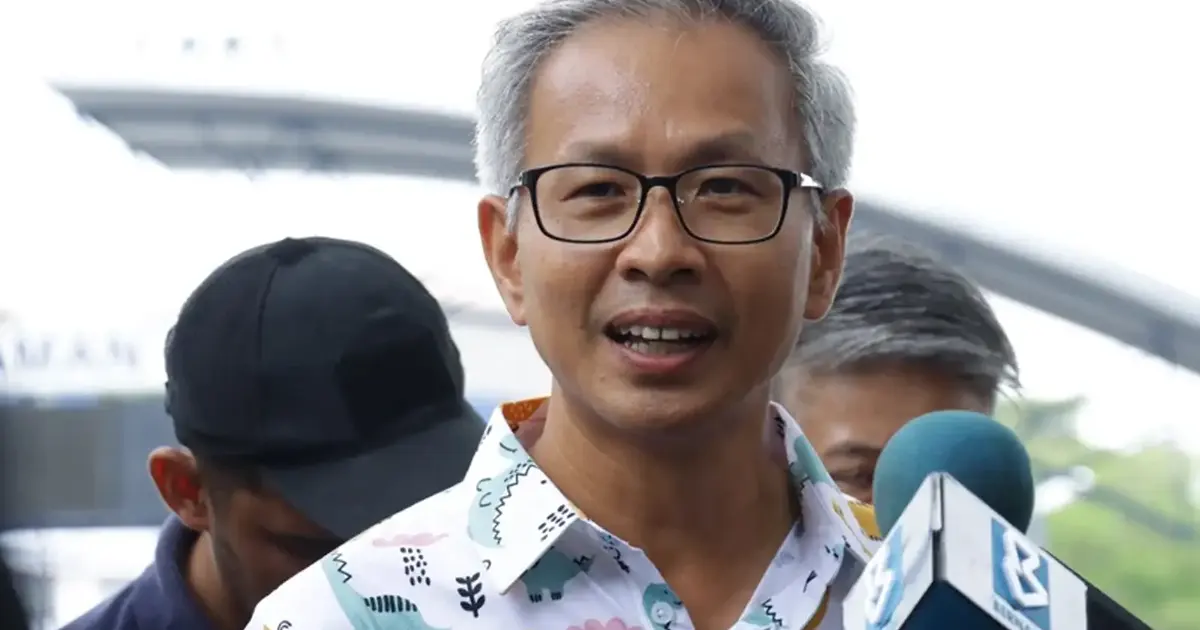
The police investigation into Democratic Action Party leader Pua Kiam Wee remains active, Home Minister Saiful Bahari Jamil announced, signalling that the matter has not been shelved despite weeks passing since the initial controversy erupted. The ongoing probe underscores mounting tensions between political figures and law enforcement agencies over statements touching on sensitive national institutions, a pattern that has become increasingly visible across Malaysia's political landscape.
The investigation stems from 140 police reports submitted against Pua, all centring on a social media post he published that addressed the constitutional monarchy system and the Rukun Negara, Malaysia's foundational national principles. The sheer volume of complaints—a figure substantially higher than typical public complaints about individual politicians—reflects either widespread public concern or, as critics contend, a coordinated reporting campaign designed to amplify pressure on the politician through formal channels.
The constitutional monarchy occupies unique constitutional and cultural standing within the Malaysian system. The position of the King as constitutional monarch sits at the intersection of legal framework and national symbolism, making any public commentary on the institution inherently sensitive. Similarly, the Rukun Negara serves as Malaysia's sworn national philosophy, binding together diverse ethnic and religious communities under shared civic principles. Posts referencing either institution invite scrutiny from multiple quarters—ordinary citizens who view criticism as disrespectful, religious authorities concerned with implications for Islamic institutions, and political opponents seeking tactical advantage.
Pua's case reflects broader challenges facing Malaysian politicians navigating the constraints of political speech. The line separating legitimate political discourse from statements deemed offensive to national institutions remains deliberately ambiguous in interpretation and application. This ambiguity creates an environment where politicians must exercise extreme caution when addressing even peripheral aspects of constitutional arrangements or founding national documents, potentially chilling legitimate democratic debate about how these institutions function and evolve.
The timing of the announcement coincides with intensifying political competition between the ruling coalition and opposition parties vying for public support ahead of potential electoral contests. The DAP, as a significant opposition voice, finds itself under particular scrutiny, with party statements and leaders' social media activity receiving heightened attention from both supporters and critics. This politicised context around Pua's investigation raises questions about whether law enforcement resources are being deployed equally across the political spectrum or whether opposition figures face disproportionate investigative pressure.
For Malaysia's Southeast Asian positioning, the episode carries implications beyond domestic politics. Neighbouring democracies and international observers monitor how Malaysian authorities handle political speech and investigate elected representatives, with assessments of judicial independence and press freedom feeding into broader perceptions of governance quality. Extended investigations targeting opposition politicians, particularly on charges relating to speech rather than concrete criminal conduct, risk damaging Malaysia's regional standing among democracies committed to protecting political opposition.
The investigation's continuation without apparent imminent conclusion creates prolonged uncertainty for Pua and establishes a precedent affecting other politicians considering what commentary remains permissible on constitutionally sensitive topics. Opposition figures may practice self-censorship to avoid similar treatment, while government-aligned politicians might feel emboldened to make more pointed statements about the same subjects, potentially widening the space for political expression inequality.
Home Minister Saiful Bahari's confirmation that investigations persist lacks specific timelines or benchmarks for completion, meaning the probe could extend indefinitely or resolve without formal charges materialising. This extended uncertainty functions as a de facto penalty regardless of eventual legal outcomes, consuming Pua's time and resources through engagement with investigative processes. For a serving legislator, such demands create practical constraints on performing parliamentary duties and campaigning activities.
The episode also highlights how social media has fundamentally altered the mechanics of political speech and official response. Traditional media statements underwent editorial screening and deliberate crafting, while social media posts reach audiences instantaneously but invite immediate response and complaint filing. The compressed timeframe between publication and official investigation creates scenarios where fleeting online comments become subjects of sustained legal scrutiny, elevating stakes for any digital communication by public figures.
Moving forward, the investigation's trajectory will likely influence how Malaysian opposition politicians approach social media engagement and public communication more broadly. Should Pua ultimately face charges, the legal arguments advanced will establish precedent affecting permissible political speech nationwide. Conversely, if investigations conclude without charges, the damage to Pua's reputation persists regardless of formal outcomes. Either result carries implications for Malaysia's democratic character and the space available for opposition voices to critique governmental institutions and foundational national arrangements without triggering official investigation.

