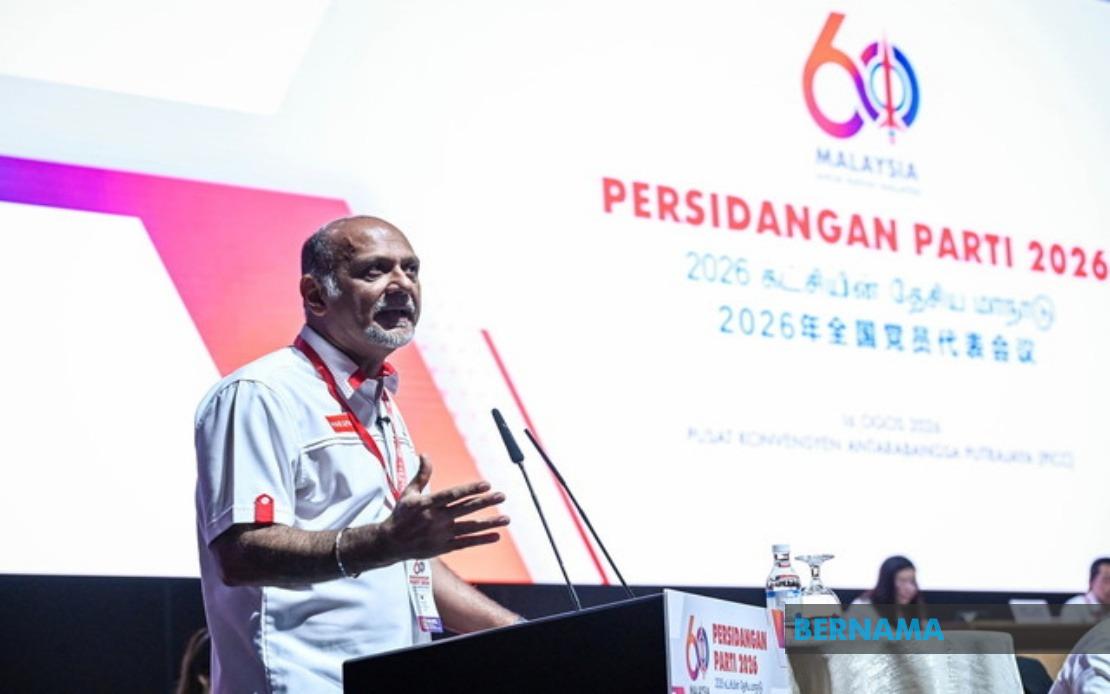
The Democratic Action Party faces a critical juncture as it grapples with the implications of recent electoral performance, according to party chairman Gobind Singh Deo, who addressed delegates at the DAP Party Conference 2026 in Putrajaya this week. Acknowledging the people's verdict in the polls, Gobind indicated that the party must undertake a comprehensive strategic review to ensure it remains politically viable as Malaysia's electoral landscape continues to shift. The assessment comes at a pivotal moment for the party, which has spent three and a half years as a member of the Unity Government coalition, providing ample opportunity to evaluate both accomplishments and areas where expectations have fallen short.
Gobind's remarks signal a significant recalibration of expectations within DAP's leadership regarding what the party can realistically achieve through its coalition arrangement. Rather than pursuing an ambitious reform agenda independently, Gobind emphasized the necessity of identifying measures that enjoy support across all Unity Government partners before attempting implementation. This pragmatic approach represents a departure from earlier ambitions and reflects the mathematical reality of operating within a multi-party coalition where consensus becomes the limiting factor for policy advancement. The party's willingness to acknowledge this constraint publicly suggests internal acknowledgment that overreach on divisive issues could fracture the delicate political balance that keeps the government functional.
Among the institutional reforms Gobind identified as priorities, several stand out as particularly contentious in Malaysian politics. He proposed that Parliament convene in a special sitting to debate and vote on amendments to the Security Offences (Special Measures) Act 2012, commonly known as SOSMA, which has long been criticized by civil liberties advocates as granting excessive detention powers to authorities. The proposed amendments would also encompass revisions to the Peaceful Assembly Act 2012, another statute that civil society groups argue restricts fundamental freedoms. Additionally, Gobind called for legislative action to separate the powers of the Attorney General and Public Prosecutor, a reform that would fundamentally reshape Malaysia's institutional architecture by ending the combined office that has wielded considerable influence over prosecution decisions.
The party chairman also raised the prospect of term limits for the Prime Minister's position, proposing that the office be restricted to two consecutive terms. This proposal carries significant political weight, as it directly challenges the concentration of executive power that has characterized Malaysian governance. Such limitations exist in many democracies but would represent novel constitutional constraints in the Malaysian context. Gobind framed these initiatives as essential demonstrations of the government's commitment to transparent administration and the prevention of power abuse, suggesting that their passage would serve as tangible proof of Unity Government's reformist credentials to an electorate that has grown skeptical of politicians' reform promises.
Economic concerns form another crucial dimension of Gobind's message to party members. He stressed that the government must deepen its understanding of the specific hardships faced by ordinary Malaysians, moving beyond generic acknowledgment to concrete remedial policies. The party chairman highlighted the need for government action to alleviate economic pressure on citizens, particularly regarding rising cost-of-living challenges that have dominated public discourse. Simultaneously, Gobind underscored the importance of maintaining political stability to assure foreign investors of Malaysia's governance reliability, creating a tension between meeting immediate citizen demands and pursuing long-term economic development through foreign direct investment.
The relationship between political stability and investment flows represents a central paradox in Malaysian governance that Gobind's comments illuminate. Malaysia competes with regional neighbors including Thailand, Vietnam, and Indonesia for foreign capital, and any perception of political instability can cause investors to redirect projects elsewhere. This competitive dynamic constrains the policy space available to reform-minded governments, as aggressive institutional change might unsettle investors who prefer predictability even if accompanied by governance shortcomings. Gobind's emphasis on maintaining stability while pursuing reforms suggests recognition that DAP must balance its reform ambitions against the practical need to demonstrate that the country remains an attractive investment destination capable of generating employment opportunities.
The conference proceedings will determine the party's continued participation in the Unity Government through a secret ballot motion that delegates will decide following parliamentary debate. This mechanism ensures that the party membership, represented by 4,264 delegates from 1,704 eligible branches, will have direct voice in what constitutes one of DAP's most significant political decisions. The motion's wording asks whether the party should remain in or withdraw from the government bloc through the end of the 16th Parliament term, providing a binary choice that will shape Malaysian politics substantially regardless of the outcome. A decision to exit would reshape the government's composition and potentially trigger realignment across the broader coalition structure.
The timing of this conference coincides with DAP's 60th anniversary, adding symbolic weight to the deliberations. The party has evolved considerably since its establishment six decades ago, transforming from a largely urban-based political force into a major component of the Pakatan Harapan coalition alongside PKR and Amanah. This historical milestone provides occasion for reflection on the party's trajectory and its role within Malaysia's evolving democratic landscape. The convergence of anniversary celebrations with serious internal debate about the party's future direction creates a distinctive context for reassessing institutional identity and political mission.
The presence of senior party figures including secretary-general Anthony Loke and vice-chairmen Chong Chieng Jen, Teo Nie Ching, Ng Suee Lim, Syahredzan Johan, and J. Arul Kumar, along with party advisers Lim Guan Eng and Tan Kok Wai, underscores the seriousness with which leadership approaches this transition. These individuals collectively represent the party's most influential faction, and their alignment on key messages signals attempts to manage internal party dynamics during a period of strategic uncertainty. The participation of Lim Guan Eng, whose role as party adviser carries historical significance given his previous tenure as Penang Chief Minister, particularly emphasizes the gravity of current deliberations.
For Malaysian readers and observers across Southeast Asia, DAP's ongoing recalibration carries implications extending beyond the party itself. As one of Malaysia's most significant political forces championing reforms related to judicial independence, civil liberties, and democratic governance, DAP's trajectory influences broader regional discussions about the pace and scope of democratic advancement. The party's willingness to prioritize consensus-driven reforms over unilateral manifesto implementation suggests a maturation of coalition politics in Malaysia, where ideological commitment confronts practical governance constraints. How DAP navigates these tensions may establish precedents for other reform-oriented parties operating within multi-party governments throughout the region.
The outcome of the Unity Government participation motion will likely reflect members' assessments of whether the coalition arrangement offers sufficient opportunity for meaningful progress on institutional reform and economic policy. If delegates vote to remain, the party will continue negotiating for implementation of priority reforms within coalition constraints. If they vote to withdraw, Malaysian politics would enter a new phase with unpredictable consequences for governmental stability and policy direction. Either path involves significant risk and opportunity, making this decision one of the most consequential DAP has faced since joining the government formation effort several years ago.

