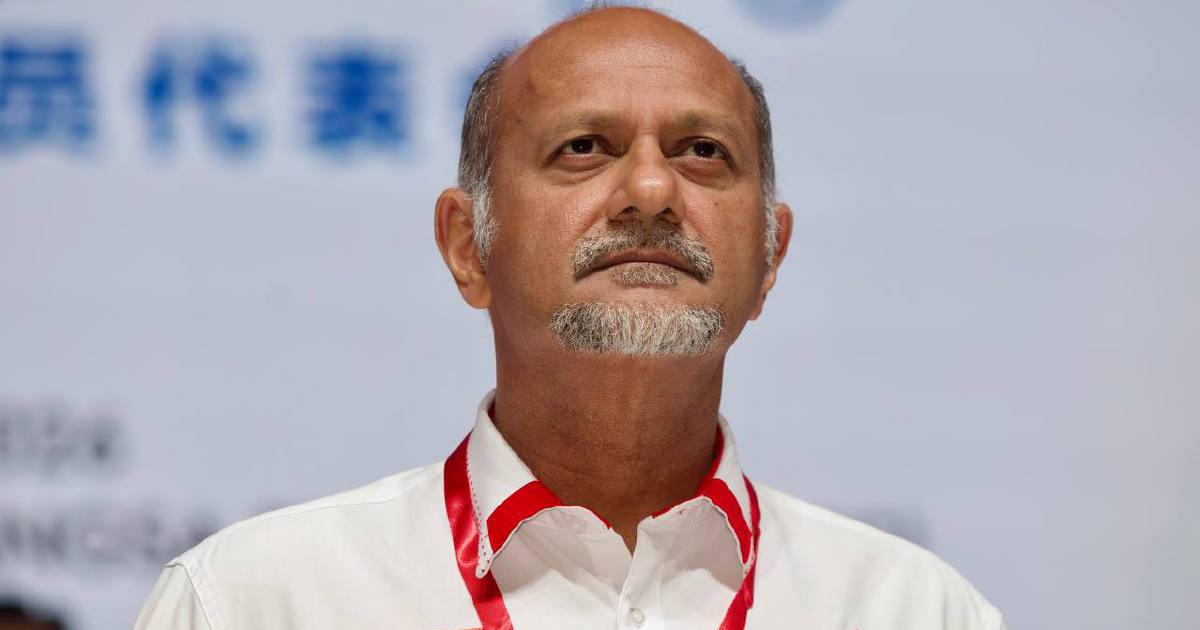
The Democratic Action Party has thrown its weight behind calls for more ambitious institutional and economic restructuring, with national chairman Gobind Singh Deo making a direct appeal to Prime Minister Datuk Seri Anwar Ibrahim to quicken the pace of reform efforts. Speaking in Putrajaya, Gobind Singh Deo underscored the party's position that deeper transformation is required to sustain the unity government's mandate and address longstanding challenges facing Malaysia's economy and governance framework.
The timing of DAP's intervention reflects a critical juncture for the multiparty coalition, which has now operated for three and a half years under Anwar's leadership. As one of the three largest components in the ruling bloc—alongside Pakatan Harapan and Barisan Nasional parties—DAP's public positioning carries significant weight in shaping the government's reform agenda. The statement suggests that the party views the current moment as opportune for accelerating changes that were pledged during the 2022 general election campaign but may not have progressed at the desired pace.
Institutional reform constitutes a core concern for DAP, reflecting the party's long-standing advocacy for stronger checks and balances, enhanced accountability mechanisms, and greater transparency in governance. Under the unity government framework, DAP has participated in various reform initiatives, yet party leadership evidently believes the momentum has stalled in critical areas. This assessment implies dissatisfaction with the current tempo of change, particularly in domains affecting rule of law, anti-corruption enforcement, and bureaucratic restructuring—areas where institutional weakness has historically constrained Malaysia's development prospects.
On the economic dimension, Gobind Singh Deo's intervention signals DAP's conviction that Malaysia faces mounting competitive pressures that demand swift policy action. The party's emphasis on economic reform likely encompasses concerns about productivity growth, digital transformation, competitiveness in high-value sectors, and addressing structural imbalances that have constrained middle-income country advancement. Given DAP's traditional base among urban, educated voters, the party has consistently positioned itself as champion of merit-based economic policies and reduced rent-seeking behaviour that undermines efficiency.
The unity government arrangement, brokered in 2022 to restore political stability after years of fractious coalition politics, has attempted to balance competing agendas across ideologically diverse partners. However, the mechanics of such broad-based coalitions often create friction between reform-minded components and parties more comfortable with status quo arrangements. DAP's public appeal to Anwar suggests that internal coalition negotiations may not be yielding sufficient progress on the party's priority areas, prompting leadership to take its case to the broader public and directly to the Prime Minister.
Anwar Ibrahim himself has championed modernisation agendas throughout his political career, framing economic transformation and institutional strengthening as essential to Malaysia's long-term trajectory. However, the Prime Minister operates within significant constraints—managing coalition partners with divergent interests, navigating fiscal limitations, and contending with entrenched interests resistant to reform. DAP's intervention essentially calls for Anwar to prioritise reform objectives over coalition management compromises, a delicate positioning that acknowledges his stated commitments while pressing for accelerated implementation.
The three-and-a-half-year marker carries strategic significance in Malaysia's political calendar, with general elections potentially callable within the next two years under current constitutional arrangements. For DAP, reinforcing commitment to reform narratives serves both immediate coalition politics and longer-term electoral positioning. The party aims to maintain its identity as a change-oriented force while remaining coalition partners, a balancing act that requires periodic public emphasis on unfulfilled reform agendas.
Regionally, Malaysia's institutional and economic challenges resonate across Southeast Asia. Governance weaknesses and productivity stagnation affect the entire region's development trajectory, and Malaysia's struggle to implement comprehensive reforms carries implications for ASEAN's collective competitiveness. Should DAP's advocacy succeed in galvanising faster reform momentum, it could influence how other regional governments approach similar modernisation imperatives. Conversely, if reform initiatives continue stalling despite coalition partners' stated commitment, Malaysia risks falling further behind regional peers in attracting investment and retaining talent.
For Malaysian voters and businesses, the outcome of this intra-coalition debate carries tangible consequences. Institutional reform affects everything from property rights certainty to contract enforcement reliability and regulatory predictability. Economic restructuring determines whether Malaysia can generate higher-quality employment opportunities and achieve higher productivity gains essential to improving living standards. DAP's public push reflects recognition that these outcomes remain contested within government, rather than settled policy consensus.
The party's intervention also reflects broader frustrations within the reform-oriented constituency that supported the unity government's formation. Civil society organisations, business chambers, and professional bodies have similarly called for accelerated institutional change. DAP's parliamentary and organisational platforms provide mechanisms to amplify these voices, translating street-level sentiment into coalition-level pressure on decision-making. By positioning itself as advocate for impatient reformers, DAP potentially strengthens its appeal beyond traditional party supporters.

