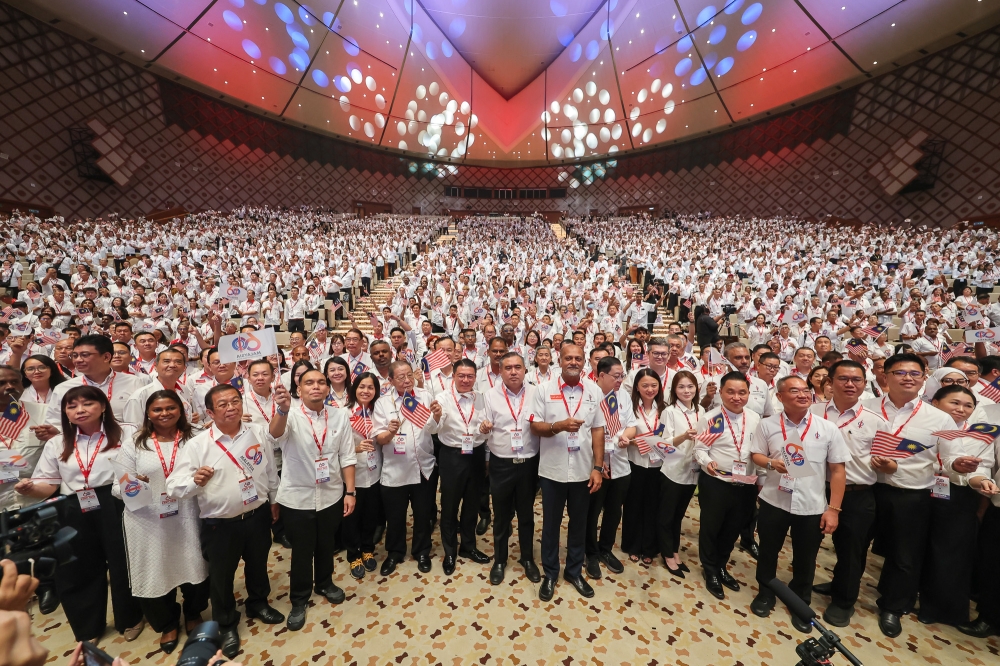
At the Democratic Action Party's national congress in Putrajaya on August 16, Wanita DAP legal bureau chief Sangeet Kaur Deo delivered a pointed critique of the coalition's direction under Prime Minister Anwar Ibrahim, calling for a fundamental reassessment of the party's alignment with the ruling administration. Her remarks signal growing internal friction within DAP over the strategic choices made since the formation of the current government, raising questions about the stability of Malaysia's political coalition.
Sangeet's intervention at the party gathering represents more than routine political rhetoric. By invoking the party's Central Executive to reconsider its positioning, she touched on a nerve within the DAP leadership—the tension between maintaining coalition discipline and advancing the party's own interests and values. The Wanita DAP chief contended that Prime Minister Anwar Ibrahim's stewardship has produced unintended consequences that directly undermine the coalition's original purpose and strength.
Central to Sangeet's argument is the claim that the current governance structure has introduced divisive fault lines within Pakatan Harapan. Rather than presenting a unified bloc capable of pushing through transformative reform, the coalition has fractured into competing interests and competing factions. This fragmentation, she suggested, weakens the coalition's capacity to deliver on the promises that secured electoral support from Malaysian voters who sought change from the preceding governance model.
Equally troubling in Sangeet's assessment is the apparent beneficiary of these internal coalition divisions: Umno, the major Malay-majority party that had dominated Malaysian politics for decades. By Sangeet's reading, the fractured state of Pakatan Harapan has created space for Umno to rehabilitate its political standing and accumulate influence within the government framework. This outcome would represent a reversal of the political momentum that propelled Pakatan Harapan candidates to electoral success and would fundamentally alter the balance of power within the coalition.
For Malaysian observers and regional watchers, Sangeet's remarks illuminate a persistent challenge facing multiethnic, ideologically diverse coalitions in Malaysia's political system. The DAP, as the primary Chinese-majority party within Pakatan Harapan, has long navigated the tension between advocating for its community's interests and maintaining coalition coherence. The party's involvement in government under Anwar Ibrahim was premised on the belief that coalition participation would translate into meaningful policy influence and protection of democratic norms. If senior DAP figures now question whether these premises hold, it suggests a recalibration of expectations may be underway.
The timing of Sangeet's intervention at the party congress carries particular weight. Party congresses serve as moments when rank-and-file members and senior figures convene to assess strategy and reset direction. By raising these concerns in such a forum, Sangeet has effectively placed the party leadership on notice that grassroots sentiment may favour a harder line vis-à-vis the governing arrangement. Whether this reflects broader DAP sentiment or represents a faction within the party remains to be determined, but it signals that internal discussion on the coalition arrangement is not settled.
From a broader Malaysian perspective, this episode reflects a pattern visible across Southeast Asian democracies: the difficulty of maintaining coalition discipline once governmental power has been secured. The initial urgency that binds disparate parties together in opposition often dissipates once those parties assume ministerial positions and compete for resources, patronage, and policy direction. The DAP's current predicament suggests this universal challenge is playing out in Malaysian politics.
The relationship between DAP and Umno deserves particular scrutiny in this context. Historically, these parties have represented competing visions of Malaysia's constitutional and communal arrangements. Yet the current political configuration has created conditions where Umno, sidelined from federal power in 2018 but remaining influential in several states, has regained footing partly through accommodations within the current government. If Sangeet's analysis is accurate, this rehabilitation has occurred at the expense of the parties, like DAP, that were instrumental in Umno's initial electoral defeat.
The sustainability of Malaysia's current governing coalition may well hinge on whether leadership can address concerns articulated by senior figures like Sangeet Kaur Deo. Coalition members cannot sustain participation if they perceive systematic erosion of their influence and advancement of rivals' interests. The DAP's historical role as an opposition watchdog and reformist force means that if the party's leaders conclude that governing participation is counterproductive, they retain the option of repositioning as a critical voice from within the coalition or, more dramatically, revising that arrangement altogether.
Looking forward, Prime Minister Anwar Ibrahim and the DAP leadership will need to undertake difficult conversations about the coalition's future trajectory and whether current arrangements serve the interests of all partners. Whether Sangeet's concerns represent isolated criticism or a broader undercurrent within the party structure will become clearer in coming weeks and months. The resolution of this tension will have implications not only for DAP's internal cohesion but for the stability of Malaysia's entire governing coalition and the prospects for continued political reform.

