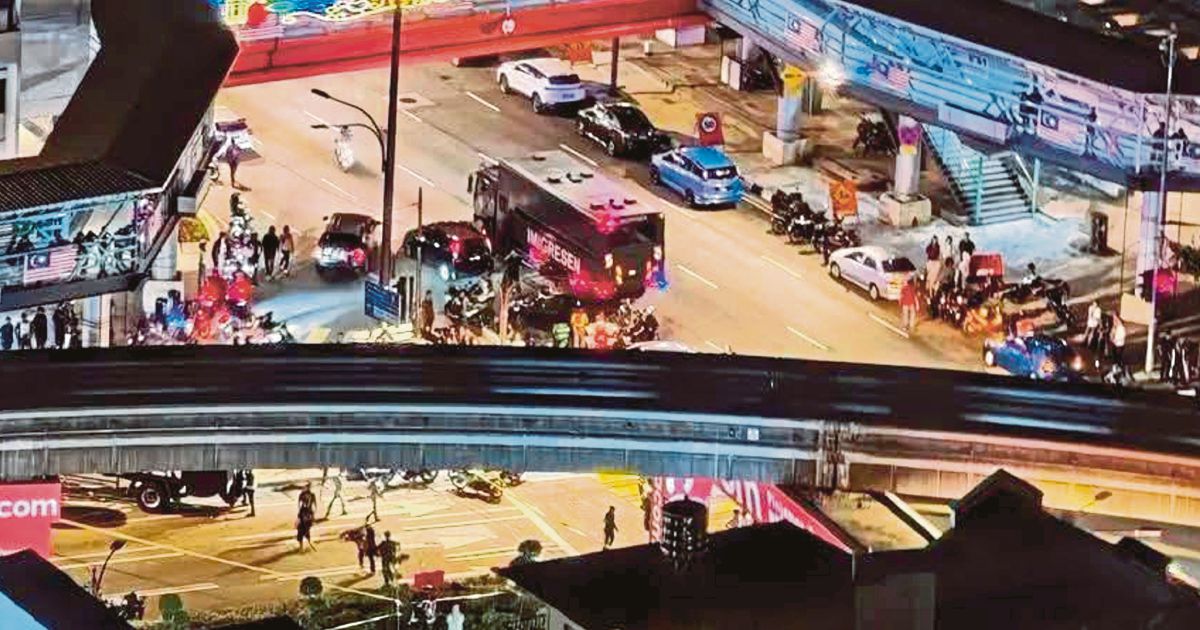
Investigators in Kuala Lumpur have begun a systematic review of video recordings captured at the scene of a tragic collision that unfolded on Jalan Sultan Ismail in the early hours yesterday, which resulted in the deaths of three family members when an Immigration Department lorry struck their vehicle.
The fatal accident has prompted law enforcement to examine multiple sources of visual documentation, including footage from dashboard cameras mounted in nearby vehicles and surveillance systems operated by businesses and institutions along the busy thoroughfare. Such evidence typically provides crucial details about the sequence of events leading up to impact, vehicle speeds, traffic signal compliance, and visibility conditions at the moment of collision. Detectives are cross-referencing these recordings to establish a comprehensive timeline and identify any contributing factors that may have precipitated the crash.
The collision claimed the lives of a father alongside his two daughters, a tragedy that has underscored ongoing concerns about heavy vehicle safety and accident prevention in Malaysia's major urban centres. Traffic incidents involving large commercial vehicles continue to feature prominently in road fatality statistics, particularly during early morning hours when darkness, reduced visibility, and driver fatigue converge to create high-risk conditions. The incident occurred at a time when traffic volumes are typically lighter, yet accidents remain severe due to the mass and velocity differential between lorries and private vehicles.
The Immigration Department lorry involved in the accident represents the category of commercial vehicles that regularly operate throughout Kuala Lumpur's central business district and surrounding areas. These larger vehicles require greater stopping distances and present heightened collision risks compared to standard passenger cars. The specific nature of how the lorry came into contact with the family's vehicle—whether through loss of control, brake failure, driver distraction, or other mechanical or human factors—remains under investigative scrutiny as dashcam and CCTV footage is analysed frame by frame.
Jalan Sultan Ismail itself is a significant arterial route within Kuala Lumpur's transport network, carrying considerable daily traffic including commercial vehicles, taxis, and private motorists. Road geometry, lighting infrastructure, and traffic management at the specific location will all form part of the investigative context. Understanding whether existing safety measures proved adequate, or whether additional precautions might have prevented this particular incident, often influences recommendations made following fatal collisions on major urban thoroughfares.
Police methodology in commercial vehicle accident investigations typically extends beyond visual evidence examination. Mechanical inspection of the lorry will assess whether defects in braking systems, steering mechanisms, or tyres contributed to the crash. Driver records, including licensing status, fatigue history, and any previous violations, form part of the human factors analysis. Witness statements from other road users or pedestrians present at the scene provide supplementary perspective on conditions and circumstances immediately preceding impact.
The three fatalities represent a devastating loss for one family and underscore the indiscriminate nature of road trauma. Unlike many causes of death that can be managed through medical intervention, fatal traffic collisions eliminate all possibility of recovery or second chances. This distinction makes prevention through improved vehicle standards, driver training, infrastructure enhancement, and enforcement of traffic regulations paramount in Malaysia's road safety agenda.
Video analysis technology has become increasingly sophisticated in recent years, allowing investigators to examine not only what occurred but also to quantify variables such as apparent speed, braking patterns, and collision impact angles. When multiple camera angles are available from different vantage points, reconstructionists can triangulate information to build reliable accident models. This forensic video analysis represents a cornerstone of contemporary traffic investigation practice.
The incident will likely inform discussions among road safety advocates, urban planners, and transport authorities regarding the adequacy of current protective measures for roads like Jalan Sultan Ismail. Whether outcomes result in increased enforcement, modified traffic signal timing, improved street lighting, mandatory vehicle safety technologies, or enhanced driver standards will depend on investigative findings and broader policy considerations. Each fatal collision represents an opportunity to identify preventable factors and implement systemic improvements.
As the investigation progresses and police continue analysing the accumulated video evidence, the findings will provide insights not only into the specific causes of this tragedy but also into patterns and vulnerabilities within Kuala Lumpur's traffic safety framework. For the family affected, the investigation may provide some measure of understanding about how this devastating loss occurred, though no investigative outcome can restore what has been irrevocably lost.

