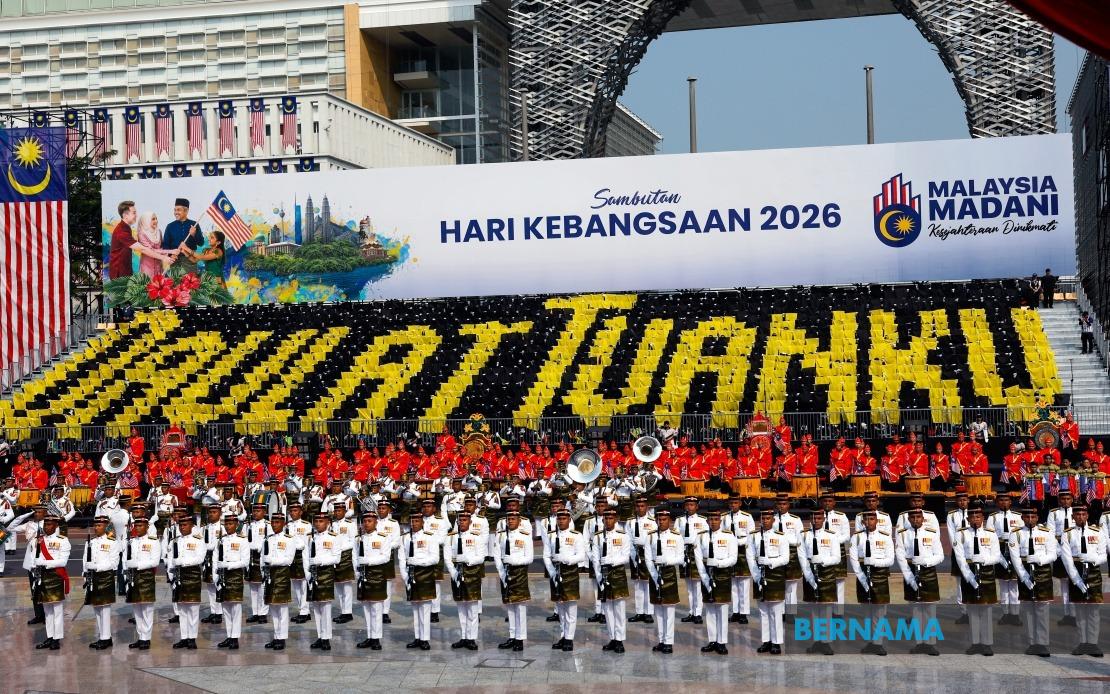
The stage is set for a momentous gathering at Dataran Putrajaya tomorrow as Malaysia prepares to mark its 69th National Day with an elaborate commemoration designed to kindle patriotic fervour across the nation. Commencing at 8:00 am, the celebration will draw together a carefully orchestrated assembly of nearly 11,000 participants organised into 76 contingents, supported by military hardware, marching ensembles, and symbolic representations of the nation's diverse heritage. The event promises to be a defining moment in the nation's calendar, with His Majesty Sultan Ibrahim and Queen Raja Zarith Sofiah attending alongside Prime Minister Datuk Seri Anwar Ibrahim and his Cabinet.
This year's commemoration adopts the overarching theme "Malaysia MADANI: Kesejahteraan Dinikmati", a philosophical framework that extends beyond ceremonial formality to encompass the nation's contemporary vision of shared prosperity and collective wellbeing. The thematic approach signals a deliberate pivot toward celebrating not merely the historical act of independence but the tangible benefits and inclusive development that the nation aspires to deliver to all citizens. By weaving together narratives of struggle, cultural identity, and forward-looking prosperity, organisers have crafted a narrative arc that resonates with both nostalgic reverence for Malaysia's founding principles and optimistic anticipation of its future trajectory.
The parade's scale reflects an unprecedented mobilisation of national resources and personnel. The 328 military assets drawn from land, naval, and air forces will demonstrate the nation's defence capabilities, while the participation of 112 working animals and 22 electric vehicles signals an integration of traditional and contemporary symbols of Malaysian identity. This juxtaposition underscores a nation attempting to honour its multicultural and multifaceted heritage whilst embracing technological progress and environmental consciousness. The inclusion of electric vehicles, in particular, reflects growing awareness of sustainability concerns among younger demographics and international observers assessing Malaysia's commitment to green transition imperatives.
The ceremonial proceedings will commence with a specially choreographed opening performance titled "Gema Inovasi MADANI", orchestrated by the National Department for Culture and Arts under the Ministry of Tourism, Arts and Culture. This 150-instrument ensemble, incorporating 700 traditional and innovative kompang frame drums, represents a calculated fusion of Malaysia's indigenous musical heritage with contemporary artistic innovation. The choice to foreground percussion instruments deeply rooted in Malay, indigenous, and other ethnic traditions acknowledges the performative power of these cultural artefacts in articulating values of harmony, unity, and collective identity. For Malaysian observers and international audiences alike, this opening salvo establishes the celebration's commitment to elevating cultural stewardship as integral to national narrative construction.
The parade's structural components compartmentalise different dimensions of national life into discrete yet interconnected thematic segments. The statehood division will showcase military academy cadets from the National Defence University of Malaysia alongside National Service Training Programme participants, symbolising the institutional mechanisms through which the state channels and shapes patriotic consciousness among younger generations. Meanwhile, the sports wellbeing segment will feature athletes and medallists from recent Commonwealth competitions, instrumentalising sporting achievement as a vehicle for projecting national excellence and competitive capability onto international platforms. This segmentation allows organisers to craft a comprehensive tableau wherein military power, institutional continuity, athletic prowess, and cultural sophistication coexist as mutually reinforcing expressions of national vitality.
Private sector and civil society participation extends the celebration's reach beyond governmental apparatus into commercial and community domains. The involvement of entities ranging from Munchy's Malaysia and ZUS Coffee to MR. D.I.Y Group and Carsome Sdn Bhd reflects deliberate efforts to integrate Malaysia's business ecosystem into official nationalist commemoration. This strategy serves multiple functions: it provides commercial entities with branding opportunities whilst positioning Malaysian capitalism as intrinsically aligned with state patriotic objectives. The inclusion of the Malaysian Security Industry Association and civil defence forces emphasises the partnership between public and private sectors in maintaining social order and physical security, articulating an implicit narrative wherein national wellbeing emerges from coordinated institutional and commercial cooperation.
Public safety considerations have assumed heightened prominence in preparation planning, reflecting contemporary environmental and health challenges confronting the nation. Communications Minister Datuk Seri Fahmi Fadzil has advised participants to wear N95 face masks in response to regional haze conditions, whilst organisers are distributing protective equipment to over 10,000 parade participants. This precaution, endorsed by Ministry of Health guidance, acknowledges the reality that patriotic commemoration must occur within material constraints imposed by transboundary air quality degradation—a persistent Southeast Asian challenge with origins in regional land-clearing practices. The administrative response normalises mask-wearing as a routine aspect of public gathering participation, subtly reshaping expectations around collective public space engagement.
The Visit Malaysia Year 2026-2027 campaign floats embedded within the parade serve promotional functions whilst reinforcing territorial claims and cultural ownership narratives. These showcases of state tourism icons, flora, fauna, traditional attire, and musical instruments from Malaysia's diverse communities effectively transform the National Day parade into an extended advertisement for domestic tourism infrastructure and experiential offerings. Regional audiences observing Malaysian media coverage of these displays receive implicit messaging regarding Malaysia's positioning as a culturally sophisticated and environmentally abundant destination. The strategic partnership of Malaysia Airlines, AirAsia, Batik Air, and Air Borneo further commercialises the celebration, positioning aviation infrastructure as integral to the nation's contemporary identity and capability.
The integration of entertainment media into nationalist commemoration extends the celebration's appeal across demographic strata. The participation of animation powerhouse Les' Copaque through iconic characters Upin and Ipin acknowledges the significant role of popular culture and children's media in constructing patriotic sensibilities among younger generations. By anchoring national celebration in beloved animated characters familiar to most Malaysian children, organisers create emotional resonance points that transcend formal ceremonial language and political rhetoric. This approach reflects sophisticated understanding of how nationalism operates through affective engagement with cultural products, not merely through statutory obligation to participate in state rituals.
The human graphics component, comprising 1,500 students from 36 Selangor schools performing synchronised visual formations, represents both an extraordinary logistical achievement and a statement about the pedagogical instrumentalisation of education systems in service of nationalist production. These student participants effectively become the physical substrate upon which national symbolism is written, their bodies arranged to create kaleidoscopic visual patterns synchronised to musical accompaniment. For educational institutions and participating families, this involvement offers tangible claim to participating in national commemoration; simultaneously, it demonstrates the state's capacity to mobilise substantial educational resources toward patriotic performance. Such large-scale student mobilisation has become characteristic of Southeast Asian nationalist commemoration practices, signalling the centrality of youth in contemporary nation-building projects.
The celebration's climactic sequence—featuring Royal Malaysian Air Force fighter jets executing aerial manoeuvres above Putrajaya's administrative precinct—provides visceral demonstration of military technological capability and state power concentration. The visual spectacle of high-performance aircraft streaking across urban airspace operates simultaneously as entertainment, security demonstration, and nationalist symbol. For Malaysian observers, this airshow reaffirms military readiness; for international audiences, it communicates technological sophistication and defence preparedness. The timing of this aerial display as the celebration's dramatic crescendo ensures that audiences depart with sensory impressions of national military prowess animating their patriotic consciousness.
Theme song "Aku Berjanji", composed and performed by renowned singer Faizal Tahir, provides the celebration's emotional throughline and concluding psychological anchor. The narrative premise embedded within the song's title—"I Promise"—frames National Day not merely as retrospective commemoration of historical independence but as forward-looking commitment to continuing nation-building labour. The choice to conclude the event with this composition, approximately 10:00 am, ensures that participant departure coincides with emotional and musical resolution, facilitating psychological closure whilst simultaneously reorienting consciousness toward future obligations and pledges.
Logistical arrangements reflect the extraordinary coordination demands imposed by large-scale public assembly in Malaysia's administrative centre. The total closure of Putrajaya's Core Island from 5:00 am on August 30 through 6:00 pm on August 31, encompassing five primary bridges and surrounding vehicular corridors, necessitates comprehensive public communication and transport alternatives. Ministry of Home Affairs guidance advising utilisation of public transportation acknowledges both the celebration's legitimacy as a significant public event justifying infrastructure disruption and the practical necessity of managing mobility flows across the Klang Valley metropolitan region. For Malaysian audiences, such coordination represents the state's capacity for complex administrative management; for Southeast Asian observers, it exemplifies urban governance challenges confronting rapidly urbanising national capitals across the region.
The 69th National Day celebration at Dataran Putrajaya ultimately represents far more than ceremonial commemoration of independence attainment decades past. Rather, it functions as a comprehensive performance through which the Malaysian state articulates its contemporary character, demonstrates institutional capabilities, celebrates cultural diversity within nationalist frameworks, and engages citizens across multiple demographic and sectoral dimensions in patriotic consciousness construction. The event's careful choreography, spanning military displays, commercial participation, cultural performance, entertainment media integration, student mobilisation, and technological demonstration, illustrates sophisticated understanding of how modern nationalism operates through multisensory engagement, emotional resonance, institutional demonstration, and collective participation rituals.

