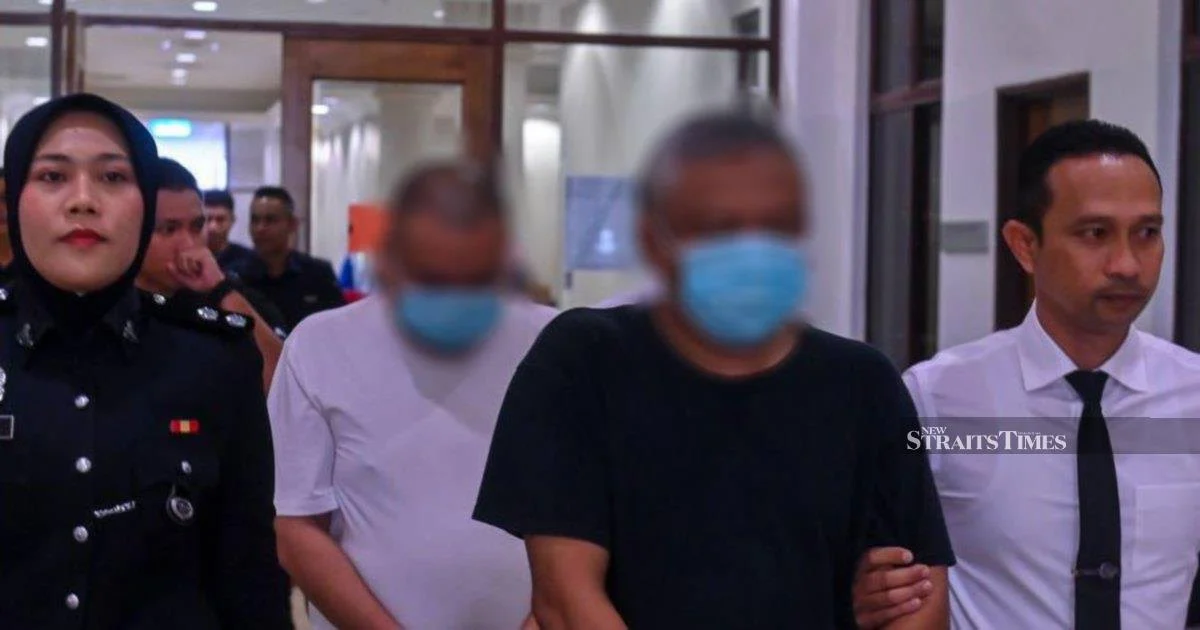
Law enforcement authorities in Kuantan have apprehended a businessman holding the rank of Datuk alongside his assistant following an investigation into an elaborate forgery scheme. The alleged fraud centred on the creation of a counterfeit letter that bore the official coat of arms of the Tengku Mahkota of Pahang, potentially intended to lend false legitimacy to business transactions or applications.
The deployment of royal insignia in fraudulent correspondence represents a particularly serious matter within Malaysia's legal framework, as misuse of state symbols carries substantial penalties beyond standard forgery charges. The Pahang Palace, as an institution, guards its official seals and emblems with considerable vigilance, given the authority and trust vested in authentic royal communication. When members of the public falsify such documents, they invariably invite not only criminal investigation but also the mobilisation of palace advisors and state police resources.
The involvement of two individuals in the operation suggests that the forged letter may have been part of a coordinated effort rather than an isolated incident. The assistant's role in the scheme remains under investigation, though authorities typically establish whether subordinates participated knowingly or under duress from a senior figure. Such distinctions frequently inform charging decisions and sentencing recommendations in document fraud cases across Malaysian jurisdictions.
Business-related fraud using falsified official correspondence has become increasingly common in recent years, particularly as commercial operators seek shortcuts to regulatory approval or contractual legitimacy. The use of state symbols—whether royal crests, ministerial letterheads, or government agency logos—amplifies the apparent authority of such communications and substantially increases the likelihood of victims accepting false claims at face value. This tactic proves especially effective when directed at individuals with limited access to verification channels or insufficient familiarity with authentic official formats.
The Datuk title itself merits consideration in this context. While the honour recognises contributions to society and is conferred by state sultans across Malaysia, possession of such a title creates a presumption of respectability that may have been deliberately leveraged to enhance the credibility of the forged correspondence. Authorities increasingly scrutinise cases where titled individuals exploit their status to facilitate financial or administrative fraud, recognising that public confidence in the honours system depends upon swift action against beneficiaries who misuse their positions.
The arrest has prompted fresh examination of security protocols surrounding state-level official documentation throughout Pahang. Palace officials and government departments regularly conduct audits to identify potential vulnerabilities in seal management, archival systems, and authentication procedures. Digital forgery has compounded these challenges, as modern printing technology can reproduce official insignia with remarkable fidelity, requiring increasingly sophisticated anti-counterfeiting measures to remain effective.
The investigation reflects broader patterns observed across Southeast Asia, where organised fraud rings have adapted to target high-value contracts by producing credible-appearing official correspondence. Malaysia's relatively mature civil administrative infrastructure and formal institutional structures paradoxically create opportunities for sophisticated forgers, who study authentic document formats extensively before attempting reproduction. Detection often occurs only when recipients independently verify claims with actual government bodies or palace offices.
Regulatory bodies now recommend that any organisation receiving communication purportedly from state royalty should undertake direct confirmation through official channels before proceeding with agreed actions. This heightened verification standard, while cumbersome, has proven effective in disrupting fraud schemes at relatively early stages. The Pahang case will likely be incorporated into training materials for government procurement teams and business compliance officers throughout the state.
For the broader Malaysian business community, the arrests underscore the severe legal consequences awaiting those who attempt to exploit royal symbols for fraudulent gain. Penalties under the Malaysian Penal Code for document forgery involving state insignia can reach substantial prison sentences and substantial fines, depending on the extent of loss suffered by victims and the sophistication of the fraudulent operation. Conviction carries lasting reputational damage that frequently prevents future business licensing or professional advancement.
The timing of the arrests suggests that the fraud may have been uncovered either through routine administrative verification or as a result of a specific complaint from an aggrieved party. Pahang's police commercial crime unit, which typically handles such investigations, would have collaborated with palace administration to establish the authenticity of documents before advancing the case to prosecution. Such collaborative approaches have become standard practice across Malaysian states seeking to protect institutional integrity.
As the investigation progresses through the judicial system, the case is likely to attract attention from Malaysia's broader business regulatory landscape. Professional associations and industry bodies may subsequently issue guidance emphasising the importance of document verification protocols and the legal risks associated with engaging with potentially falsified official correspondence. The outcome will establish important precedent regarding sentencing frameworks for sophisticated forgery operations involving state symbols.

