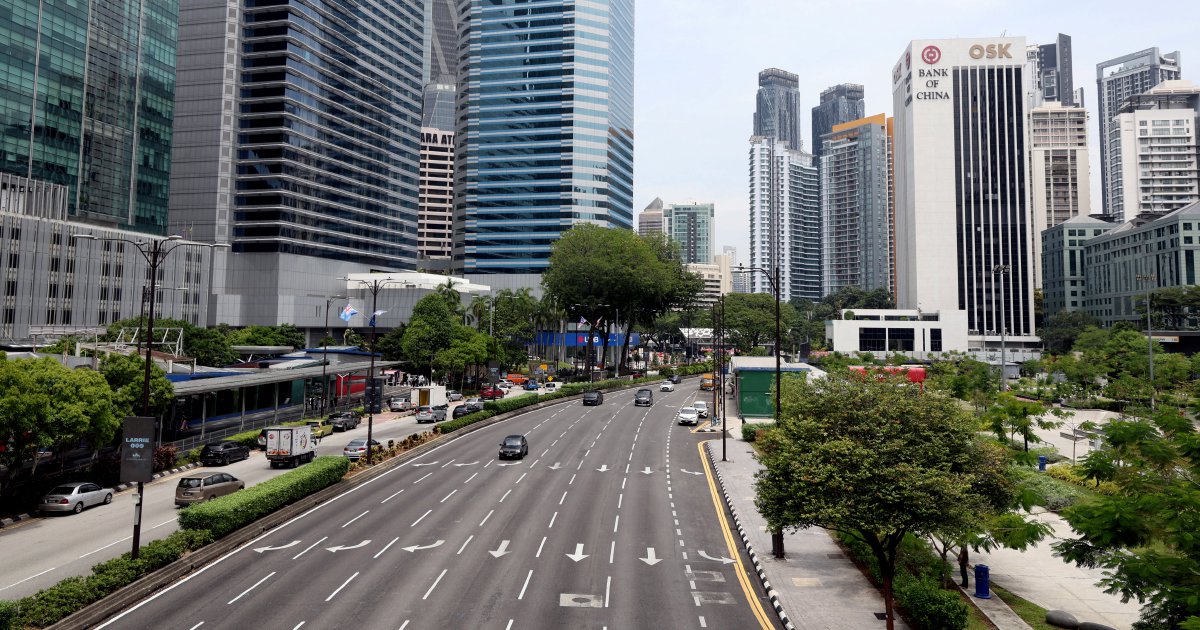
Kuala Lumpur City Hall has responded to a fatal tree incident by launching a comprehensive technical investigation and accelerating inspections of potentially dangerous trees positioned along the capital's busiest roads. The move represents a significant shift in the city's approach to urban forestry management, moving beyond routine maintenance towards a more preventative risk assessment framework. DBKL's action underscores mounting concerns about tree safety in Malaysia's densest metropolitan area, where rapid urban development and ageing arboricultural infrastructure have created pockets of vulnerability in the urban landscape.
The incident has prompted wider scrutiny of how city authorities manage the thousands of mature trees lining Kuala Lumpur's streets and public spaces. Urban planners and environmental experts note that as cities expand vertically and horizontally, tree management often becomes relegated to secondary concerns, even though properly maintained urban forests provide essential cooling, stormwater management, and aesthetic benefits. In tropical Southeast Asia, where monsoon rains and saturated soil conditions create additional structural stresses, the importance of robust tree health monitoring cannot be overstated. The timing of DBKL's inspection programme coincides with Malaysia's monsoon season, when tree-related accidents typically spike due to heightened wind speeds and waterlogged soil conditions that compromise root stability.
The technical investigation being conducted by DBKL will likely examine multiple factors contributing to the tree's failure. Engineers and arborists typically assess internal decay, root system integrity, soil compaction, previous pruning practices, and structural defects that may not be immediately visible to the naked eye. Mature trees in urban settings face unique pressures—soil pollution from vehicle emissions, root damage from construction activities, selective pruning that creates weight imbalances, and competition with underground utilities. Understanding these contributing factors will be essential not only for preventing similar incidents but also for informing maintenance protocols across the city's entire tree stock.
DBKL's decision to focus on major roads reflects a strategic prioritisation of high-traffic areas where tree failures pose the greatest public risk. Arterial routes through the city, including those in areas such as Jalan Raja Chulan, Jalan Tun Razak, and Jalan Sultan Ismail, carry thousands of vehicles and pedestrians daily. A tree collapse in these locations carries exponentially higher consequences than failures in less congested zones. This targeted approach allows authorities to deploy limited resources efficiently while addressing the areas of greatest concern, though critics may argue that comprehensive citywide screening would be the ideal long-term solution.
The inspection programme represents an opportunity for DBKL to implement more rigorous assessment standards moving forward. Modern arboricultural science employs sophisticated diagnostic tools including sonic tomography, which can detect internal decay without invasive boring, and resistograph technology to measure wood density. These methods allow certified arborists to make evidence-based decisions about whether trees should be retained, treated, pruned, or removed. The cost of implementing such technologies across thousands of trees is significant, but substantially less expensive than managing the human and economic consequences of tree failures.
Previous incidents of falling trees in Kuala Lumpur and other Malaysian cities have highlighted systemic gaps in urban forestry management. Many municipalities inherited their tree populations through historical planting patterns without corresponding investment in long-term maintenance frameworks. Trees planted decades ago are now reaching ages where structural failure becomes increasingly likely, particularly if they have not received appropriate crown management or health interventions. The challenge facing DBKL and similar authorities is deciding which trees can be rehabilitated through pruning and care, which require monitoring, and which must be removed and replaced.
The incident also raises questions about liability and public accountability. Property owners and municipalities have legal obligations to maintain trees on their land in a safe condition. Failure to do so can result in significant compensation claims from injured parties. In Malaysia, though litigation culture around tree-related accidents remains less developed than in developed nations, public expectations for government accountability are rising, particularly following high-profile incidents. This investigation will likely set a precedent for how DBKL addresses similar situations in future.
Coordination between DBKL and other stakeholders will be crucial for success. Utility companies, road authorities, and private property owners adjacent to major roads must participate in information-sharing and collective mitigation efforts. Some trees may be on private land but overhang public spaces, creating shared responsibility scenarios. Establishing clear protocols for communication and intervention will streamline response times and prevent gaps in coverage. Additionally, engaging specialist arborists and consulting international best practices in urban tree management could enhance the quality of assessments and recommendations.
The broader implications for Malaysia's urban centres extend beyond Kuala Lumpur. As other Malaysian cities grapple with rapid urbanisation and ageing urban infrastructure, DBKL's experience will inform sector-wide practices. Cities including Penang, Johor Bahru, and Subang Jaya face comparable challenges with their established tree populations. Knowledge-sharing through professional networks and government channels could accelerate adoption of improved management techniques across the nation. This positions Malaysia to learn from contemporary incidents rather than suffering repeated similar accidents across multiple municipalities.
Moving forward, sustainable urban forestry in Kuala Lumpur will require integrated planning that balances heritage tree preservation with public safety, environmental benefits with maintenance costs, and density of tree cover with structural integrity. The investigation findings should inform development of a comprehensive urban forestry strategy that extends beyond reactive incident response. Such a strategy might include standardised maintenance schedules, staff training programmes, public education about reporting hazardous trees, and phased replacement programmes for aged trees that cannot be rehabilitated. The fatal incident, while tragic, offers an opportunity to fundamentally strengthen how the capital manages its urban forest for generations to come.

