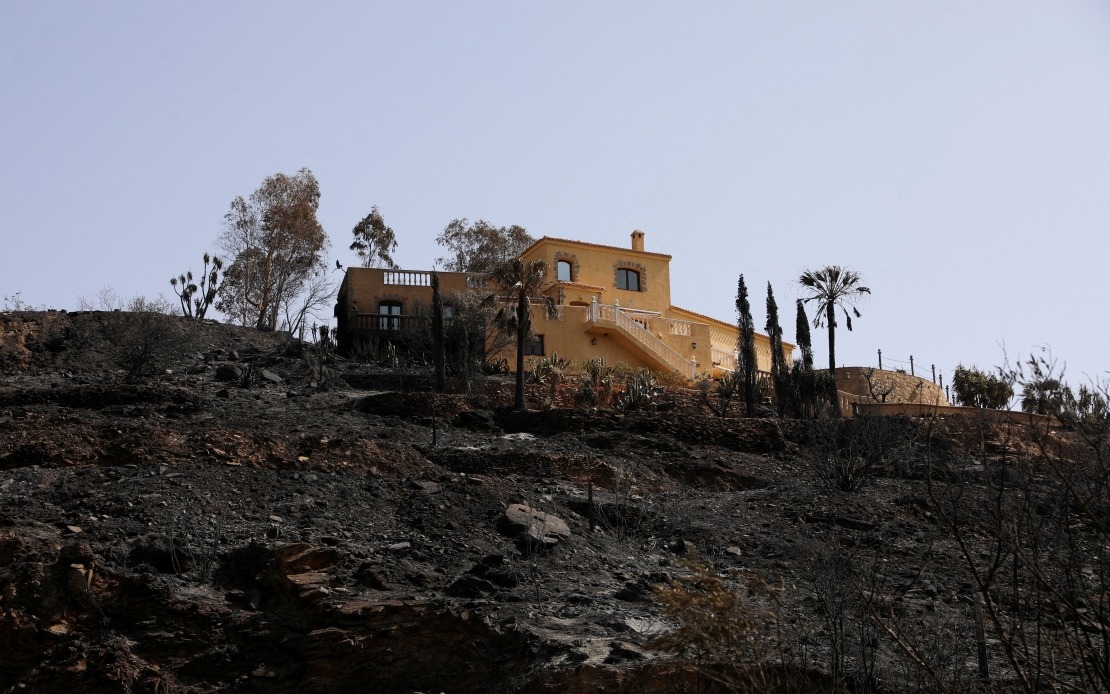
A catastrophic wildfire ravaging Spain's southeastern province of Almeria has claimed at least 13 lives, with the death toll potentially rising as rescue operations continue. Regional authorities announced on Sunday that the fire has been stabilised, marking a critical turning point in the disaster response after days of intense firefighting efforts across the scorched landscape near Los Gallardos municipality in Andalusia.
The humanitarian impact remains severe despite the containment announcement. Seven individuals remain hospitalised for injuries sustained during the fire, with three of those patients classified as critically ill and requiring intensive medical care. Spanish public broadcaster RTVE reported that a significant proportion of those affected by the disaster are foreign nationals, adding layers of complexity to relief and recovery efforts.
The fire, which ignited on Thursday, has consumed approximately 7,000 hectares of terrain across the region. The scale of destruction underscores the vulnerability of Mediterranean landscapes to seasonal wildfire outbreaks that have become increasingly destructive in recent years. The affected area represents a substantial loss of agricultural land, forests, and ecosystems across one of Spain's most ecologically sensitive regions.
A particularly troubling aspect of the disaster is that ten persons remain officially unaccounted for, leaving families and authorities in a state of uncertainty as search and rescue operations continue in the charred remains of affected communities. The missing persons represent among the most challenging elements of the disaster response, requiring methodical investigation and coordination among multiple agencies.
The stabilisation of the fire has enabled regional authorities to adjust emergency protocols significantly. Approximately 1,000 residents who were evacuated as a precautionary measure when the fire raged uncontrollably have now been authorised to return to their homes. This follows an initial repatriation of roughly 600 residents on Saturday, when authorities assessed sufficient progress in containment efforts. The phased return reflects the careful balance authorities must maintain between community recovery needs and ongoing fire management.
Investigators are working to determine the fire's origins, though early indications suggest an electrical infrastructure failure may have triggered the disaster. The leading hypothesis centres on the possibility that the wildfire began following the collapse of an electricity pole or associated cable infrastructure. Understanding the precise cause remains essential for implementing preventative measures and identifying responsibility.
Juanma Moreno, who leads Andalusia's regional government, delivered a cautiously optimistic assessment on Sunday while emphasising that extensive work remained. He stated that the fire had ceased advancing and remained contained within established perimeters, though he stressed that full extinguishment and complete control of the blaze required sustained effort from emergency responders. His comments reflected the reality that wildfire management involves multiple stages, and containment represents a milestone rather than a conclusion.
Moreno characterised this particular fire as the most severe incident affecting Andalusia in recent history, a distinction that underscores its exceptional scale and destructiveness. His remarks pivoted toward broader climate considerations, with the regional leader urging both the general public and government authorities to treat climate change as an urgent priority requiring immediate action. This framing connects the immediate disaster to systemic environmental trends affecting the entire Mediterranean region.
The regional leader articulated a critical observation about evolving fire dynamics in southern Spain and across the Mediterranean basin. He noted that climate change is fundamentally altering conditions that affect wildfire behaviour, creating circumstances increasingly complex for emergency management systems to address. The progression toward larger, more intense, and more difficult-to-suppress wildfires presents a strategic challenge that transcends traditional firefighting and emergency response frameworks.
For Southeast Asian observers, this Spanish wildfire carries significant implications regarding climate resilience and disaster preparedness. Malaysia and the broader ASEAN region face comparable challenges with seasonal fires exacerbated by climate pressures, particularly during dry seasons affecting peatlands and forested areas. The Almeria incident demonstrates how rapidly wildfires can escalate beyond initial expectations and how even advanced Western nations with substantial emergency resources face mounting difficulties in containing large-scale fire events.
The disaster also highlights the transnational dimensions of modern environmental catastrophes. The presence of foreign nationals among the affected population reflects how wildfires ignore borders and citizenship, creating humanitarian crises that demand regional and international cooperation. This pattern mirrors fire incidents across Southeast Asia, where seasonal blazes frequently affect migrant worker populations and cross-border communities.
The stabilisation of the Almeria fire, while representing meaningful progress in emergency response, simultaneously underscores the inadequacy of traditional crisis management approaches when confronting fires of unprecedented scale and intensity. For policymakers across Southeast Asia, the Spanish experience offers both cautionary lessons and validation of climate adaptation urgency. The incident demonstrates that investment in fire prevention infrastructure, early warning systems, and community evacuation protocols represents essential adaptation strategy as global temperatures continue rising and weather patterns shift.

