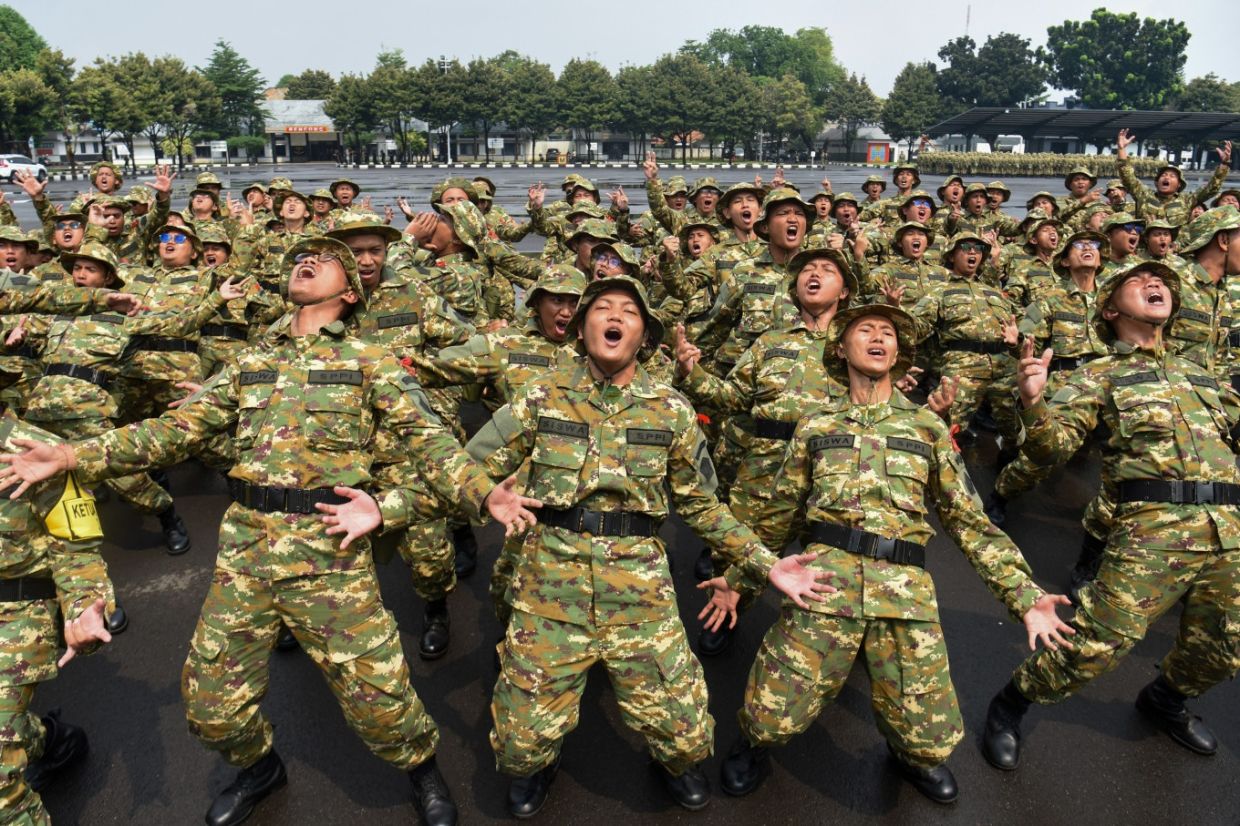
The Indonesian Defence Ministry's mandatory military-style training scheme for managers of President Prabowo Subianto's rural development initiatives has claimed four lives in its opening weeks, intensifying demands from across the political spectrum and civil society that the controversial programme be suspended or fundamentally redesigned. The deaths—occurring among more than 35,000 participants enrolled in the 30-day basic military training conducted under the Defence Ministry's reserve component framework—highlight mounting concerns about the physical and health risks embedded in the government's approach to preparing civilian cooperative managers.
The cascade of fatalities emerged with sobering proximity. Anisa Muyassaroh succumbed to heat stroke while undergoing training in Balikpapan, East Kalimantan, in the early stages of the programme. Almost simultaneously, Yonanda Muhammad Taufiq collapsed from cardiac arrest following introductory activities at a training facility in Baturaja, South Sumatra. In Jakarta, Novia Rahmadhani Sihotang died after experiencing health complications that the Defence Ministry attributed to underlying tuberculosis. Most recently, on 26 June, Muhammad Rifqi Renaldi Gunawan developed severe breathing difficulties during exercises at an Air Force facility in the capital and died early the following morning despite hospitalisation and intensive care interventions.
The Defence Ministry responded to the escalating toll by acknowledging the need for structural improvements. Brigadier General Rico Ricardo Sirait, the ministry's spokesperson, indicated that officials would undertake a thorough examination of programme procedures, with particular emphasis on strengthening pre-training health assessments, mechanisms for detecting pre-existing medical conditions, continuous monitoring of participant wellbeing throughout the training cycle, and protocols for managing medical emergencies. The statement suggested tacit recognition that existing safeguards had proven inadequate, though it stopped short of acknowledging any institutional failure or negligence.
Human rights organisations responded with far sharper criticism. Amnesty International Indonesia characterised the military training mandate for cooperative managers as fundamentally misguided and called for its immediate cessation. Executive director Usman Hamid argued that the government should replace the military component entirely with educational programming centred on cooperative management theory, business operations, and economic principles. Beyond the immediate safety concerns, Hamid positioned the training within a broader analytical frame, interpreting it as symptomatic of creeping militarisation of civilian institutions under Prabowo's presidency—a phenomenon that he explicitly compared to the military's controversial dual function role during Indonesia's New Order authoritarian period.
This contextual observation carries particular weight for Southeast Asian observers. The cooperative movement, both in Indonesia and regionally, traditionally emphasises participatory governance, consensus-building, and collective decision-making as foundational operational principles. Imposing military-style hierarchical command structures and discipline-focused training onto cooperative managers fundamentally contradicts these philosophical underpinnings. Hamid's critique therefore extended beyond immediate workplace safety to encompass questions about institutional coherence and the government's ideological orientation toward civilian affairs.
Members of the House of Representatives Commission I, which holds parliamentary oversight of defence matters, have likewise flagged concerns, though their language reflects the more measured tone characteristic of legislative accountability discussions. Dave Laksono of the Golkar Party acknowledged that the training programme aims to cultivate discipline, leadership qualities, and nationalist sentiment among cooperative managers—objectives the government has articulated clearly. However, Laksono suggested that the specific methodologies employed and the emergency response mechanisms currently in place require substantial refinement to adequately protect participant safety. He framed the necessary adjustments as constructive improvements rather than fundamental overhaul, though his comments implicitly acknowledged that current implementation standards fall short of acceptable benchmarks.
Commission member Imas Aan Ubudiyah of the National Awakening Party articulated more specific technical recommendations. She emphasised that pre-training health screening procedures must be substantially more rigorous than current practice, given the physically demanding nature of military-style training regimens. Ubudiyah called for risk mitigation standards, medical supervision protocols, and formal assessments of participants' physical capabilities to be integrated as mandatory elements throughout the training process. Her intervention suggests that parliament recognises systematic gaps in how the Defence Ministry has implemented participant safety frameworks, with particular attention to the screening phase that presumably should have identified individuals at elevated health risk before training commenced.
The Presidential Chief of Staff, Dudung Abdurachman, offered the government's most direct response to the fatality cluster. Speaking on 26 June, Abdurachman characterised the deaths as potentially attributable to pre-existing health conditions or undisclosed medical complications rather than programme negligence. He stated that preliminary investigation had revealed no indication of negligence in how training had been conducted and that the training regimen itself was not particularly strenuous by military standards. This defensive posture suggests institutional reluctance to acknowledge systemic failure, though Abdurachman did concede that future training cohorts must place heightened emphasis on participant safety. His framing implicitly accepts that something in the current approach requires adjustment, even as it resists attributing responsibility for the deaths to institutional shortcomings.
The broader governmental ambition underpinning this training initiative deserves scrutiny for Malaysian and broader Southeast Asian audiences. The government targets establishment of 80,000 cooperative units and creation of 5,000 fishing villages by 2029—an extraordinarily ambitious rural development agenda. This scale of expansion, combined with the institutional preference for military-style discipline and training methodologies, raises questions about how quality and safety standards can realistically be maintained across such rapid expansion. The fact that cooperative managers must complete 15 days of managerial instruction following their 30-day military training suggests a fragmented approach to professional development, with military conditioning preceding substantive vocational preparation.
For regional observers, particularly in Malaysia where cooperative movements have similarly evolved away from hierarchical command models toward participatory governance frameworks, Indonesia's approach presents a cautionary case study. The imposition of military training on civilian cooperative managers reflects a philosophical orientation that appears increasingly at odds with contemporary understanding of effective cooperative organisation across Southeast Asia. The mounting death toll has forced a reckoning with safety protocols, but the more fundamental tension—between military organisational logic and cooperative operational principles—remains largely unaddressed in official responses.
The programme's continuation appears increasingly uncertain, even if government officials maintain public commitment to refinement rather than suspension. With parliamentary oversight committees monitoring implementation closely, civil society organisations calling for immediate cessation, and an escalating body count making political defensibility progressively more difficult, policymakers face mounting pressure to either substantially restructure the initiative or acknowledge that militarised training for civilian cooperative managers represents a fundamental institutional mismatch. The deaths of four participants within the opening weeks of a multi-year programme suggest that the current approach carries unacceptable human costs.

