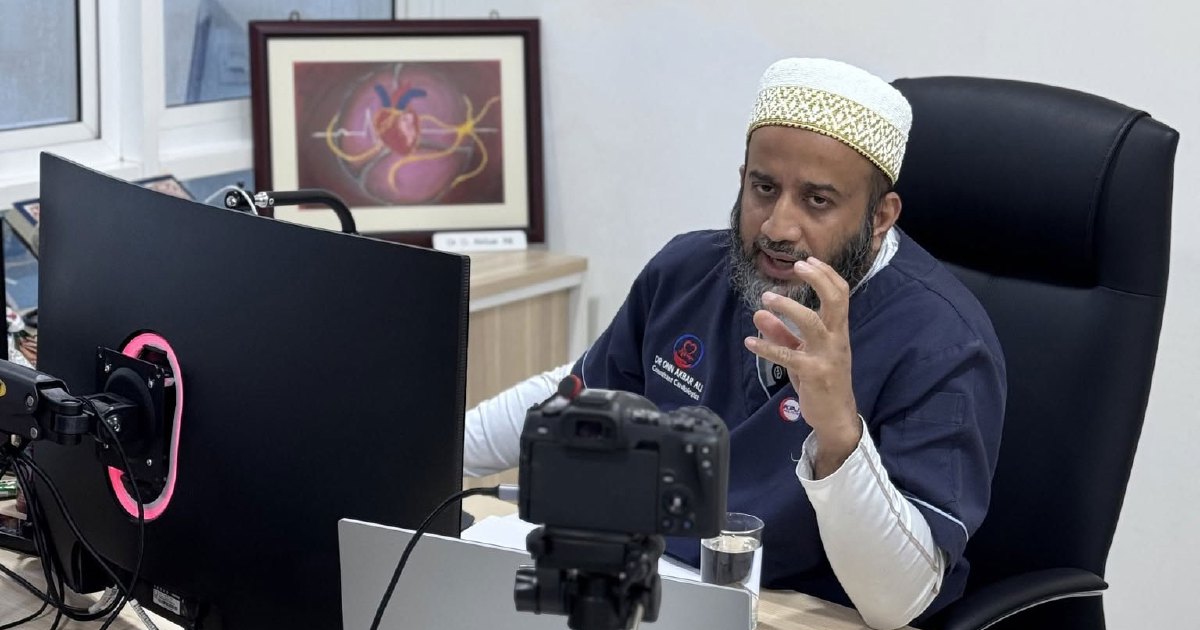
Malaysian consultant cardiologist Dr Onn Akbar Ali experienced a chilling modern crime when he learned that his face and voice had been manipulated into a deepfake video advertising herbal tea as a diabetes treatment. The discovery underscores an alarming trend: sophisticated artificial intelligence tools are being weaponised to commit medical fraud at scale, targeting vulnerable patients desperate for alternative remedies and willing to bypass conventional healthcare channels.
The incident involving Dr Akbar Ali represents a watershed moment in understanding how synthetic media poses unprecedented dangers within the healthcare sector. Unlike traditional medical impersonation schemes that required significant resources and carried high arrest risks, deepfake technology democratises fraud. Bad actors with modest technical skills and readily available AI software can now manufacture convincing video evidence of medical endorsements, complete with authentic-sounding voice synthesis that captures dialect, tone, and professional cadence. For patients searching online for medical advice—particularly those seeking alternatives to expensive or inconvenient conventional treatments—these fake testimonials carry extraordinary persuasive power.
The vulnerability stems partly from how Malaysians and Southeast Asians consume health information. Trust in online medical content often hinges on perceived professional authority, and deepfakes exploit this psychological shortcut ruthlessly. When individuals see what appears to be a qualified doctor earnestly recommending a product on video, cognitive barriers collapse. The technical sophistication of modern deepfakes means that frame-by-frame analysis becomes necessary for detection, a burden that ordinary consumers cannot reasonably shoulder. Additionally, these scams frequently target chronic disease patients—diabetics, hypertensives, cancer survivors—groups motivated by hope and desperation.
What makes this threat particularly menacing in the Malaysian context is the intersection of three factors: rising smartphone penetration and social media adoption, a population with increasing engagement in self-medication and herbal remedies, and lag in regulatory frameworks governing AI-generated content. The region's regulatory landscape, though evolving, has not kept pace with technological capability. Deepfakes created in jurisdictions with lax enforcement can circulate freely across borders, targeting patients across Malaysia, Singapore, and beyond without consequence.
The financial implications are substantial. Health fraud in Southeast Asia costs billions annually, but deepfake-enabled schemes introduce a dangerous new vector. Unlike conventional phony medical devices or counterfeit medications that rely on physical distribution networks, deepfake fraud scales infinitely. One convincing video can reach millions, with distribution costs approaching zero. Meanwhile, the profit margins on fraudulent herbal products or fake treatments remain enormous, particularly when marketed to educated, affluent patients who might otherwise dismiss traditional scams.
Dr Akbar Ali's experience also highlights the personal toll on legitimate healthcare professionals. Medical practitioners invest years building reputations, earning patient trust through competence and ethical conduct. Deepfake impersonation can instantly corrode that credibility. Patients who encounter the fake endorsement may become confused about the doctor's actual position on treatments, potentially disrupting genuine medical relationships. For some doctors, discovering their likenesses weaponised for fraud causes reputational damage that proves difficult to reverse, particularly if the fake content spreads widely before detection.
The broader healthcare ecosystem faces cascading consequences. When deepfakes erode public confidence in medical authority, patients grow more sceptical of legitimate professional guidance. This creates perverse incentives: bad actors can manufacture competing "expert" endorsements, muddying the information landscape until patients lose ability to distinguish genuine from artificial expertise. In markets like Malaysia with significant engagement in complementary and alternative medicine, deepfakes risk accelerating migration toward unproven treatments, potentially delaying crucial conventional interventions.
Developing effective countermeasures requires coordination across multiple stakeholders. Regulators must establish frameworks criminalising deepfake medical fraud and enabling rapid takedown mechanisms. Tech platforms need investment in detection algorithms and content moderation policies specific to health claims. The medical profession should establish protocols for rapid response when practitioners discover impersonation, including verification systems that help patients confirm practitioner identity. Public literacy campaigns must educate populations about deepfake risks and verification strategies.
Internationally, the challenge demands cooperation because fraudsters operate globally while enforcement remains mostly national. Southeast Asian nations should develop shared intelligence networks and mutual legal assistance protocols for cross-border deepfake investigations. Regional professional bodies could establish registries of verified practitioners, allowing patients to confirm credentials independently of online video content.
For individual Malaysians, practical vigilance becomes essential. Medical decisions should never rest solely on online videos, however convincing. Direct contact with medical practitioners through verified channels, consultation of official credentials, and cross-referencing recommendations with established medical institutions all provide protection. Healthcare providers should educate patients about deepfake risks as part of informed consent discussions, particularly for patients researching alternative treatments online.
The emergence of deepfake medical fraud reveals that technological advancement carries unprecedented risks alongside potential benefits. As artificial intelligence becomes more sophisticated and accessible, the asymmetry between fraudster capability and consumer protection widens. Without deliberate intervention—through policy, platform accountability, professional standards, and public awareness—deepfake health scams will proliferate, potentially causing genuine harm to patients who make treatment decisions based on fabricated evidence. Dr Akbar Ali's disturbing discovery serves as an urgent warning for Malaysia and the broader region to act decisively.

