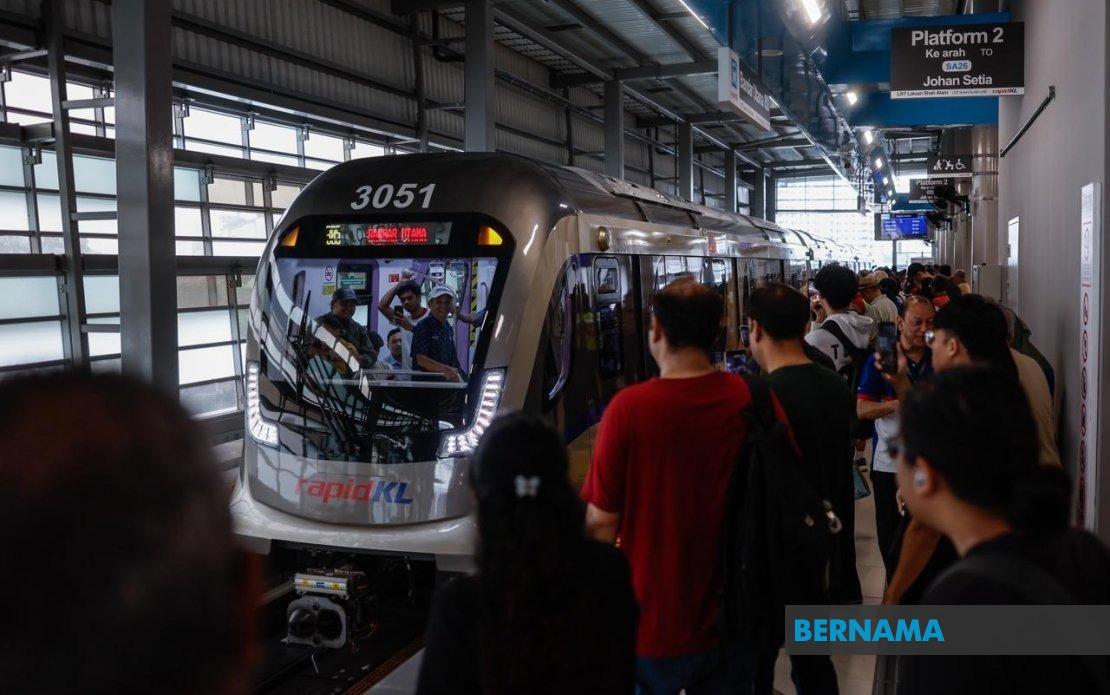
A technical malfunction in one of the train's critical components led to an incident on the Light Rail Transit 3 Shah Alam Line at Shah Alam Stadium Station on July 4, Rapid KL confirmed on Wednesday. The fault caused the affected part to make contact with the power conductor rail, generating audible sounds and visible electrical discharge during the evening rush hour at 7.05 pm.
Though the incident produced what witnesses described as an explosion-like noise accompanied by sparks, the rapid transit operator stated that no passengers sustained injuries in the occurrence. Service on the line proceeded without disruption to commuters, demonstrating that the system's safety protocols prevented any escalation of the technical problem into a more serious operational crisis.
Rapid KL's immediate response involved removing the affected train from active service to prevent further complications. All passengers aboard were guided to disembark at the next available station along the line, where they boarded an alternative train to complete their journeys. This procedure ensured minimal disruption to the evening commute while prioritising the safety of those travelling on the network.
Following the incident, maintenance teams transported the train to the company's depot facility for comprehensive diagnostic work. Engineers conducted a detailed technical examination to identify the precise nature of the component failure and determine whether similar issues might affect other vehicles in the fleet. Upon completion of the assessment, technicians replaced the defective component with new parts meeting operational specifications.
Rapid KL authorised the train's return to passenger service only after completing all necessary safety validations and confirming that the vehicle met the required standards for operation. The cautious approach reflected the company's commitment to ensuring that any equipment returning to service had undergone rigorous testing to prevent recurrence of the technical fault.
Beyond addressing the immediate issue, Rapid KL implemented a broader precautionary strategy across its LRT3 fleet. The company extended its inspection and monitoring procedures to other trains operating on the Shah Alam Line, aiming to identify any similar component degradation or manufacturing defects that might pose risks. This proactive stance demonstrated recognition that isolated incidents could indicate systemic issues requiring fleet-wide attention.
The July 4 incident underscores the critical importance of maintaining robust maintenance schedules and component quality assurance across Malaysia's expanding rapid transit network. With the LRT3 Shah Alam Line serving as a major transport corridor linking the capital region to industrial areas, ensuring reliable and safe operations is essential for the millions of commuters who depend on the system daily.
For Malaysian commuters and industry observers, the incident highlights both the effectiveness of existing safety systems and the ongoing challenges of managing ageing infrastructure. The LRT3, which opened in 2016, has seen sustained usage growth, placing continuous demands on its mechanical and electrical systems. Component failures, while inevitable in high-frequency operations, require swift detection and remediation to maintain public confidence in the transit network.
Rapid KL's transparent communication regarding the incident and its corrective actions reflects industry best practices in crisis management. By promptly disclosing the cause, explaining the response measures, and outlining precautionary steps taken across the wider fleet, the company maintained accountability to stakeholders and the travelling public. Such openness is particularly important in Malaysia's mature transit market, where operators compete for passenger loyalty and government investment.
The incident also carries implications for regulatory oversight of public transport systems. Malaysia's transport authorities continue to develop and refine safety standards and inspection regimes across all rapid transit modes. Events such as this technical fault provide valuable data for identifying potential systemic vulnerabilities and informing updates to operational protocols and maintenance frameworks.
Looking forward, the incident reinforces the necessity for consistent investment in fleet maintenance and timely component replacement across the LRT3 network. As public transport demand continues to grow in the Klang Valley and throughout Malaysia, ensuring that vehicles operate at peak safety and reliability standards becomes increasingly crucial for sustaining ridership and supporting the nation's urban mobility goals.

