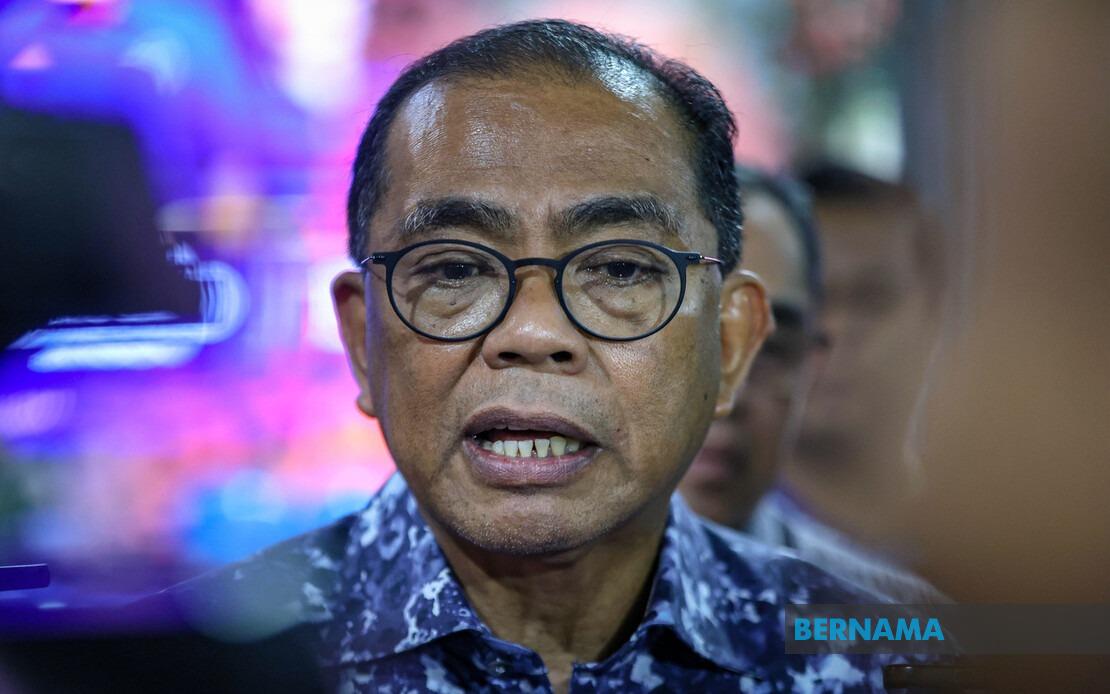
The Ministry of Defence has intensified efforts to overhaul how the Malaysian Armed Forces manages talent, career pathways and compensation, signalling a pivotal shift in how the military adapts to contemporary defence challenges. Speaking at an event in Pasir Gudang, Defence Minister Datuk Seri Mohamed Khaled Nordin outlined the scope of reforms being pursued, emphasising that military personnel deserve career structures aligned with their roles and responsibilities in an era of rapid technological change.
At the heart of MINDEF's agenda lies a fundamental mismatch between officer capability and advancement opportunities. The ministry has identified a recurring problem where qualified military personnel meet all performance and competency benchmarks yet remain unable to progress because positions at higher ranks are severely constrained. This structural bottleneck undermines retention of skilled officers and frustrates those who have proven themselves capable. Mohamed Khaled stressed that correcting this imbalance requires recalibrating how ranks, grades and responsibilities correspond to actual strategic duties undertaken by armed forces personnel, ensuring a logical relationship between seniority levels and the complexity of work assigned.
Three interconnected reform pillars form the foundation of MINDEF's approach. The first concerns organisational restructuring to create more advancement pathways within the military hierarchy. Second is modernising career progression mechanisms so talented officers are not indefinitely trapped at single grades. Third involves revising allowances and remuneration to reflect the extraordinary demands placed on military professionals. These proposals have already been formally submitted to the government and the Public Service Department for evaluation, indicating the ministry's resolve to move beyond rhetoric into concrete action.
The allowances component addresses a particularly acute issue. Military service demands sacrifices absent from most civilian public sector roles, including mandatory participation in intensive training courses spanning nine months to two years. These extended absences from family and civilian life warrant special financial consideration beyond standard civil service compensation packages. MINDEF argues that military-specific allowances should recognise this unique professional burden, though the ministry recognises such benefits must be balanced against fiscal constraints and public service equity concerns.
Crucially, MINDEF has committed that any acceleration of promotion pathways will remain anchored to meritocratic principles rather than becoming automatic or formulaic. Advancement will continue reflecting performance, competency, integrity and organisational requirements, assessed through rigorous established evaluation frameworks. This insistence on merit-based criteria addresses potential concerns that hastening promotion processes might compromise military effectiveness or fairness, ensuring that accelerated pathways reward genuine capability rather than seniority alone.
These initiatives connect to the broader Defence White Paper strategy launched in 2022, which recognised that modernising military assets and capabilities requires equally sophisticated approaches to human capital management. Technology and equipment modernisation cannot succeed without corresponding evolution in how the armed forces develop and retain personnel. MINDEF's sustained advocacy for structural improvements demonstrates acknowledgment that defence effectiveness depends on attracting and retaining talented officers who see viable long-term career prospects.
The timing of these reforms aligns with Prime Minister Datuk Seri Anwar Ibrahim's recent announcement regarding in-principle government agreement to streamline promotion mechanisms across both military and Royal Malaysia Police personnel. This broader initiative aims to bring security services into parity with other public service advancement schemes, eliminating perceived disparities in career mobility. The government has committed to unveiling detailed mechanisms during the Ambang Merdeka celebration at Stadium Merdeka on August 30, creating a definitive timeline for implementation.
For Southeast Asia's defence landscape, Malaysia's military modernisation carries strategic implications. Regional security challenges demand professional, motivated armed forces capable of operating sophisticated defence systems and adapting to evolving threats. Countries competing for regional influence recognise that military effectiveness depends fundamentally on personnel quality and retention. By investing in career structures and compensation that retain experienced officers, Malaysia strengthens its operational capabilities while signalling commitment to professionalising its defence establishment.
The financial dimension extends beyond individual compensation. The government has pledged increased defence ministry allocation under Budget 2027 specifically to strengthen MAF capabilities and welfare provision. This budgetary commitment demonstrates that career structure reforms form part of comprehensive military investment rather than isolated personnel policy adjustments. Enhanced funding enables capabilities modernisation while simultaneously supporting improved compensation and career pathways, creating synergy between operational effectiveness and personnel satisfaction.
Implementing these reforms presents practical challenges. Public Service Department approval remains essential, particularly regarding remuneration modifications that interact with broader civil service compensation frameworks. Balancing military personnel interests against claims from other public sector groups requires careful negotiation. Additionally, actually creating promotion opportunities demands potentially complex organisational redesign affecting established hierarchies and career expectations among current officers.
For Malaysian defence personnel themselves, these reforms represent potential professional transformation. Junior and mid-career officers facing limited advancement prospects could access expanded opportunities to progress based on proven capability. More attractive compensation might stabilise retention of experienced professionals considering private sector transitions. However, until formal mechanisms are announced and implemented, reform announcements generate hope mixed with uncertainty about actual outcomes and implementation timelines.
Regionally, Malaysia's institutional approach to military modernisation offers instructive lessons. Unlike approaches prioritising equipment acquisition over human development, MINDEF's integrated strategy recognises that maintaining credible defence capabilities requires sophisticated talent management alongside technological investment. Neighbouring countries facing similar retention and advancement challenges may observe whether Malaysia's reforms successfully address these structural issues or reveal persistent constraints limiting military modernisation efforts.

