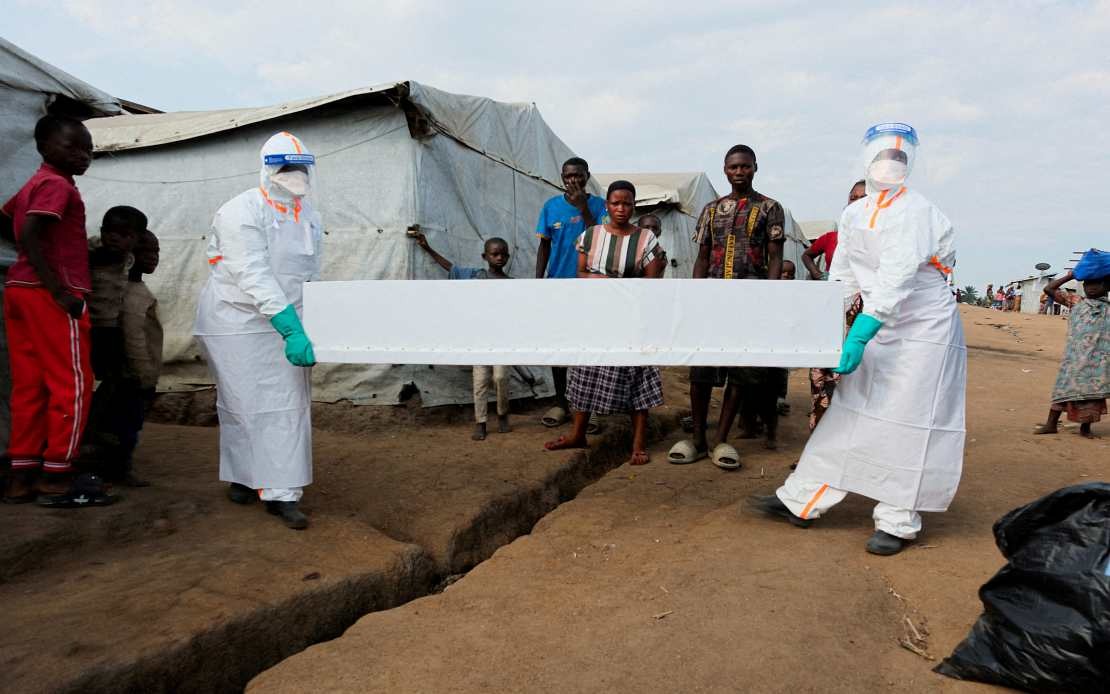
The Democratic Republic of Congo is confronting an escalating public health emergency as confirmed Ebola virus cases have surpassed the 1,000 mark, according to updates from the country's health authorities reported over the weekend. The cumulative toll stands at 1,003 confirmed infections, accompanied by 254 documented deaths, since health officials first declared the outbreak on May 15. This represents a mortality rate of 25.3 per cent, underscoring the severity of the viral strain currently circulating in the Central African nation.
The trajectory of this outbreak carries sobering implications not only for the Democratic Republic of Congo but for the broader East and Central African region, particularly given proximity to neighbouring countries including Uganda and Rwanda. What distinguishes this particular emergency from previous incidents is the speed of transmission and the challenges response teams face in containing spread across multiple affected provinces. The virus continues to circulate actively in Ituri, North Kivu and South Kivu provinces, regions already burdened by ongoing armed conflict and humanitarian crises that complicate disease control operations.
Despite the alarming caseload, health officials report mixed indicators across key metrics. Approximately 100 patients have recovered and been discharged, while 365 individuals currently remain hospitalized or isolated for observation and treatment. Recovery rates represent a glimmer of hope within an otherwise grave situation, though the continuing influx of new infections threatens to overwhelm medical infrastructure already strained by decades of underinvestment and conflict-related damage. The ministry's statement emphasised that response teams maintain active case investigations, epidemiological surveillance and preventive measures across affected communities, though operational effectiveness depends heavily on community cooperation and security conditions on the ground.
Health Minister Roger Kamba acknowledged a concerning decline in the contact follow-up rate, a critical metric for controlling spread. Tracing and monitoring individuals who have had contact with confirmed cases represents one of the most effective strategies for interrupting transmission chains, yet the ministry's own data indicates this mechanism is losing momentum. Kamba attributed this partly to community hesitancy, misinformation and the complex security environment, factors that undermine the ability of health workers to access populations and implement containment measures systematically.
The international health community has sounded increasingly urgent warnings about this outbreak's trajectory. Last week, the Africa Centres for Disease Control and Prevention cautioned that without rapid and sustained intervention, the current epidemic could eclipse the devastation of the 2014-2016 West African Ebola crisis, which claimed more than 11,000 lives across Guinea, Liberia and Sierra Leone. That precedent haunts current response efforts, as it demonstrated how quickly and catastrophically Ebola can spread when early containment fails, straining health systems across multiple nations and destabilising entire regions.
Kamba countered the bleaker projections by highlighting intensified community engagement and communications strategies. The ministry is prioritising dialogue with local populations to counter misinformation, improve case reporting and encourage voluntary isolation of suspected cases. Case management protocols are being enhanced to improve survival rates, while diagnostic capacity continues expansion to enable faster identification of infections. These measures, officials argue, create the conditions for bending the outbreak curve downward before transmission spirals beyond control.
A significant development emerged from scientific analysis of the viral strain itself. Researchers from Uganda's Department of National Health Laboratory and Diagnostic Services, working alongside Congo's Institute of National Biomedical Research, confirmed that the circulating strain is Ebola Bundibugyo, originating from a new spillover event from wildlife populations. This finding carries profound implications, as it eliminates the possibility that the outbreak stems from an earlier incident that persisted undetected or spread sporadically for months. Instead, it indicates a fresh zoonotic transmission event, suggesting ongoing risk of additional spillovers if wildlife-human contact patterns remain unchanged.
The identification of a new wildlife spillover underscores the ecological and behavioural dimensions of Ebola control that extend far beyond conventional public health responses. Deforestation, habitat loss and population pressure driving increased human-animal contact in Central Africa create conditions favouring viral emergence. Regional nations, including Malaysia, should recognise these patterns as harbingers of future outbreaks across Africa and Southeast Asia, where comparable ecological pressures exist. The Democratic Republic of Congo outbreak illustrates how infectious disease threats respect no borders in an interconnected world.
For Malaysia and the broader Southeast Asian region, this African crisis carries watchful implications. While Ebola has not historically established transmission in Asia, the pathogen's potential emergence through travellers or biological specimens creates ongoing surveillance responsibilities. Malaysian health authorities maintain vigilance through international disease monitoring networks and airport screening protocols. The economic and travel disruptions accompanying major outbreaks also carry spillover effects regionally, as demonstrated during previous crises that disrupted supply chains and deterred tourism across affected and neighbouring zones.
The Democratic Republic of Congo's response capacity faces structural constraints that Malaysian policymakers should understand when considering regional solidarity and support options. Unlike Southeast Asian nations with relatively robust health infrastructure, the Congo confronts this emergency amid chronic underfunding, ongoing conflict and limited laboratory and quarantine capacity. International assistance, whether through the African Union, bilateral partnerships or multilateral organisations, remains essential for preventing this outbreak from becoming a continental catastrophe.
Moving forward, the success of containment efforts hinges on sustained political commitment, adequate resourcing and genuine community participation in response mechanisms. Health Minister Kamba's emphasis on intensified communication reflects understanding that technical interventions alone cannot succeed without social acceptance and behavioural change. The coming weeks will prove decisive in determining whether this outbreak stabilises or accelerates toward the worst-case scenarios that Africa CDC epidemiologists have publicly articulated.
The Democratic Republic of Congo's battle against Ebola remains far from resolved. With over 1,000 confirmed cases and mounting international concern, the outbreak demands unprecedented regional cooperation and resources. For observers across Asia and Africa alike, this crisis serves as a stark reminder that infectious disease threats continue evolving and that preparedness, swift response and international solidarity remain essential for protecting public health in an increasingly complex epidemiological landscape.

%22%2F%3E%3C%2Fpattern%3E%3C%2Fdefs%3E%3Crect%20width%3D%22100%25%22%20height%3D%22100%25%22%20fill%3D%22url(%23ph3ule8g)%22%2F%3E%3Crect%20width%3D%22100%25%22%20height%3D%22100%25%22%20fill%3D%22url(%23ph3ule8p)%22%2F%3E%3Ctext%20x%3D%2250%25%22%20y%3D%2250%25%22%20text-anchor%3D%22middle%22%20dominant-baseline%3D%22central%22%20fill%3D%22rgba(255%2C255%2C255%2C0.95)%22%20font-family%3D%22Georgia%2C%20'Times%20New%20Roman'%2C%20serif%22%20font-weight%3D%22700%22%20font-size%3D%22272%22%20letter-spacing%3D%22-0.02em%22%3EAnwar%3C%2Ftext%3E%3C%2Fsvg%3E)