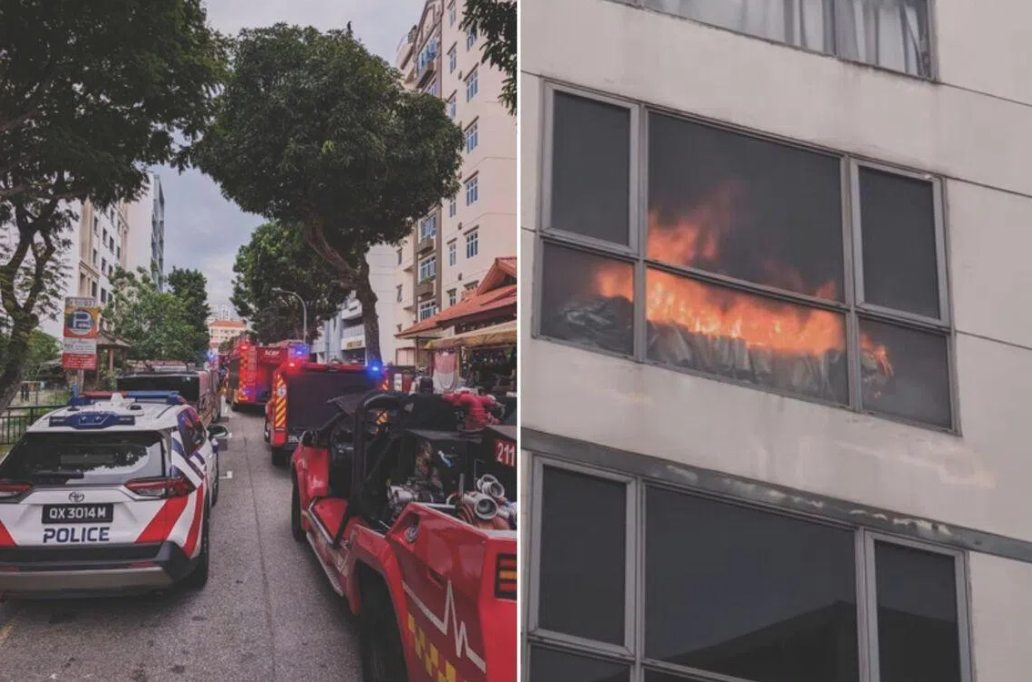
An unattended power-assisted bicycle being charged in a residential unit sparked a fire that forced the evacuation of five people from a Geylang condominium block on Sunday afternoon. The Singapore Civil Defence Force responded to the blaze at 9 Lorong 26 Geylang, identified as Casa Aerata condominium, at 5.35pm on June 21. Emergency responders rapidly contained the situation, with no injuries reported, but the incident has reignited official concerns about the growing risks posed by improperly maintained and charged active mobility devices in Singapore's densely packed residential neighbourhoods.
The fire originated in the seventh-floor unit where the power-assisted bicycle battery was undergoing an unattended charging session in the living room. The SCDF deployed a hosereel and compressed air foam backpack to extinguish the flames, which had reached sufficient intensity to crack a window from the heat. Residents from neighbouring units were evacuated as a precautionary measure by police and civil defence personnel, underscoring how quickly such fires can spread in multi-storey residential buildings where units share common infrastructure and ventilation systems.
Initial investigations determined the fire was of electrical origin, stemming directly from the power-assisted bicycle itself. This finding aligns with a troubling pattern that has emerged across Singapore's residential fire statistics. The SCDF's preliminary assessment points to the battery system as the culprit, though the exact cause—whether a manufacturing defect, degraded battery cells, or improper charging conditions—remains under examination. What is clear, however, is that the practice of leaving these devices unattended while charging creates a dangerous vulnerability in home fire safety.
In response to the incident, MP for Bishan-Toa Payoh GRC Cai Yinzhou moved quickly to the scene after spotting smoke and hearing emergency sirens in the vicinity. His immediate action to clear residents from the area below the burning unit, in anticipation of the window failing under thermal stress, demonstrated rapid situational awareness that could have prevented injuries had any residents remained in the danger zone. His involvement also reflects how seriously local political leaders are treating the emerging threat posed by active mobility device batteries in residential settings.
The SCDF has intensified its public messaging around safe practices for power-assisted bicycles and personal mobility devices. The agency specifically cautioned residents against purchasing or installing non-original batteries in their active mobility equipment, a common cost-cutting measure that often compromises safety standards. Additionally, authorities emphasised that batteries should not be charged continuously for extended periods or left charging overnight, practices that are surprisingly common among users seeking convenience without understanding the thermal stress and degradation these habits impose on battery chemistry.
The statistical picture reveals a nuanced but concerning trend in active mobility device fires across Singapore's residential sector. In the first half of 2025, the SCDF recorded 49 fires involving active mobility devices at residential premises out of 304 total electrical fires—a decrease from 67 such fires in the same period of 2024. This apparent improvement, however, masks a worrying development: while power-assisted bicycle fires declined, personal mobility device fires surged sharply from 25 to 31 cases, suggesting different risk profiles between device types that warrant tailored intervention strategies.
The broader context of active mobility in Singapore makes this fire safety issue particularly pressing. Over the past decade, the city-state has actively promoted micro-mobility solutions to reduce traffic congestion and emissions. Power-assisted bicycles and personal mobility devices have become increasingly commonplace, especially in densely populated residential areas where the last-mile transport challenge is most acute. However, this rapid adoption has not been matched by equally robust consumer awareness campaigns about proper battery maintenance and charging protocols, leaving many users unaware of the hazards they are creating.
For Malaysian readers and the broader Southeast Asian audience, Singapore's experience offers a cautionary lesson as similar micro-mobility trends gain momentum across the region. Malaysia's urban centres, particularly Kuala Lumpur and George Town, have seen growing adoption of e-bikes and personal mobility devices. The fire risk patterns emerging in Singapore suggest that Malaysian authorities should proactively establish safety standards, consumer education programmes, and building regulations that address the specific hazards of battery charging in multi-unit residential developments before incidents force reactive policy changes.
The incident at Casa Aerata also highlights vulnerabilities in condominium management and resident safety protocols. Shared residential spaces with multiple occupants create compounded risk environments where one person's unsafe practice can endanger neighbours' lives and property. Building management associations and developers across Southeast Asia should consider implementing designated charging zones with proper ventilation, electrical monitoring systems, and clear prohibitions on overnight charging in common areas or individual units without safety infrastructure.
Longer-term solutions will require coordinated action across multiple stakeholders. Battery manufacturers must implement improved safety features and cell-level monitoring; retailers need to enforce warranty and authenticity verification systems; regulators must establish clear certification standards for imported devices; and consumers require accessible, culturally tailored education about responsible ownership. The SCDF's warning serves as a stark reminder that convenience and cost savings in the active mobility ecosystem cannot come at the expense of residential fire safety.
As Singapore refines its approach to managing these emerging risks, the experience demonstrates how critical it is for regional governments to stay ahead of technology adoption curves. The power-assisted bicycle industry continues evolving rapidly, with new battery chemistries and charging technologies entering markets faster than safety frameworks can adapt. Policymakers in Malaysia and across Southeast Asia must use Singapore's data and incident patterns to inform their own regulatory approaches, potentially avoiding the learning-through-incidents phase that has characterised Singapore's response and instead implementing evidence-based precautions from the outset.