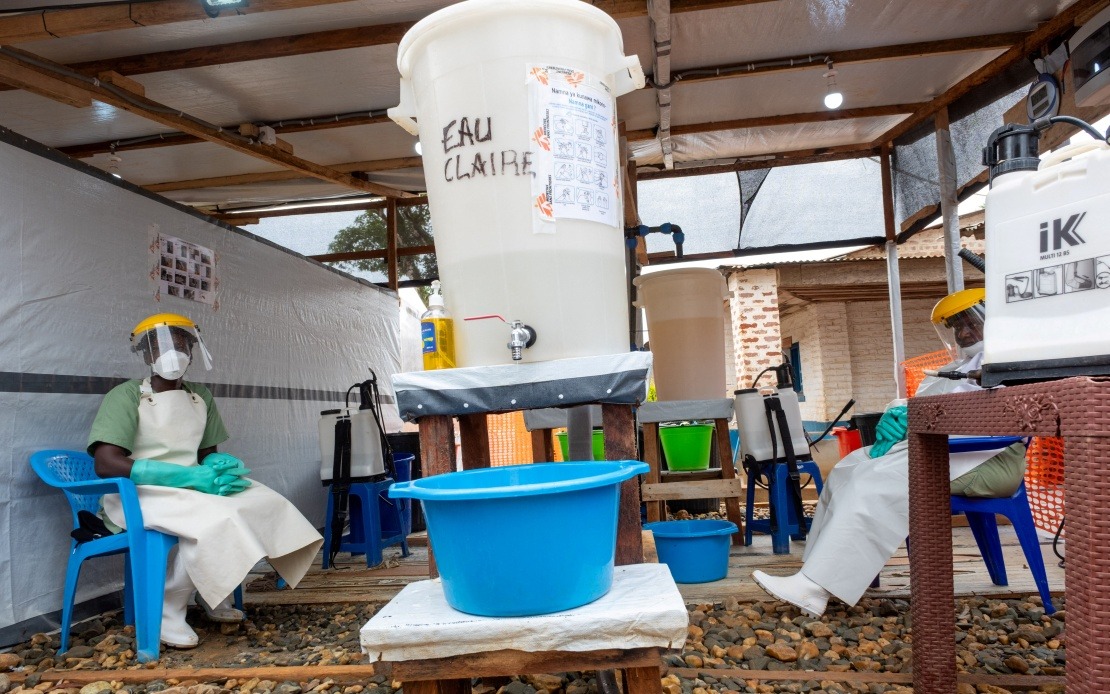
The Ebola epidemic sweeping across five provinces in the Democratic Republic of Congo has reached a grim milestone, with confirmed infections now exceeding 3,000 cases. According to health authorities in Kinshasa, the outbreak has claimed 1,354 lives as of late July, though the situation remains dynamic with 556 patients having recovered and another 755 currently under medical care in hospitals or isolation facilities. The scale of this outbreak underscores the persistent challenge of containing filovirus transmission in Central Africa, where weak healthcare infrastructure and limited resources often hinder rapid response efforts.
The geographic spread of the virus across five provinces—Ituri, North Kivu, South Kivu, Haut-Uele and Tshopo—demonstrates how quickly the disease can establish itself across vast territorial distances. This multi-provincial distribution has complicated containment strategies, as controlling the movement of potentially infected individuals and tracing contact networks becomes exponentially more difficult when cases emerge across fragmented regions. For Malaysian and Southeast Asian readers monitoring global health threats, the DRC situation illustrates why cross-border preparedness and regional surveillance networks remain essential, particularly given the interconnected nature of modern travel and trade.
A significant development emerged on Friday when Prime Minister Judith Suminwa Tuluka announced that government-backed research efforts are progressing toward developing both therapeutic treatments and preventive vaccines specifically targeting Bundibugyo ebolavirus, the particular strain responsible for this outbreak. The Prime Minister expressed optimism that viable medical countermeasures could become available within a two to four-month window, though she offered minimal detail regarding the current phase of development, funding allocation, or the anticipated regulatory approval pathway. This timeline suggests accelerated development protocols, though whether such accelerated schedules will yield safe and effective products remains subject to rigorous clinical evaluation.
The absence of approved vaccines or specifically licensed treatments for Bundibugyo ebolavirus represents a significant public health vulnerability. Unlike other Ebola strains that have benefited from years of research following previous outbreaks, the Bundibugyo variant remains relatively understudied from a therapeutic perspective. Currently, several experimental vaccines and candidate therapeutics are undergoing clinical evaluation in laboratory and early-stage human studies, but moving from experimental status to licensed deployment typically requires substantial time investment and regulatory scrutiny. The pressure to accelerate this timeline is understandable given the mounting casualty figures, yet scientific rigor cannot be compromised to meet political deadlines.
Breakthrough progress arrived through the University of Oxford, which announced the administration of the first human dose of an experimental vaccine designated ChAdOx1 BDBV on Friday. This represents a watershed moment in the global response, as it marks humanity's first human trial of a vaccine specifically engineered to confer protection against Bundibugyo ebolavirus infection. The vaccine platform builds upon Oxford's established viral vector technology, which has been adapted to deliver genetic sequences encoding Ebola surface proteins. Such rapid transition from preclinical development to initial human testing, while potentially expedited by emergency circumstances, reflects confidence among international researchers regarding the vaccine's foundational safety profile.
For Southeast Asia, including Malaysia, this outbreak carries significance beyond humanitarian concerns. The Democratic Republic of Congo sits within complex African trade networks, and given Malaysia's substantial commercial partnerships across the continent, the potential for viral introduction through international travel or cargo remains a non-zero risk. While the risk to Malaysia itself remains low due to geographic distance and established screening protocols at international airports, regional health authorities would be prudent to maintain heightened vigilance and ensure laboratory capacity exists to rapidly identify and confirm cases should imported cases occur.
The research acceleration announced by Prime Minister Tuluka reflects the political urgency surrounding this outbreak, yet sustainable progress requires adequate funding, trained personnel, and functioning laboratory infrastructure. The DRC's commitment to allocate government resources represents a positive commitment, though the adequacy of such funding against the scale of research needed warrants scrutiny. International collaboration will almost certainly prove essential, as no single nation possesses the specialized expertise required to simultaneously develop vaccines, therapeutics, and diagnostic tools while managing an active epidemic.
The path from initial human vaccination to widespread deployment involves multiple sequential stages: ensuring safety and tolerability in phase-one trials, evaluating immunogenicity in phase-two studies, and ultimately assessing protective efficacy in phase-three trials. Compressed timelines for these studies remain possible when sufficient resources are deployed and regulatory agencies provide accelerated review pathways, yet the fundamental scientific questions cannot be bypassed without accepting unacceptable risks. The Prime Minister's two to four-month projection likely represents optimistic scenario planning rather than a definitive forecast.
Regional health systems across sub-Saharan Africa remain vulnerable to Ebola due to limited laboratory capacity, insufficient training in infection control practices, and challenges in implementing rapid isolation protocols across dispersed populations. The DRC outbreak has exposed these systemic weaknesses repeatedly during its progression. For Malaysia and its neighbors within the Association of Southeast Asian Nations, these developments underscore the enduring importance of investing in pandemic preparedness, including regional diagnostic capacity, trained epidemiological personnel, and coordinated surveillance networks that can detect emerging threats before they achieve critical mass.
The momentum generated by Oxford's vaccine trial commencement carries symbolic importance alongside scientific potential. It demonstrates that global scientific cooperation can mobilize rapidly when faced with infectious disease threats, and that accumulated knowledge from previous outbreak responses can be leveraged to accelerate development of countermeasures. However, success ultimately depends not merely on laboratory achievements but on effective field deployment, adequate vaccination coverage across at-risk populations, and sustained commitment to outbreak containment measures including isolation, contact tracing, and safe burial practices that interrupt transmission chains.

