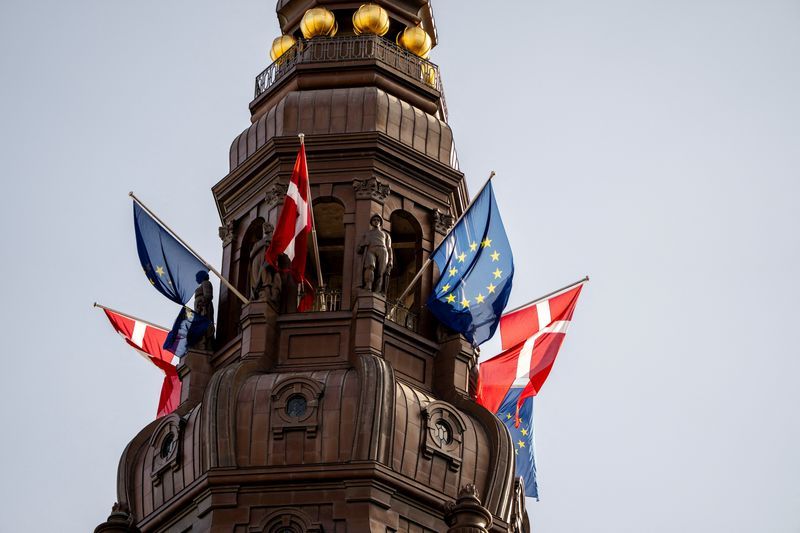
Denmark's government has stepped into a critical battle shaping the future of European media economics, filing formal legal arguments at the European Court of Justice in support of Belgium's position against major technology platforms. The intervention, announced by the country's Culture Ministry on Monday, underscores growing tensions between tech companies and publishers over who should bear the financial burden of distributing news and creative content online.
At the heart of the dispute lies a 2023 lawsuit filed by Streamz, Google, Meta, Spotify, and Sony against the Belgian government. These companies argue that Belgium's approach to implementing Article 15 of the European Union's Digital Single Market Directive conflicts with broader EU law. Article 15 establishes a fundamental principle: when news publishers' content appears on digital platforms, those platforms should compensate the publishers for using their material.
Denmark's decision to participate in the oral hearings on July 6 and 7 reveals why this case matters far beyond Belgium's borders. A ruling that favours the tech companies could fundamentally weaken protections for press publishers across the entire European Union, with cascading effects on how news organizations operate and sustain themselves financially. For smaller media markets like Denmark—and by extension, other Nordic and European countries—such an outcome would be economically devastating.
The Danish government's intervention strategy focuses on a specific objective: ensuring that Meta, Google, Spotify, and other technology platforms face genuine accountability when they profit from publishers' work. During the court proceedings, Denmark will push the European Court of Justice to provide clear, binding definitions of what publishers' rights actually entail under the Digital Single Market Directive, and to spell out exactly what financial obligations tech companies have when they display journalistic content.
Culture Minister Zenia Stampe framed the intervention in terms that resonate across democratic societies: allowing technology companies to use media content without compensation amounts to a threat to press independence and, by extension, to democracy itself. Her statement that such practices damage Danish media and undermine democratic institutions reflects a broader European concern that commercially profitable tech platforms should not be permitted to extract value from journalistic work without compensation.
The case reveals a fundamental economic imbalance in the digital media landscape. Tech platforms have built massive audiences and advertising revenue streams partly through aggregating and displaying content produced by news organizations that invest heavily in reporting, editorial judgment, and fact-checking. Publishers argue they deserve a share of the revenue generated when their content attracts users to these platforms. The tech companies counter that news organizations benefit from the traffic and visibility they receive, and that mandatory licensing payments would be inefficient and anticompetitive.
Denmark's involvement is not limited to this single case. The country has also participated in another landmark European copyright lawsuit examining whether Google's use of press content to train artificial intelligence systems complies with EU copyright law. These parallel legal efforts suggest that European governments are coordinating a broader strategy to establish firmer rules around how technology companies can exploit journalistic material.
The stakes for regional media ecosystems are particularly high. In Malaysia and Southeast Asia, where digital disruption of traditional media has been even more dramatic than in Europe, the European Court of Justice's ruling could establish important precedents. If the court sides with publishers and upholds robust compensation frameworks, it might embolden media organizations across Asia to demand similar arrangements. Conversely, a victory for tech companies would likely encourage platforms to resist compensation demands globally.
Belgium's implementation of Article 15 represents one of the stricter interpretations of the Digital Single Market Directive in Europe. The tech companies' challenge essentially tests whether such stringent national implementations can survive legal scrutiny or whether they should be softened to align with what platforms consider reasonable compliance. Denmark's intervention suggests that at least some EU member states believe Belgium's approach is appropriate and worth defending at the highest judicial level.
The broader context involves fundamental questions about power asymmetry in the digital economy. Technology platforms argue they are mere intermediaries providing distribution services, while publishers insist they are content curators and creators deserving compensation. The European Union has been attempting to rebalance this relationship through various directives, but implementation and interpretation remain contested.
For Danish media houses and those across Europe, the outcome will directly affect their financial sustainability. Advertising revenue continues to migrate to digital platforms, and if publishers cannot secure compensation for content used by these platforms, many newsrooms may face further downsizing. This economic pressure cascades into reduced reporting capacity, fewer investigative journalists, and ultimately weaker scrutiny of power.
The European Court of Justice's decision will likely establish principles that influence how the Digital Single Market Directive is understood and applied across all member states. Denmark's intervention ensures that the court will hear arguments emphasizing protection of press freedom and the economic viability of news media, not merely the commercial interests of either tech companies or individual publishers.

