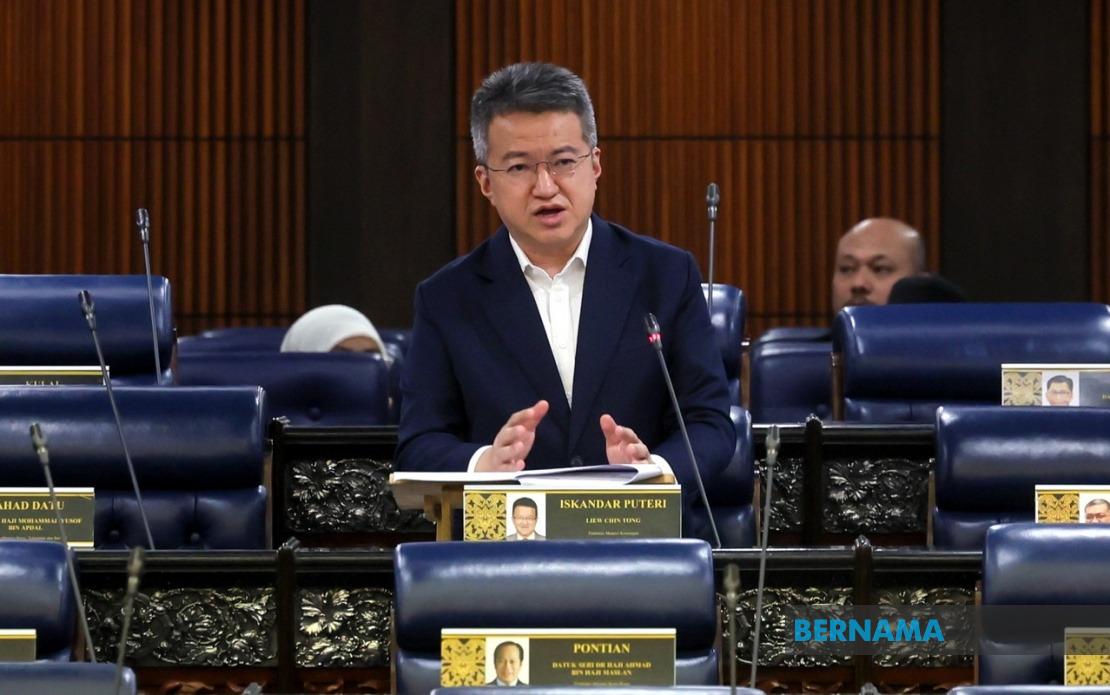
Deputy Finance Minister Liew Chin Tong has categorically denied reports that fugitive businessman Low Taek Jho—commonly known as Jho Low—slipped back into Malaysia last year alongside a Chinese delegation to conduct confidential negotiations surrounding the sprawling 1Malaysia Development Berhad (1MDB) scandal. The terse denial came during parliamentary Question Time in the Dewan Rakyat, where Liew was responding to a supplementary query from opposition lawmaker Syed Saddiq Syed Abdul Rahman representing MUDA-Muar, who had flagged media accounts of the alleged secret meeting.
The allegation, first circulated in press reports, suggested that Jho Low had attended clandestine talks late in the previous year ostensibly to hammer out terms for repaying funds related to the 1MDB affair involving Malaysia's Ministry of Finance. Syed Saddiq's question built on an earlier parliamentary enquiry from Chong Chieng Jen, the Stampin representative from Pakatan Harapan, who had sought government updates on 1MDB's outstanding liabilities and the status of efforts to retrieve embezzled assets. The questions reflect ongoing parliamentary scrutiny of one of the nation's most damaging financial scandals, which has reverberated through Malaysian politics and international relations for over a decade.
In his substantive response, Liew underscored the government's sustained commitment to pursuing asset recovery through multiple legal avenues, encompassing both criminal prosecutions and civil suits. The Deputy Finance Minister highlighted that the judiciary has delivered decisive outcomes in several high-profile cases connected to the scandal. Most significantly, the High Court sentenced former Prime Minister Datuk Seri Najib Tun Razak on December 26, 2025, to 15 years' imprisonment following his conviction on 25 charges encompassing money laundering and the abuse of governmental authority to solicit bribes connected to 1MDB. The court additionally imposed a financial penalty of RM11.38 billion against Najib, underscoring the magnitude of judicial reckoning in the case.
Parallel to the criminal proceedings against Najib, authorities have pursued recovery of assets allegedly siphoned through luxury acquisitions. The government has initiated civil litigation targeting Datin Seri Rosmah Mansor, the former Prime Minister's wife, seeking recompense of approximately US$380 million—equivalent to roughly RM1.56 billion—in damages related to 1MDB funds that were allegedly channelled toward purchasing high-end consumer goods including designer handbags and precious jewellery. This particular civil action represents a distinct legal strategy aimed at reclaiming state resources that were diverted for personal enrichment rather than public purposes.
Jho Low himself remains at the centre of the government's enforcement efforts, though his location and movements continue to be matters of speculation and diplomatic concern. Liew acknowledged that criminal and civil proceedings are actively underway against the businessman, whom authorities characterise as the orchestrator of the 1MDB misappropriation scheme. The government has lodged a civil claim against Jho Low valued at US$3.78 billion—approximately RM15.4 billion—representing one of the largest financial recovery actions pursued by Malaysia in recent years. Despite these efforts, Jho Low has evaded direct apprehension, having fled Malaysia prior to the full scope of investigations coming to light.
The broader ramifications of the 1MDB debacle have extended far beyond the immediate perpetrators and stolen funds. Liew characterised the scandal as having inflicted four distinct categories of harm to the Malaysian economy and state. Direct financial losses constitute the most tangible damage, encompassing the principal sums misappropriated from the sovereign wealth fund. Opportunity costs represent the second dimension, relating to economic growth and development that could have been generated had those capital resources been deployed productively within Malaysia's economy. Irrecoverable losses form a third category, acknowledging that certain misappropriated assets may never be fully returned regardless of legal outcomes. Perhaps most intangible yet deeply consequential, the scandal has inflicted lasting damage to Malaysia's international reputation, complicating diplomatic relations, undermining investor confidence, and requiring sustained government efforts to restore credibility on the global stage.
The Deputy Finance Minister's firm rejection of the allegation regarding Jho Low's supposed recent entry into Malaysia reflects the government's broader messaging strategy surrounding the 1MDB affair. Official statements consistently emphasise that authorities maintain vigilance regarding the fugitive's movements and activities, whilst simultaneously projecting confidence in ongoing legal mechanisms. The parliamentary denial also serves to preempt speculation that might suggest any backchannels or informal arrangements exist between Malaysian authorities and Jho Low or his associates. Such insinuations carry particular sensitivity given the past government's perceived leniency toward the businessman during his early years of prominence and accumulation of wealth.
The persistence of these allegations and parliamentary questions indicates that 1MDB remains a live political issue within Malaysia's legislative chambers, despite the passage of years since the scandal first erupted. Opposition lawmakers continue to press the government on recovery efforts and to scrutinise official narratives, reflecting broader public interest in accountability and restitution. The case has become embedded in Malaysian political discourse as a benchmark of governmental transparency and commitment to pursuing wrongdoing at the highest levels of the state apparatus. Each parliamentary session produces fresh inquiries and statements, suggesting that the wound inflicted by 1MDB upon public confidence has not fully healed.
For regional observers and Malaysia's international partners, the ongoing legal proceedings and government statements serve as indicators of institutional capacity and political will to address financial crime and governmental corruption. The scale of the 1MDB scandal—involving billions in stolen assets, international financial networks, and alleged involvement of global business elites—has meant that its resolution carries implications beyond Malaysia's borders. Neighbouring countries and major trading partners have monitored the case closely, with outcomes influencing perceptions of Malaysia's regulatory environment and commitment to financial integrity. The government's comprehensive approach to criminal prosecution, civil recovery, and public accounting of losses reflects an attempt to demonstrate that despite the severity of past failures, institutional mechanisms now function effectively to prevent recurrence and pursue accountability.

