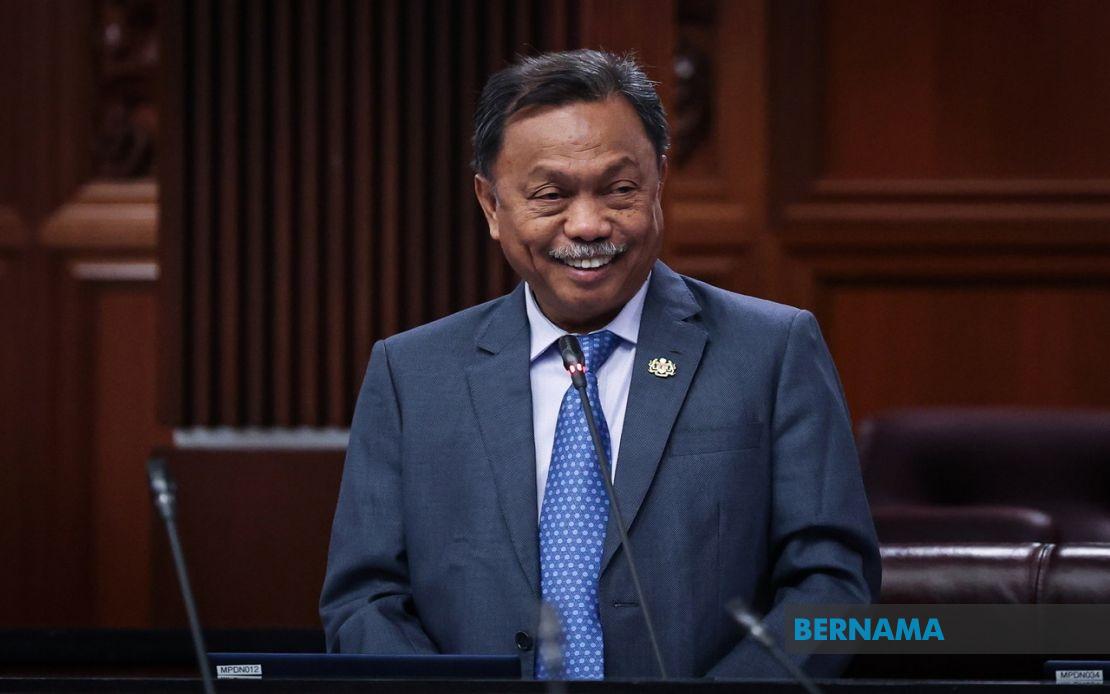
Datuk Dr Mohammad Yusof Apdal, the Deputy Minister for Science, Technology and Innovation, has firmly rejected swirling claims on social media that he has resigned from his position in the Unity Government. Speaking in Lahad Datu on August 13, the minister issued a direct statement denouncing the allegations as false and deliberately misleading, whilst reaffirming his commitment to his ministerial duties and the coalition administration.
Through an official statement to Bernama, Yusof Apdal emphasised that he continues to serve as an active member of the Unity Government. He underscored his intention to fulfil the responsibilities and trust placed upon him by the administration, signalling that reports of his departure are entirely baseless. The minister's swift and public denial reflects the seriousness with which such claims are treated at ministerial level, particularly given their rapid spread across social platforms.
The Lahad Datu Member of Parliament, who represents Parti Warisan in parliament, characterised the misinformation as damaging not only to public discourse but also to his personal standing. He voiced concern that the dissemination of unverified claims undermines confidence in official channels and creates unnecessary confusion regarding government operations. The deliberate nature of the false narrative—according to Yusof Apdal—suggests an attempt to destabilise political dynamics within the ruling coalition.
Social media platforms have become increasingly fertile ground for political rumours in Malaysia, particularly regarding ministerial reshuffles and internal coalition tensions. Such claims often circulate without substantiation, exploiting public interest in government affairs to generate engagement and spread quickly across networks. The speed at which unverified information propagates has become a persistent challenge for government officials, who must regularly debunk false reports to prevent public misconception and maintain institutional credibility.
Yusof Apdal's response highlights a broader issue affecting Malaysia's political landscape: the difficulty in distinguishing verified information from speculation during periods of coalition governance. The Unity Government, formed following the 2022 elections, has occasionally faced internal strains and ministerial changes, creating an environment where resignation rumours gain traction more readily. However, such claims require official confirmation before being accepted as fact.
The minister urged citizens to exercise greater caution regarding information sources and to prioritise official government announcements over unverified social media posts. This appeal reflects a growing recognition among policymakers that media literacy and reliance on credible sources are essential for maintaining informed public discourse. In an era where misinformation spreads instantaneously, the burden increasingly falls on both officials and citizens to ensure accuracy.
As Lahad Datu's representative, Yusof Apdal maintains a significant political presence in Sabah's political ecosystem. His role bridges the interests of Parti Warisan and the broader Unity Government coalition, making his position within the administration a matter of strategic importance to both entities. Any genuine departure would carry implications for coalition stability and Sabah's representation at federal level, lending additional weight to his emphatic denial.
The incident underscores the vulnerability of government officials to reputational attacks via social channels, where rapid dissemination and algorithmic amplification can reach millions before correction mechanisms take effect. For ministers navigating the public domain, swift and authoritative responses have become necessary tools for maintaining credibility and preventing the embedding of false narratives in public consciousness.
Government communications strategies in Malaysia have evolved in response to this environment, with ministries increasingly issuing immediate clarifications when false claims emerge. The approach recognises that delayed responses risk allowing misinformation to gain deeper traction and influence public and political opinion. Yusof Apdal's prompt rebuttal represents standard contemporary practice among senior officials seeking to protect both their positions and public trust.
Looking forward, the persistence of such rumours may prompt broader discussions about digital governance and the regulation of social media platforms in Malaysia. While freedom of expression remains paramount, the societal costs of unchecked misinformation—particularly regarding government stability—continue to mount. Balancing these competing concerns represents an ongoing challenge for policymakers and civil society alike.
For the Unity Government, maintaining ministerial stability and public confidence in coalition coherence remains essential to its political longevity. False resignation claims, whilst ultimately deniable, contribute to an atmosphere of uncertainty that can accumulate into genuine governance challenges if left unchecked. The coalition's ability to manage such crises through transparent communication will significantly influence its effectiveness and public standing in the years ahead.

