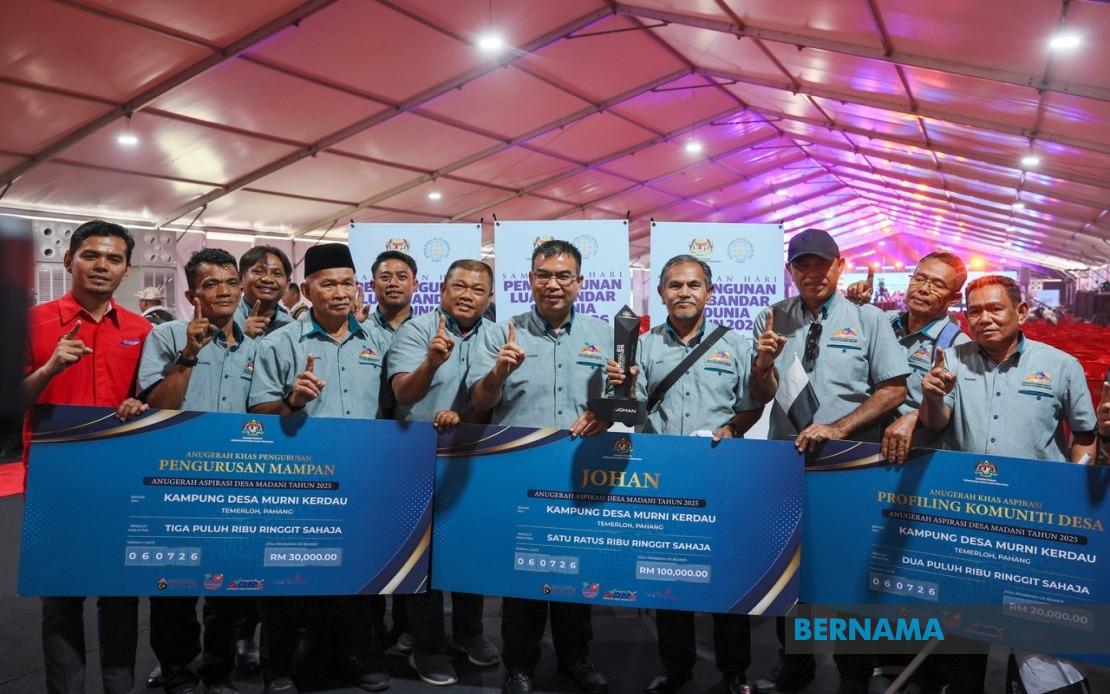
Desa Murni Kerdau, a traditional settlement located in Temerloh, Pahang, has achieved a significant milestone by capturing three major awards at the World Rural Development Day 2026 celebrations held at Tun Abdul Razak Stadium in Jengka Sentral. The recognition underscores the village's demonstrable commitment to sustainable development practices and effective community governance in an increasingly urbanised Malaysia where rural initiatives often struggle for visibility and resources.
The accolades bestowed upon the settlement include the prestigious 2025 MADANI Rural Aspiration Award Champion designation, alongside the Rural Community Profiling Aspiration Special Award and the Sustainable Management Special Award. The tiered nature of these honours reflects the comprehensive approach the village has adopted in addressing multiple dimensions of rural development, from institutional structures to environmental stewardship and community engagement.
Deputy Prime Minister Datuk Seri Dr Ahmad Zahid Hamidi personally presented the flagship MADANI award, underscoring the federal government's investment in validating grassroots development models that align with the MADANI framework. The two additional special awards were conferred by Deputy Minister of Rural and Regional Development Datuk Rubiah Wang, indicating multi-level institutional endorsement of the village's achievements.
According to Mohamad Fazrul Ahmad, Chairman of Desa Murni Kerdau's Village Development and Security Committee, the awards represent tangible validation of the settlement's track record in governance, institutional leadership, and comprehensive community advancement. The recognition carries symbolic weight beyond the ceremonial aspects, effectively positioning the village as a benchmark for rural administration across the nation and potentially throughout Southeast Asia where comparable development challenges persist.
Desa Murni Kerdau comprises approximately 200 residential properties accommodating over 600 inhabitants, making it a mid-sized rural settlement where coordinated development efforts can yield measurable outcomes. The village has successfully nurtured approximately 20 entrepreneurs operating across diverse economic sectors including small and medium industries, agricultural production, and the automotive trade, demonstrating effective economic diversification at the grassroots level.
The settlement has gained wider recognition through its "Kampung Stay" rural tourism initiative, which has positioned Desa Murni among Malaysia's prominent rural tourism destinations. This programme exemplifies how traditional village environments can generate sustainable income streams while preserving cultural authenticity—a model increasingly valued as domestic and regional tourism markets seek authentic cultural experiences beyond conventional urban attractions.
The financial winnings from these awards will be strategically allocated to benefit residents through direct distribution and reinvestment in village infrastructure and development projects. This commitment to community-wide benefit reflects a governance philosophy where institutional recognition translates into tangible improvements in residents' quality of life, rather than remaining symbolic achievements.
For Malaysian policymakers and development practitioners, Desa Murni Kerdau's trajectory offers instructive lessons about effective rural administration. The village demonstrates that traditional settlements need not remain economically stagnant or administratively fragmented; instead, coordinated leadership, entrepreneurial support, and tourism integration can create resilient, economically diverse communities that retain cultural character while improving living standards.
The MADANI framework emphasis on equitable development across all regions makes rural settlements like Desa Murni critical test cases for broader national development ambitions. As Malaysia continues navigating post-pandemic economic recovery and addressing urban-rural disparities, villages that successfully combine traditional governance structures with contemporary development practices provide viable blueprints for replication elsewhere.
The World Rural Development Day platform itself serves as an important venue for Malaysian rural communities to gain recognition beyond domestic circles. International exposure for successful local models strengthens Malaysia's credentials as a developing nation successfully implementing inclusive growth strategies, potentially attracting development funding, technical partnerships, and knowledge exchanges within the Southeast Asian region and beyond.
Looking forward, the challenge for Desa Murni Kerdau involves sustaining momentum and translating award recognition into long-term structural improvements. The village's success in nurturing entrepreneurs and developing tourism infrastructure suggests institutional capacity exists for managing expanded responsibilities. However, maintaining engagement across 600 residents while scaling development initiatives requires continuous investment in local leadership development and community participation mechanisms.

