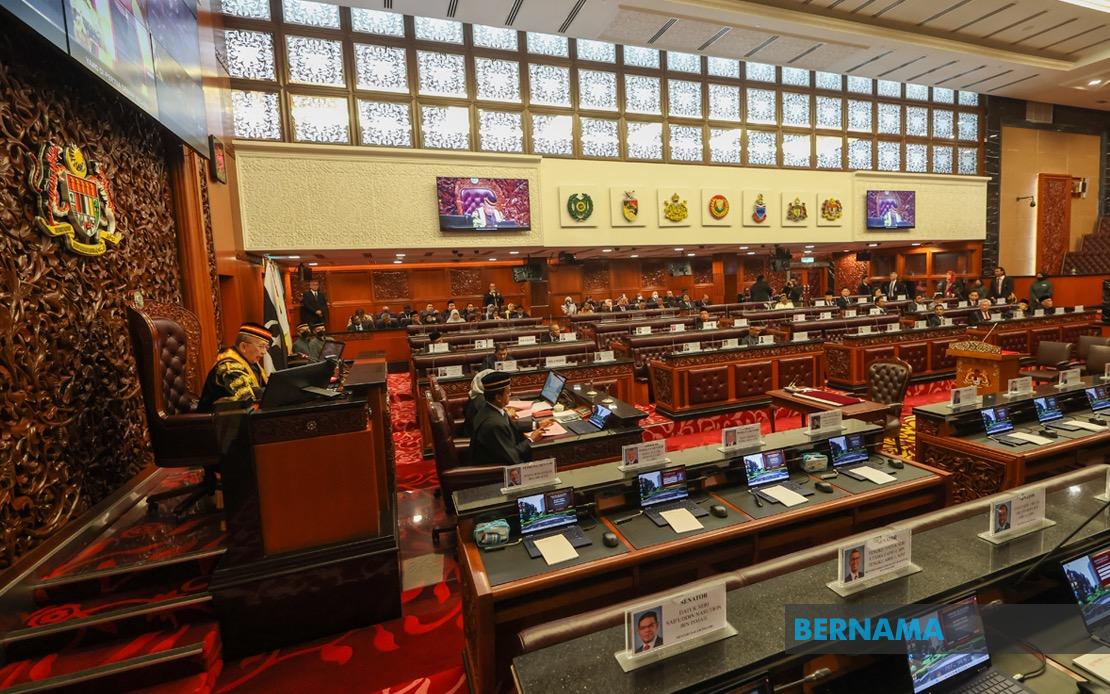
Malaysia's parliamentary upper house brought its 10-day second meeting to a close on August 4 with the successful passage of two significant pieces of legislation designed to modernise the country's governance and statistical frameworks. The National Trust Fund (KWAN) Bill 2026 and the Statistics Bill 2026 represent components of a broader government agenda focused on strengthening institutional discipline, attracting quality foreign investment, and ensuring long-term fiscal sustainability across the region's third-largest economy.
Deputy Finance Minister Liew Chin Tong steered the KWAN Bill through the legislative process, introducing measures intended to impose more rigorous oversight and clearer withdrawal protocols from Malaysia's National Trust Fund. The legislation addresses concerns about fund management discipline and is expected to enhance public confidence in how accumulated reserves are utilised for national priorities. Complementing this effort, Deputy Economy Minister Datuk Mohd Shahar Abdullah introduced the Statistics Bill 2026, which establishes a modernised and comprehensive legal framework governing the collection, analysis and dissemination of national statistical data. This overhaul of statistics legislation underscores growing recognition that accurate, timely economic data underpins sound policy decisions and business investment strategies.
The 10-day sitting, which commenced on July 20, consistently emphasised four interconnected policy priorities for the government. Lawmakers devoted considerable attention to measures protecting public welfare amid geopolitical instability in West Asia, particularly focusing on securing essential commodity supplies, moderating inflation pressures on households, sustaining industrial production and fortifying Malaysia's broader economic resilience. This reflects palpable anxieties across Southeast Asia regarding supply chain disruptions and energy price volatility stemming from international tensions that could ripple through the region's economies.
Prime Minister Datuk Seri Anwar Ibrahim used the forum to defend the investment track record of the Retirement Fund (Incorporated) (KWAP) following publication of its RM12.9 billion net profit. While defending the pension fund's overall performance, the Prime Minister acknowledged that KWAP's investment in eFishery had yielded instructive lessons informing future capital allocation decisions. The candid assessment reflects growing scrutiny of sovereign fund investments and the need for transparent accountability regarding deployment of public retirement assets.
State-owned postal operator Pos Malaysia also drew parliamentary attention, with government representatives outlining a multi-pronged transformation strategy aimed at arresting accumulated losses. The approach centres on rationalising the physical branch network, aggressively expanding digital service channels, and implementing disciplined financial management. Additionally, the government signalled it is examining the feasibility of establishing a dedicated Postal Service Fund to provide sustainable long-term financing for the struggling operator, suggesting recognition that traditional mail services require structural support mechanisms in an increasingly digital economy.
Energy security emerged as a paramount concern during the July 23 proceedings, when the Dewan Negara received a comprehensive briefing on strengthening Malaysia's energy independence. Officials outlined analysis regarding the potential establishment of a strategic petroleum reserve, weighing fiscal costs, operational logistics, governance arrangements and experiences from international peers. This deliberation reflects broader regional anxieties about energy supply resilience, particularly given Malaysia's position as both a hydrocarbon producer and consumer vulnerable to global market shocks.
The government simultaneously highlighted a recently concluded 20-year fuel supply agreement with Russia encompassing petrol, diesel, crude oil and gas, characterising this arrangement as complementary to Malaysia's National Energy Transition Roadmap (NETR). The agreement signals the government's strategy of diversifying energy sources and supply partnerships while maintaining progress toward cleaner energy objectives—a balancing act many Southeast Asian nations must perform as they navigate the transition away from fossil fuels whilst managing immediate energy security imperatives.
Investment inflows received sustained attention throughout the session, reflecting the government's determination to position Malaysia as a magnet for high-value manufacturing and technology ventures. Lawmakers heard that Japanese direct investment commitments in Malaysia's electrical and electronics (E&E) sector totalled RM10.5 billion across 46 projects between 2021 and 2025, anticipated to generate 9,009 employment positions. This clustering of Japanese investment in advanced manufacturing demonstrates Malaysia's continuing appeal for regional technology supply chains, though competition from other Southeast Asian jurisdictions remains intense.
Competitiveness metrics also featured prominently when Deputy Economy Minister Shahar reported on July 27 that Malaysia remains positioned to achieve its target of ranking among the world's 12 most competitive economies by the conclusion of the 13th Malaysia Plan (13MP). The government cited improving performance in the 2024 World Competitiveness Ranking (WCR) as evidence the country's structural reform agenda is delivering measurable results. Regional peers monitor such benchmarks closely, as Malaysia's competitive positioning influences broader Southeast Asian perceptions of economic dynamism.
Bank Negara Malaysia's planned implementation of a new Performance Measurement Framework (PMF) for Development Financial Institutions (DFIs) from July 1, 2027, signals institutional evolution in how public financial entities are assessed and held accountable. The framework promises more comprehensive evaluation of DFI performance encompassing development impact, governance quality and operational efficiency beyond purely financial metrics, reflecting international best practices in development finance.
The electric vehicle ecosystem received attention when the Ministry of Investment, Trade and Industry (MITI) confirmed Malaysia would continue leveraging private sector participation to expand EV charging infrastructure without government-mandated price controls on public charging services. The approach reflects a market-oriented philosophy, though it contrasts with price-controlled approaches in certain neighbouring jurisdictions. As of May 31, Malaysia had installed 6,416 public EV chargers nationwide, indicating steady progress toward supporting vehicle electrification.
Fiscal discipline formed an underlying thread throughout the session. The Finance Ministry reported the federal fiscal deficit had narrowed consecutively for the fifth year following implementation of economic and structural reforms, whilst federal debt remained within statutory parameters. Liew disclosed that expenditure controls during the first half of 2024 yielded nearly RM5 billion in spending restraint without compromising delivery of essential public services, demonstrating that fiscal consolidation and service maintenance need not be mutually exclusive objectives.
The Dewan Negara's President subsequently adjourned the second meeting of the fifth session of the 15th Parliament, with the next convocation date to be announced subsequently. The session's substantive agenda underscores Malaysia's multifaceted policy challenges: balancing fiscal rectitude with growth objectives, securing energy independence whilst transitioning toward sustainability, attracting foreign capital amid regional competition, and strengthening governance frameworks that instil public and investor confidence.

