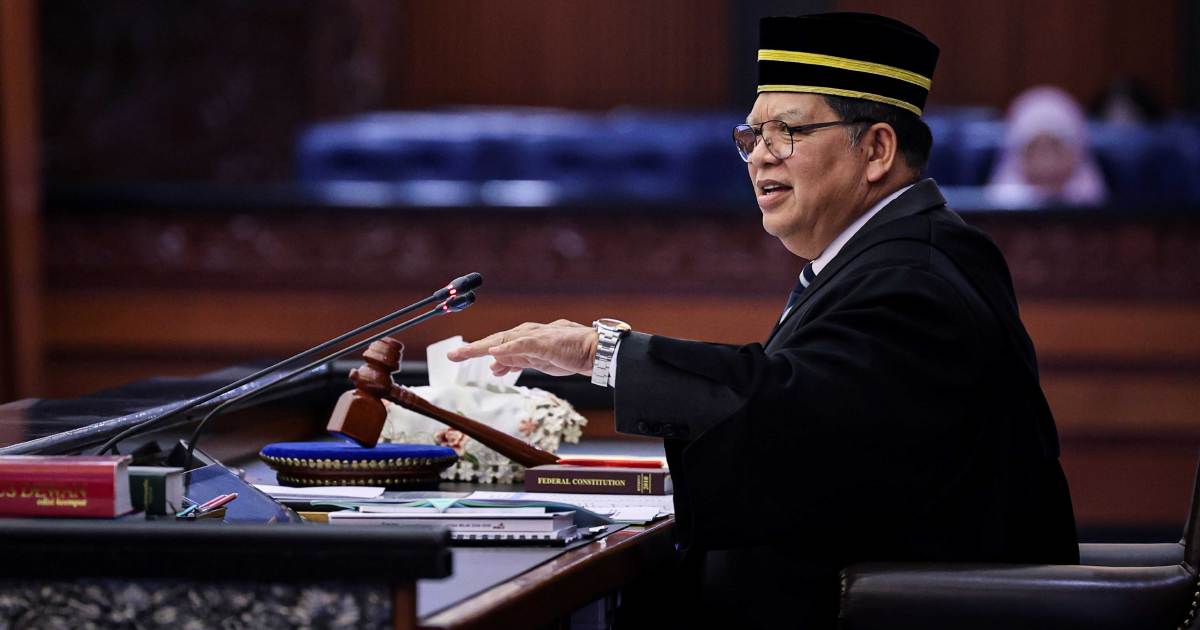
Dewan Rakyat Speaker Tan Sri Johari Abdul has issued a direct reminder to members of parliament regarding their obligation to attend legislative sessions, cautioning against unauthorised absences that undermine the functioning of the chamber. The warning reflects ongoing concerns within the legislative institution about attendance patterns and the need to maintain standards expected of elected representatives entrusted with lawmaking responsibilities.
Parliamentary attendance carries significance beyond mere protocol. When legislators fail to show up without legitimate reasons, the quorum requirements necessary for conducting official business become difficult to meet, potentially disrupting the legislative agenda and delaying important matters requiring parliamentary consideration. For Malaysia's bicameral system to function effectively, the Dewan Rakyat must maintain adequate representation from its 222 members during scheduled sittings.
The Speaker's directive comes as part of broader institutional efforts to reinforce parliamentary discipline. While members may have various commitments—including constituency work, committee assignments, and personal matters—the principle remains that legislators must prioritise their presence in the chamber during scheduled sessions unless facing genuine impediments. Acceptable reasons typically encompass health emergencies, official government duties on behalf of the nation, and similar unforeseen circumstances beyond a member's control.
Speaker Tan Sri Johari's emphasis on this matter reflects a pattern of concern that has periodically surfaced in legislative bodies across Commonwealth democracies. Voters elect representatives with expectations they will participate actively in parliamentary deliberations, contribute to policy discussions, and hold the government accountable. Consistent absenteeism, particularly among backbenchers, can diminish public confidence in legislative institutions and raise questions about whether elected officials are fulfilling their fundamental duties.
The attendance issue has taken on added relevance given Malaysia's complex political landscape, where coalition governments often depend on maintaining sufficient numbers to pass legislation and survive confidence votes. Deliberate or habitual absences by members from the ruling coalition could potentially jeopardise government stability, while opposition members missing sessions forfeit opportunities to participate in critical debates and amendments. This calculus makes the Speaker's reminder particularly timely.
Enforcement mechanisms exist within parliamentary rules to address chronic absenteeism. Members who accumulate excessive unexcused absences may face disciplinary action, suspension of certain privileges, or in extreme cases, potential legal consequences depending on the provisions governing parliamentary conduct. However, the expectation is that most legislators will respond to administrative guidance and peer accountability rather than requiring formal disciplinary procedures.
Beyond institutional concerns, persistent absences reflect poorly on representatives seeking public support during election cycles. Constituents increasingly scrutinise voting records and attendance data when deciding whether to return members to office. Strong attendance demonstrates commitment to legislative work and responsiveness to the democratic mandate. Opposition parties routinely track government member attendance to identify potential vulnerabilities during parliamentary debates or when campaigning in constituencies.
The Speaker's statement also carries implications for legislative productivity and public resource allocation. Parliament operates with significant budgetary allocations covering facilities, staff, administrative operations, and member facilities. When sittings proceed with thin attendance, these resources are underutilised while the institution's credibility suffers. Members missing sessions also forfeit opportunities to voice constituent concerns, propose amendments, or participate in scrutiny that represents their legislative role.
Forcing attendance through rigid rules would be counterproductive, however. Legitimate reasons for absence—including health crises, family emergencies, and critical government assignments—must be accommodated. The challenge lies in distinguishing genuine obstacles from casual absenteeism motivated by competing commercial interests, external employment commitments, or simple disengagement from parliamentary duties. Clear communication of expectations, as the Speaker has now provided, serves as a baseline reminder before more formal enforcement becomes necessary.
The directive reflects international best practices in parliamentary governance. Legislatures worldwide have struggled with member attendance, leading many to implement transparent tracking systems, publish regular attendance records, and establish clear protocols for legitimate absences. Some parliaments tie portion of member allowances to minimum attendance thresholds, creating financial incentives for participation. Malaysia's approach emphasises institutional responsibility and the honour code expected of elected representatives.
Looking forward, the Speaker's statement may prompt internal coalition or party-level discussions about ensuring adequate member representation during sittings. Whips and party leadership bear responsibility for coordinating member schedules to maintain presence during key votes and debates. Government programmes and opposition responses require sufficient numbers present to fulfil parliamentary functions effectively. Parties that consistently fail to field adequate representation during crucial sessions face reputational damage extending beyond the chamber itself.
Ultimately, the Speaker's reminder addresses a fundamental principle of representative democracy: those chosen by voters to serve must actually perform their legislative duties. While reasonable accommodations exist for unavoidable circumstances, the baseline expectation remains clear. For parliament to maintain public confidence and discharge its constitutional responsibilities effectively, members must treat their presence in the chamber as a primary obligation rather than an optional commitment.