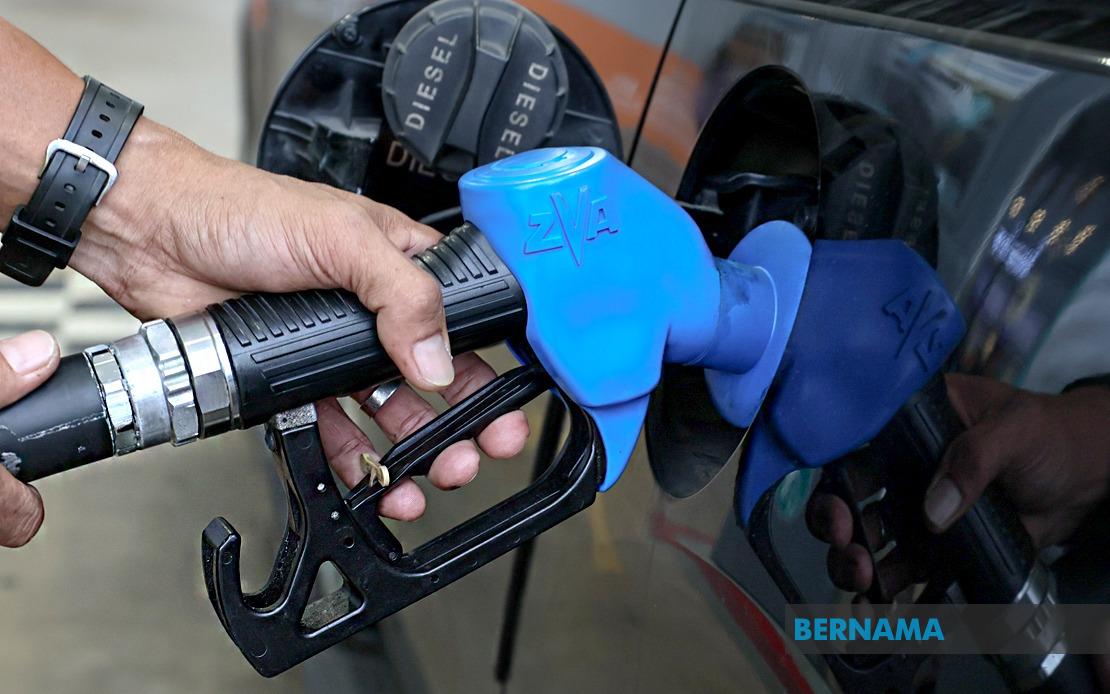
Prime Minister Datuk Seri Anwar Ibrahim's announcement to reduce subsidised diesel prices to RM2.10 per litre beginning July marks a significant shift in Malaysia's fuel subsidy architecture. The policy, rolled out through the BUDI95 programme with MyKad verification, aims to standardise pricing across Peninsular Malaysia while aligning Sabah and Sarawak with the national rate. Currently, the East Malaysian states enjoy diesel at the subsidised rate of RM2.15 per litre, compared to an unsubsidised RM4.37 per litre on the Peninsula—a disparity the government now seeks to address.
Economists see the price cut as a potential catalyst for easing pressures throughout Malaysia's supply and distribution networks. Dr Nanthakumar Loganathan from Universiti Teknologi Malaysia's Faculty of Management notes that fuel costs permeate the basic food supply chain, affecting everything from agricultural production to final-mile delivery. Businesses have repeatedly cited rising diesel expenses as a primary driver of price increases at the consumer level. The reduction should theoretically translate into tangible savings for companies operating across logistics, agriculture, and retail sectors, creating a downstream effect that reaches shoppers.
For perishable goods dependent on rapid transport—fresh vegetables carried by pickup trucks, seafood distributed daily, and other temperature-sensitive products—the impact could be particularly noticeable. Industry associations and traders' groups, according to Dr Loganathan, have signalled that lower fuel costs would allow them to moderate pricing pressures rather than pass additional costs to consumers. The economist emphasises that stakeholder buy-in from these organisations will be crucial to translating fuel savings into actual price relief on supermarket shelves and market stalls.
Yet sustainability remains a critical question. Global oil price volatility means the government cannot guarantee indefinitely maintaining the RM2.10 benchmark if international markets surge. Dr Loganathan suggests that securing fuel supply guarantees—whether through Russian sources, non-Arab suppliers, or alternative arrangements—may become necessary to defend the subsidy programme long-term. This reflects a broader strategic consideration: as a net petroleum importer despite its own oil production, Malaysia faces exposure to global commodity cycles that can strain fiscal budgets allocated for subsidies.
The nationwide coordination of diesel pricing represents more than a simple cost adjustment. Dr Novel Lyndon, a political sociology professor at Universiti Kebangsaan Malaysia's Centre for Development, Social and Environmental Studies, frames this as part of a deliberate effort to establish more uniform subsidy policy architecture. Previously, the price differential between East and West Malaysia created distortions: businesses in Sabah and Sarawak benefited from lower input costs, yet those savings did not consistently filter through to consumers, partly because logistics and geographical challenges absorbed the advantage. Standardising pricing signals the government's intent to move away from region-based subsidy approaches toward needs-based allocation.
However, the policy carries implementation risks that demand careful monitoring, particularly in Sabah and Sarawak. Rural economies in these states depend heavily on diesel-powered transport for agriculture, fisheries, inter-island commerce, and community mobility. Unlike Peninsular Malaysia's relatively developed road network and urban logistics infrastructure, East Malaysian regions often have limited alternatives to road and river transport. Without complementary targeted assistance mechanisms, rural small businesses and farming communities could face margin compression as their cost advantages narrow. Dr Lyndon warns that if implementation occurs without adequate safeguards, the policy risks elevating living costs precisely in areas where household incomes are often lower and economic opportunities more constrained.
Transparency and tangible benefits delivery emerge as crucial political economy dimensions. The public will not evaluate this policy solely through the lens of fuel prices but will assess whether savings from subsidy rationalisation translate into visible improvements in infrastructure, education, healthcare, and cost-of-living assistance. This connects to a deeper social contract expectation: citizens expect governments to reinvest efficiency gains in areas directly affecting quality of life. Dr Lyndon stresses that communicating clearly how the government will deploy fiscal space freed by better-targeted subsidies is essential for building public confidence and sustaining the reform's legitimacy.
The MyKad verification mechanism represents an operational innovation designed to sharpen subsidy targeting and reduce system leakages. Bank Muamalat Malaysia's chief economist Dr Mohd Afzanizam Abdul Rashid notes that prior experience with MyKad-based RON95 subsidies demonstrates the system's technical feasibility and effectiveness. By linking fuel purchases to authenticated citizen identity, the government can compile comprehensive usage data, prevent subsidy access by ineligible purchasers, and curtail smuggling activities that drain subsidy budgets. This data collection capacity also enables real-time policy monitoring and adjustment.
Beyond immediate cost considerations, the MyKad approach signals a shift toward digital governance infrastructure for social protection programmes. As Malaysia progressively implements identity-verification mechanisms across multiple subsidy schemes, interoperability and data security become paramount. Citizens must trust that personal consumption patterns tracked through fuel purchases remain confidential and are not weaponised for other purposes. The legitimacy of well-intentioned targeting depends critically on public confidence in data governance.
The diesel price reduction occurs within Malaysia's broader fiscal consolidation context. Government spending on subsidies represents a substantial budgetary commitment that competes with investment in productive sectors. By tightening subsidy leakages through verification systems and nationwide coordination, policymakers create fiscal space for other priorities—infrastructure upgrading, research and development, social services—that support long-term economic resilience. However, this reframing requires explaining to citizens why short-term sacrifice in subsidy generosity serves their long-term interests.
Regional implications extend beyond Malaysia's borders. Neighbouring countries including Indonesia, Thailand, and the Philippines grapple with similar subsidy pressures and targeting challenges. Malaysia's experience implementing MyKad-based fuel subsidy distribution could offer lessons for regional peers managing commodity price shocks and fiscal constraints. Southeast Asia's interconnected supply chains mean that changes in one nation's transport costs ripple across the region. Lower Malaysian logistics expenses could enhance the competitiveness of Malaysian-based manufacturing and distribution hubs, potentially drawing regional trade and investment activity.
Implementation success will depend on coordination among multiple stakeholders: petrol station operators ensuring system compliance, traders' associations managing member expectations, rural community leaders addressing concerns in less-developed areas, and government agencies executing verification procedures smoothly. Any bottlenecks in the MyKad authentication process at fuel pumps could undermine the policy's credibility and generate consumer frustration. Equally, if traders do not translate fuel savings into lower retail prices—instead widening profit margins—public support will erode, confirming scepticism about whether subsidy reform genuinely benefits ordinary Malaysians.
The diesel price announcement thus represents more than a technical adjustment to commodity support. It embodies choices about equity, governance modernisation, and the social contract between state and citizen. Whether the policy succeeds ultimately hinges not just on economic mechanics but on whether tangible benefits reach consumers, rural communities feel fairly treated, and the government demonstrates fiscal responsibility in deploying savings. The coming months will reveal whether standardised pricing and digital verification can reconcile the demands of budgetary sustainability with broad-based prosperity.

