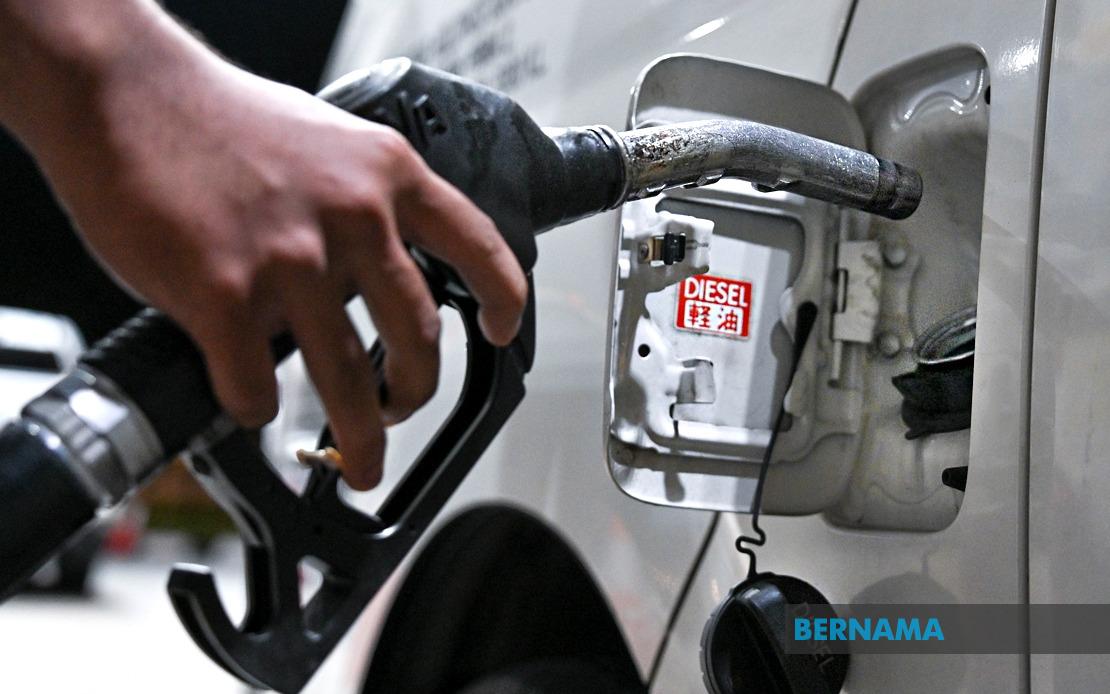
Malaysia is set to lower its subsidised diesel price to RM2.10 per litre beginning in July, marking a tangible economic relief measure that the government frames as evidence of its broader fiscal reforms taking hold. The announcement, made by Prime Minister Datuk Seri Anwar Ibrahim, arrives amid a complex global energy backdrop and signals the administration's intention to translate policy commitments into household savings, particularly for transporters, traders, and working Malaysians who depend heavily on fuel costs.
The reduction builds on the government's targeted subsidy framework, which employs MyKad identification verification to channel assistance directly to eligible citizens rather than applying blanket price caps. Datuk Mustapha Sakmud, Minister in the Prime Minister's Department (Sabah and Sarawak), characterised this approach as a watershed moment for the MADANI Government's economic architecture. By restricting subsidised fuel to verified Malaysian cardholders, the system aims to curtail long-standing inefficiencies—particularly the cross-border smuggling and leakage that have historically drained billions from the subsidy budget and distorted fuel markets across the region.
The pricing structure across Malaysia underscores the government's differentiated approach to energy support. Currently, diesel in Sabah and Sarawak sits at a subsidised RM2.15 per litre, while Peninsular Malaysia faces the unsubsidised retail price of RM4.37 per litre—a stark differential that reflects the historical arrangement granting the East Malaysian states preferential fuel pricing. The July adjustment will harmonise the subsidised rate across all regions using MyKad, establishing consistency while maintaining the subsidy mechanism exclusively for citizens.
Contextually, this move arrives as global energy markets navigate significant geopolitical turbulence. The ongoing conflict in West Asia has created pronounced uncertainties in international petroleum supplies and pricing, compelling energy-importing nations like Malaysia to adopt more sophisticated strategies around procurement and domestic distribution. The government's explicit acknowledgement of these regional tensions suggests a recognition that energy security cannot be treated as a purely domestic matter but requires careful calibration against international supply pressures and price volatility.
Malaysia's energy diplomacy has shifted noticeably toward diversification and strategic partnerships, particularly with major producers outside traditional markets. Mustapha highlighted cooperation initiatives with Russia and Turkmenistan, alongside assurances from established energy-supplying partners, as foundational to the nation's energy resilience framework. These relationships are designed to buffer Malaysia against supply shocks and provide negotiating leverage—an increasingly important consideration as global energy markets become more fragmented and politically fraught.
The subsidy reform itself represents a delicate balancing act within Malaysia's economic management. Blanket fuel subsidies have historically consumed enormous government resources, crowding out spending on healthcare, education, and infrastructure. Yet sudden or poorly targeted price increases risk triggering inflation, eroding consumer purchasing power, and destabilising transport-dependent sectors. By coupling the price reduction with means-testing through MyKad, the government positions itself as both fiscally prudent and socially protective—limiting subsidy outlays while ensuring that households and businesses genuinely dependent on low fuel costs receive support.
For Southeast Asian observers, Malaysia's approach offers an instructive case study in subsidy recalibration. The region's economies have grappled with similar tensions between energy affordability and fiscal sustainability, and the MyKad verification model presents a technologically feasible alternative to across-the-board pricing that other nations might examine. Indonesia, Thailand, and the Philippines have each wrestled with subsidy reform over the past decade, often encountering public resistance when price increases proceed without clear targeting mechanisms.
The diesel price adjustment will likely have differing ripple effects across economic sectors. Long-haul transporters, construction firms, and agricultural producers relying on diesel will experience reduced operating costs, potentially easing margins in competitive industries. Consumer goods prices dependent on transport costs may gradually moderate, though not uniformly—retailers will calibrate pass-through based on demand elasticity and competitive positioning. For households, the indirect benefit through lower transport fares and goods prices may be as consequential as any direct savings from subsidised fuel access.
Suspect that the sustainability of this approach hinges on several variables. Border smuggling has historically undercut fuel subsidy schemes, particularly in Sabah and Sarawak where maritime and land borders present enforcement challenges. The MyKad system improves monitoring at petrol stations but cannot entirely prevent black-market diversion. Additionally, global crude prices remain volatile; should international petroleum costs spike sharply, the government may face renewed pressure to either deepen subsidies or adjust prices upward, potentially triggering social pushback.
The timing also reflects broader economic messaging ahead of potential electoral cycles and amid persistent cost-of-living concerns. By visibly reducing one of the most psychologically significant commodity prices—fuel—the government reinforces its narrative that economic reforms are yielding tangible benefits beyond abstract growth metrics. However, the framing carries implicit acknowledgement that households continue to experience financial strain, and relief measures remain necessary interventions rather than luxuries.
Looking ahead, the success of this initiative will likely determine the credibility of future subsidy reforms. If the MyKad mechanism effectively prevents leakage while maintaining price stability, the government may confidently extend similar targeting to other subsidised items—cooking oil, rice, or electricity. Conversely, if smuggling persists or administrative challenges emerge, confidence in the model could erode, complicating subsequent policy implementation. For Malaysian consumers and regional observers alike, the July diesel adjustment warrants close monitoring as a test case for how modern governance tools can address the timeless challenge of balancing equity with fiscal discipline.