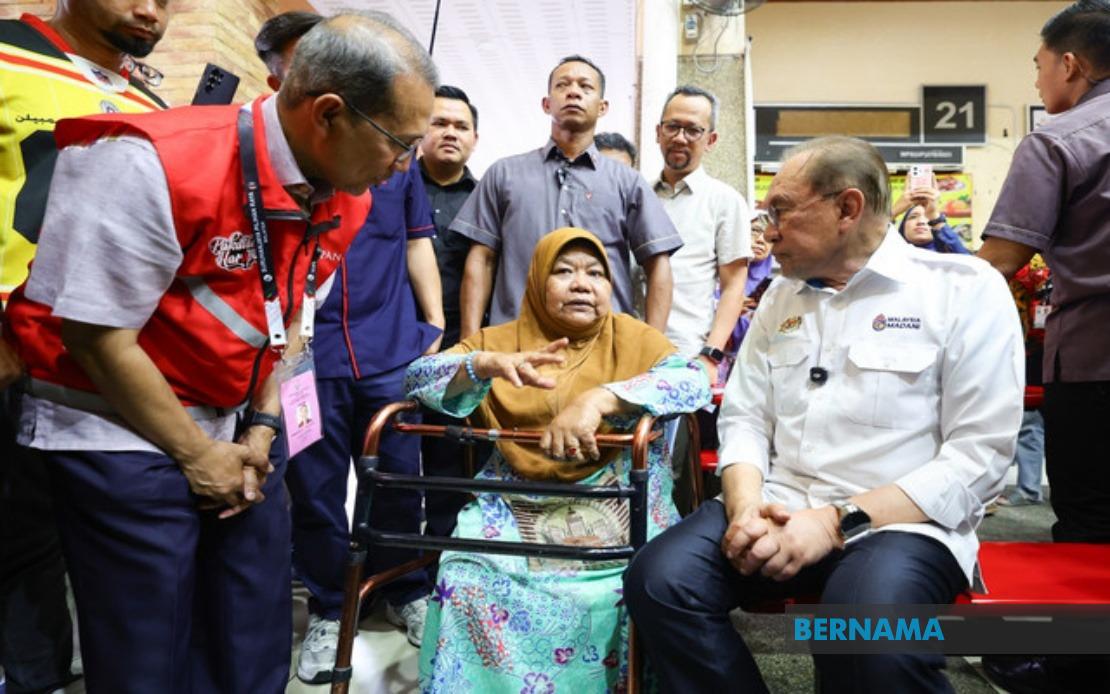
A determined 68-year-old resident of Kampung Gedung Lalang defied both adverse weather and physical limitations on July 22 to travel by three-wheeled motorcycle to Benteng Ampangan, where she realised a long-held ambition of meeting Prime Minister Datuk Seri Anwar Ibrahim. Despite drizzle dampening the landscape and her own mobility challenges from losing her left leg in an accident more than three decades ago, Jumaah Mohd Alif mounted her vehicle and navigated the route to catch a glimpse of the nation's leader.
Word had spread through her village only the previous day that the Prime Minister would be making a campaign stop in the Ampangan area as part of Pakatan Harapan's broader effort to consolidate support during the Negeri Sembilan state election cycle. For Jumaah, the spontaneous notification transformed into an irresistible opportunity. She acknowledged to reporters that learning of Anwar's imminent arrival in her district provided the spark she needed to undertake the journey, regardless of the unfavourable weather conditions that accompanied the event.
The significance of this encounter cannot be overstated for Jumaah personally. Throughout her life, her exposure to the Prime Minister had been limited to distant views at public gatherings or filtered through television broadcasts. The prospect of direct interaction, of standing face-to-face and exchanging words with Malaysia's highest elected official, represented something far more profound than a mere photo opportunity. She characterised the moment as deeply meaningful—a memory she expects to treasure throughout her remaining years.
Jumaah's case reflects broader questions about accessibility and representation in Malaysian politics. As a person with disabilities navigating both physical barriers and societal infrastructure not always designed with her needs in mind, her determination to participate in the democratic process speaks to the resilience of citizens who insist on being seen and heard by their leaders. Her willingness to brave uncomfortable conditions underscores the intensity of her desire for connection with national figures.
During their interaction, Jumaah took the occasion to articulate concerns extending beyond her personal circumstance. She voiced expectations that the government would maintain its commitment to supporting vulnerable population segments, particularly elderly citizens and individuals with disabilities. This appeal suggests that for many Malaysians in these categories, direct access to political leadership represents an opportunity to ensure their needs remain prioritised in policy discussions and budget allocations.
The Prime Minister's presence in Negeri Sembilan was part of systematic campaigning undertaken by the Pakatan Harapan coalition ahead of the state election scheduled for August 1. His visit to Ampangan and engagement with constituents like Jumaah served multiple purposes—building grassroots momentum, demonstrating responsiveness to local communities, and reinforcing the coalition's narrative about inclusive governance. For a leader running for continued electoral mandate, such encounters with ordinary citizens carry both symbolic and practical significance in legitimising claims about accessibility and people-centred administration.
The Election Commission had designated July 28 for early voting, allowing advance polling for eligible voters unable to cast ballots on the main election day. This logistical framework meant that the campaign period during which Anwar made his Negeri Sembilan rounds remained crucial for persuading undecided voters and energising party workers. The emotional resonance of moments like Jumaah's meeting with the Prime Minister—the image of perseverance overcoming obstacles—provides campaign narratives with authentic human dimensions that transcend conventional political messaging.
For persons with disabilities across Malaysia, Jumaah's journey carries resonance beyond the personal. It highlights both the determination required to participate fully in civic life and the ongoing gaps in infrastructure and accessibility that necessitate such extraordinary effort. Her three-wheeled motorcycle represents adaptive technology that enables mobility, yet the fact that encountering the Prime Minister requires such deliberate travel underscores how citizens with disabilities must often work harder to access opportunities routinely available to others.
The Negeri Sembilan state election itself takes on added importance within broader regional political dynamics. As one of Malaysia's constituent states holding elections, outcomes here contribute to the overall health of the Pakatan Harapan coalition and provide indicators of voter sentiment regarding the federal government's performance. Anwar's campaign stops throughout the state, including the encounter with Jumaah, represent efforts to translate national political standing into success at the state level, where local issues and personalities also significantly influence voting behaviour.
Jumaah's determination to meet the Prime Minister also underscores how political engagement among seniors remains vital and passionate. Rather than viewing elderly citizens as passive recipients of government services, her proactive approach—taking initiative to travel, to be present, to communicate directly—demonstrates that many older Malaysians maintain strong investment in political processes and desire meaningful connection with their elected representatives. This active citizenship, particularly among those facing mobility challenges, deserves recognition as a form of democratic participation.
The broader implications of this encounter extend to questions about how political leaders utilise their visibility and accessibility during election campaigns. Moments of genuine connection with constituents, especially those who face barriers to participation, can significantly influence public perception of a leader's commitment to inclusive governance. Whether such encounters translate into concrete policy improvements for persons with disabilities or enhanced social support for seniors remains an ongoing consideration for voters and advocacy groups monitoring government performance.

