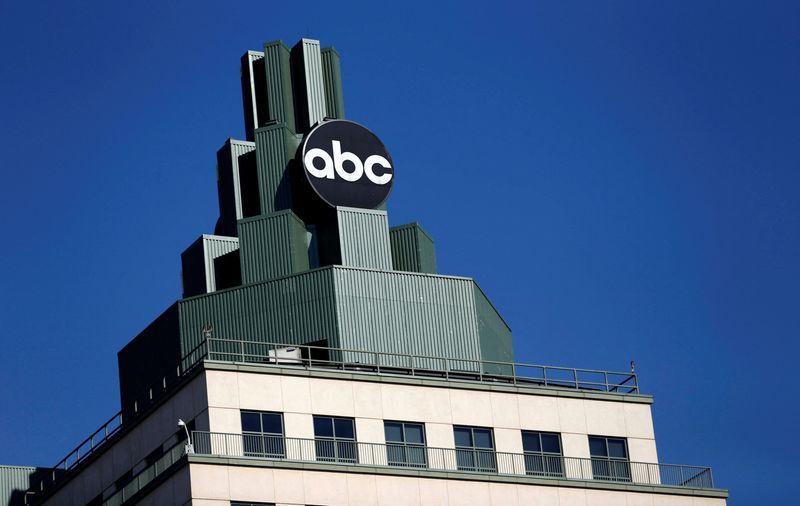
The Walt Disney Company and its ABC broadcasting subsidiary escalated their conflict with the Trump administration by filing a federal lawsuit on Tuesday to prevent the Federal Communications Commission from conducting early reviews of broadcast licenses for eight ABC stations. Disney contends that the FCC's decision to initiate these accelerated licence examinations represents a direct assault on First Amendment protections and amounts to government retaliation against a media organisation that has resisted administrative pressure regarding its editorial and programming decisions.
The lawsuit, filed in U.S. District Court in Washington, frames the FCC's actions as an attempt to coerce Disney into abandoning content the Trump administration finds objectionable. Disney's legal arguments centre on the proposition that the agency is abusing its regulatory authority as a tool for political punishment rather than exercising genuine oversight based on legitimate public interest concerns. The company argues that the timing and circumstances surrounding the licence reviews strongly suggest pretextual motives rather than substantive regulatory necessity.
President Donald Trump has maintained a prolonged adversarial relationship with ABC and has repeatedly demanded that the FCC revoke the network's broadcasting licenses. The president's public criticism has focused on specific programmes and editorial decisions he views as hostile to his administration, including instances where he called for ABC to drop particular on-air personalities. Most recently, Trump urged the FCC to act against ABC after the network declined to broadcast a prime-time speech about elections, and he pressed the agency following an incident involving a question posed by an ABC News correspondent to Saudi Arabia's crown prince regarding a sensitive geopolitical matter.
FCC Chair Brendan Carr ordered the licence reviews in April, despite the fact that the stations' regular renewal cycles were not scheduled for consideration until October 2028. The decision to conduct an early review is extraordinarily unusual in regulatory terms; the FCC had not ordered such an early examination in more than fifty years prior to this action. When questioned about the timing and rationale, Carr defended the move by emphasising the FCC's obligation to ensure that broadcasters serve the public interest, suggesting that the agency has historically failed to enforce this requirement with sufficient rigour. However, he stopped short of committing to any specific outcome regarding potential licence revocation.
The underlying investigation that prompted the licence reviews ostensibly concerns Disney's diversity policies, with the FCC claiming to be examining whether these policies constitute unlawful discrimination. Disney has categorically rejected this characterisation, arguing that its diversity initiatives comply fully with applicable law and serve legitimate business and social objectives. The company's legal response suggests that this diversity inquiry serves as a pretext for what amounts to viewpoint-based discrimination by a government agency, a particularly serious allegation in constitutional terms.
Disney and ABC have requested that the court issue a temporary restraining order to halt the licence renewal proceedings immediately and prevent the FCC from scheduling any hearing on the matter. The timing of this request carries urgency because the public comment period closed earlier in August, and the FCC could potentially move forward with formal procedures at any moment. U.S. District Judge Loren AliKhan responded by issuing an order directing both parties to propose a schedule for considering the restraining order request and instructing the FCC to notify the court should it attempt to initiate licence revocation proceedings.
The case raises fundamental questions about the boundaries between government regulatory authority and media freedom in a democratic society. Broadcast stations operating in the United States require FCC licenses to use public airwaves, a regulatory system that dates back to the early development of radio broadcasting. While actual licence revocations are exceptionally rare, critics argue that the mere threat of losing a licence can exert significant pressure on broadcasters and content creators, potentially chilling editorial decisions and creating opportunities for government interference in programming choices. Networks and broadcasting entities possess broad First Amendment protections over their programming selections, a principle that sits in potential tension with government authority to regulate broadcast spectrum.
Democratic FCC Commissioner Anna Gomez characterised the agency's actions as constituting a "campaign of censorship and control," arguing that the threat of licence revocation is being wielded as a punishment mechanism against speech the Trump administration dislikes. This framing reflects a broader concern among media policy advocates that regulatory agencies can be misused to suppress dissenting voices or force compliance with executive branch preferences regarding content. The controversy surrounding ABC's daytime talk programme "The View" further illustrates this dynamic; the FCC has suggested the show may violate rules requiring equal opportunities for political candidates, prompting the programme to cease inviting any political candidates to appear since February, citing what Disney characterises as the agency's "pressure campaign."
The dispute also reflects the extended tension between the Trump administration and Disney that has persisted over approximately two years. This relationship has encompassed multiple controversies involving specific broadcasting decisions, on-air talent, and editorial choices regarding coverage of the presidency and related political matters. The administration's willingness to pursue regulatory action against one of America's largest media companies signals a willingness to deploy government power against perceived media adversaries, a development that has attracted scrutiny from press freedom advocates and constitutional law experts.
For Malaysian and Southeast Asian observers, this case illuminates broader debates about the relationship between government authority and media independence in democracies. While regulatory frameworks governing broadcasting differ significantly across jurisdictions, the underlying tension between legitimate government oversight and the protection of editorial freedom resonates across different political systems. The case raises questions about how regulatory agencies charged with protecting the public interest can be distinguished from agencies being used to silence critical voices, a concern that extends beyond the United States to media ecosystems throughout the region. The outcome of this litigation may have implications for how other democracies understand the proper limits of government regulatory power over news and entertainment media, particularly in contexts where political tensions between governments and major media organisations have become pronounced.

