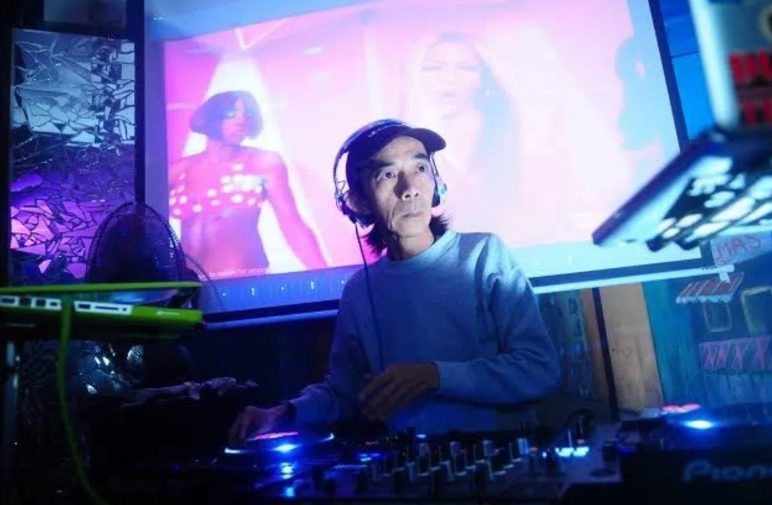
The Singapore nightlife landscape has lost one of its most influential architects with the death of Andrew Chow on August 3, a visionary DJ and turntablist who spent decades cultivating hip-hop culture across the island's most iconic venues. At 63, Chow succumbed to stomach cancer, leaving behind a legacy that shaped not only Singapore's electronic music scene but also inspired generations of musicians and nightlife enthusiasts across Southeast Asia. Known professionally as DJ Wiz, his contribution to homegrown hip-hop and turntablism fundamentally transformed how the region engaged with these art forms during a critical period of cultural development.
Chow's defining association came through his residency at the legendary Zouk nightclub on Jiak Kim Street, where he held court from the mid-1990s through the early 2010s. During this era, Zouk stood as Southeast Asia's premier destination for electronic music and hip-hop, and Chow's presence at the decks became synonymous with the venue's golden age. His tenure there spanned one of the most dynamic periods in Singapore's nightlife history, when the city was establishing itself as a regional hub for cutting-edge music culture. The club's various themed spaces, including Phuture where Chow frequently performed, became pilgrimage sites for music devotees seeking authentic hip-hop and turntablism experiences.
Throughout the 1990s and early 2000s, Chow accumulated competitive honours that cemented his technical mastery and artistic vision. He captured the DMC Singapore turntablism championship three times, victories that reflected not merely technical proficiency but an innovative approach to scratching and mixing that elevated Singapore's standing in the global DJ community. His crowning achievement came in 1998 when he won the Singapore leg of the Technics World DJ Championships, one of the most prestigious international competitions in the turntablism world. These accolades placed him among the elite practitioners of his craft during an era when such recognition carried tremendous weight within underground music circles.
Chow's influence extended beyond competition victories or venue residencies. He functioned as a cultural custodian, actively nurturing the hip-hop and turntablism ecosystem at a formative moment when these genres were still establishing footholds in Southeast Asia. His commitment to mentorship and community building created pathways for subsequent generations of DJs and musicians who might otherwise have lacked access to knowledge and opportunity. Fellow turntablist Wayne Liu, professionally known as DJ KoFlow, articulated this enduring influence with particular clarity, describing Chow as someone who had fundamentally shaped the region's artistic landscape through unwavering dedication to his craft and genuine passion for elevating those around him.
The timing of Chow's passing proved particularly poignant given that he was scheduled to receive the DMC Legacy Award at the DMC Singapore event taking place at Rasa on September 6. This honour, recognising lifetime contributions to the art form, represented official acknowledgment of what many in the community had long understood—that Chow's fingerprints were indelibly impressed upon the very foundation of Singapore's electronic music culture. The award ceremony would have offered a ceremonial moment to celebrate contributions that had accumulated across three decades, though his death ensures that recognition now carries bittersweet historical weight.
Testimonies from contemporaries reveal the profound respect Chow commanded among fellow musicians and nightlife professionals. Kavan Spruyt, founder of the Rasa venue and himself a prominent figure in Singapore's entertainment landscape, described Chow as a "hero to many," recalling formative experiences watching him perform during the Friday big-beat era at Phuture. For Spruyt and countless others, Chow represented not merely technical excellence but an aspirational figure embodying artistry, charisma, and uncompromising commitment to his musical vision. Eddie Chan, a fellow veteran DJ who performed as DJ Small and maintained a four-decade friendship with Chow, characterised him as both teacher and brother, emphasising his profound knowledge and flawless execution across multiple musical genres.
Chow's final public appearance occurred on May 24 at a DMC Warm-Up Battle event held at the club Kossa, where he participated as both judge and performer, demonstrating his continued engagement with the competitive turntablism community even as his health declined. This participation underscored a lifelong commitment to the scene that remained undiminished by age or circumstance. His willingness to contribute expertise to emerging competitions suggested a musician who understood his responsibility to the art form's continuation and evolution.
The arrangements for his departure reflected the personality and values that had defined his life. His daughter Abby Chow, 27, invited mourners to attend services in "colourful and stylish" attire rather than traditional funeral dress, a directive that captured her father's fundamental orientation toward joy, style, and celebration. The wake proceeded at Block 406 Ang Mo Kio Avenue 10, with cremation scheduled at Mandai Crematorium Hall 4 on August 8, beginning at 5 p.m. following a 4.15 p.m. cortege departure. Abby's social media announcements emphasised her father's peaceful passing and expressed gratitude for the community's profound appreciation, observations that highlighted how thoroughly Chow had woven himself into the affections of Singapore's music ecosystem.
For Malaysian audiences and the broader Southeast Asian region, Chow's passing marks the departure of a figure whose influence transcended national boundaries. During the 1990s and 2000s when electronic music culture was establishing itself across the region, Chow's work at Zouk and within Singapore's competitive DJ circuits helped establish benchmarks of excellence that influenced musicians, promoters, and enthusiasts throughout Malaysia, Thailand, and beyond. His approach to turntablism and hip-hop demonstrated that Southeast Asian artists could compete and innovate at the highest international levels, a lesson that inspired regional practitioners to pursue their own artistic ambitions with greater confidence and sophistication.
The loss of Chow also underscores the precarious position occupied by pioneering artists in electronic music scenes, whose contributions often receive formal recognition only after their deaths. His scheduled Legacy Award, though now a memorial honour, represents an overdue acknowledgment that community builders and artistic innovators merit celebration and preservation within collective memory. As Singapore's nightlife landscape continues evolving, and as Zouk itself exists now only in memory, Chow's legacy persists through the musicians he influenced, the standards he established, and the template he provided for how artistic excellence, community engagement, and cultural custodianship could intersect meaningfully within regional music culture.

