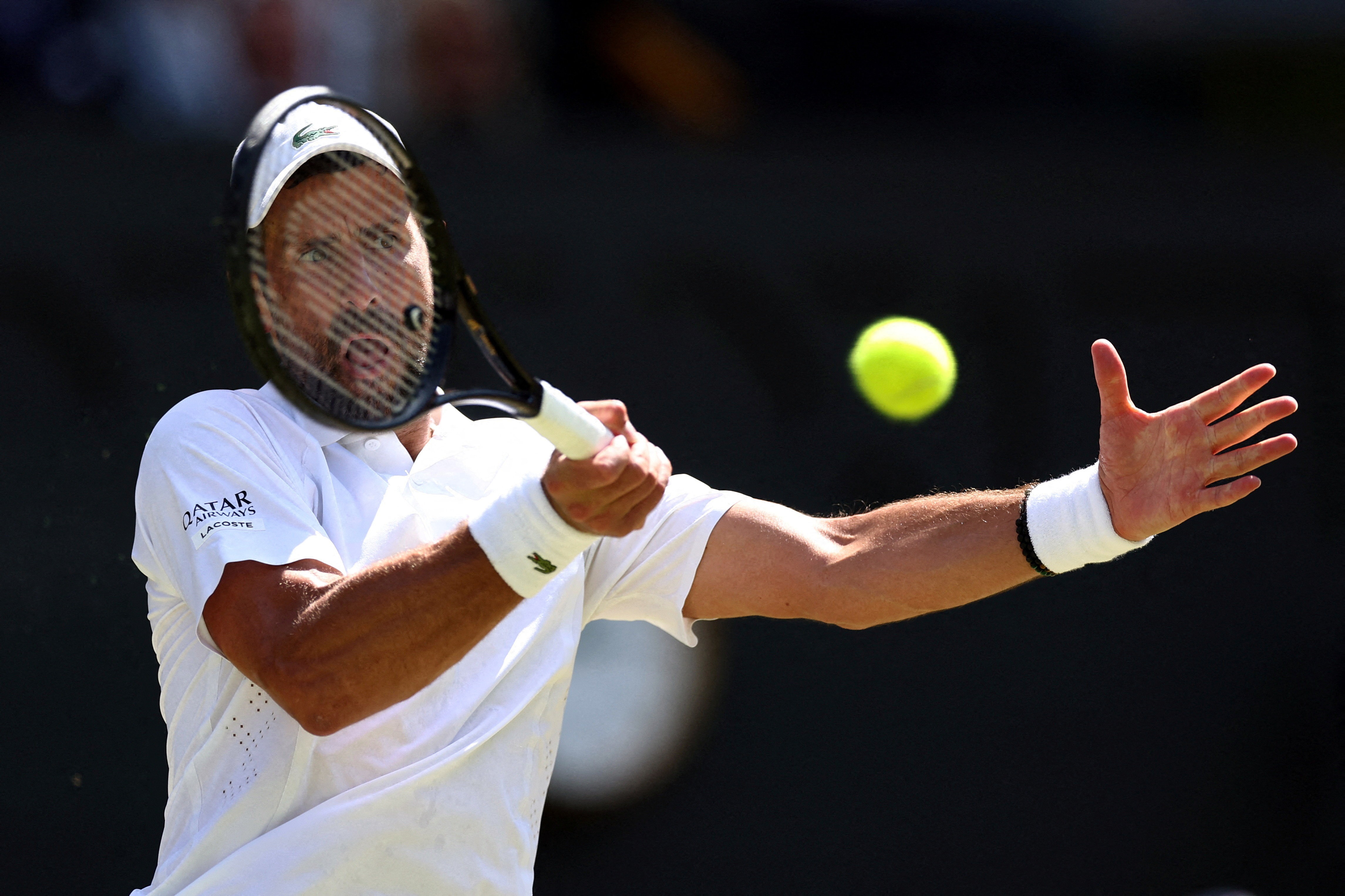
Novak Djokovic's path to the Wimbledon semifinals came at an extraordinary cost, the 39-year-old Serbian navigating a quarterfinal contest that will now be etched into the tournament's record books as its lengthiest. His victory over Felix Auger-Aliassime of Canada, sealed 7-6 (12-10), 3-6, 6-3, 6-7 (4-7), 7-6 (10-4) in just over five hours, propels him toward a semifinal meeting with defending champion Jannik Sinner and keeps alive his pursuit of an eighth Wimbledon title.
The match's final moments unfolded with dramatic urgency, as Djokovic clinched victory merely six minutes before Wimbledon's 11 pm curfew, underlining the physical and temporal intensity of the encounter. The opening set exemplified the gruelling nature of proceedings, with Djokovic prevailing in a tiebreaker at 12-10 after initially sustaining what appeared to be a left calf injury. He required medical attention late in that set, visibly grimacing during serve deliveries, yet persevered through a marathon opening frame that set the tone for the extended battle ahead.
The most combustible moment arrived when tournament referee Denise Parnell descended to Centre Court to inform both players that the roof would be lowered, a decision that triggered an animated protest from Djokovic. At 7:40 pm with the match standing at one set apiece, the Serbian star believed sufficient daylight remained for another complete set under open-air conditions, challenging Parnell's interpretation of tournament protocols. His objections grew increasingly pointed as he referenced his opening-round encounter with Wu Yibing, when the roof remained open until approximately 8:20 or 8:30 pm, suggesting inconsistent application of the closure guidelines.
Djokovic's frustration appeared rooted not merely in procedural objection but in strategic calculation. The 14-year age gap between himself and Auger-Aliassime, combined with the Canadian's reputation as a formidable indoor performer, likely motivated his insistence on maintaining outdoor conditions. His complaint that Wimbledon should remain fundamentally an outdoor tournament reflected both philosophical position and pragmatic concern about how the transition to artificial indoor conditions might shift competitive balance against his favour.
Parnell explained her reasoning by citing the problematic precedent set during Jannik Sinner's fourth-round match against Shintaro Mochizuki, when darkness forced an unscheduled mid-set roof closure that disrupted play. Her caution proved vindicated almost immediately when Auger-Aliassime held serve in the second game of the third set, requiring a 14-minute service game that demonstrated precisely the visibility challenges Parnell had anticipated. The incident validated the referee's judgement while simultaneously vindicating the dramatic tension of the broader contest.
Auger-Aliassime, seeded third in the tournament, mounted a spirited challenge throughout the evening, particularly evidenced by his reclamation of the second set and his domination of the fourth-set tiebreaker. The Canadian's pedigree had been established through an almost impeccable service record across the fortnight, having surrendered his serve only once prior to this quarterfinal encounter. Yet Djokovic's breakthrough finally materialised when he achieved a break to love as the third set progressed, demonstrating the wear accumulating upon his opponent despite Auger-Aliassime's technical proficiency.
The deciding set crystallised into an unprecedented decider-set tiebreaker at 10 points, a relatively recent format innovation designed to prevent matches from extending indefinitely. Djokovic seized the initiative decisively, prevailing 10-4 in that final shootout to complete his improbable escape. His post-match commentary acknowledged the psychological and emotional toll of such contests, emphasising his reliance upon cardiovascular resilience, technical execution with his racket, and perhaps most significantly, the psychological fortitude required to navigate extreme tension in high-stakes moments.
The victory carries particular significance for Malaysian and Southeast Asian tennis audiences, as Djokovic's continued progress maintains the prospect of compelling finals matchups between the sport's established titans and emerging challengers. His path toward contending for an eighth Wimbledon title against Sinner, the current defending champion who represents a new generation of excellence, encapsulates the evolving competitive landscape within men's professional tennis. The generational dimension matters considerably across the region, where younger athletes increasingly challenge veterans for supremacy.
Djokovic's injury management during the match provides relevant context for observers concerned with player durability and longevity. His willingness to continue competing despite apparent muscular discomfort, combined with his successful navigation of the physical demands of five-plus hours of continuous play, demonstrates both the reserves available to elite performers and the risks inherent in pushing aged bodies through extreme exertion. Whether the accumulated fatigue from this quarterfinal will impact his semifinal preparation and execution remains an open question that could prove decisive.
The match's duration and intensity reflect broader evolution within professional tennis toward extended rallies, enhanced physical conditioning, and refined tactical sophistication. Modern tennis at elite levels increasingly produces matches transcending five hours, a phenomenon driven partly by improved equipment and court surfaces that extend play length. For Malaysian viewers accustomed to tennis traditions emphasising attacking tennis and swift point resolution, the grinding nature of such contests illustrates how contemporary competition has transformed into endurance-based spectacles.
Djokovic himself, reflecting upon the demanding victory, expressed both satisfaction and concern regarding the toll upon his body for subsequent rounds. His wish that the match constituted the final rather than a quarterfinal underscores the physical investment required and his natural apprehension about recovering adequately for the semifinal confrontation. This sentiment resonates particularly with regional audiences who understand that longevity in professional sport demands careful management of resources, especially for athletes beyond their physical prime.

