Novak Djokovic enters the U.S. Open with perhaps his most realistic opportunity in recent years to capture a record 25th Grand Slam title, as the injury troubles and layoffs afflicting his main rivals have shifted the competitive landscape in his favour. The 37-year-old Serb, who last claimed a major at Flushing Meadows in 2023, must navigate a draw considerably altered by circumstance, where Jannik Sinner sits sidelined with a knee injury and Carlos Alcaraz returns from an extended absence spanning more than four months due to a wrist problem that may have compromised his competitive sharpness.
Djokovic's pursuit of sole possession of the all-time Grand Slam record—currently held by Margaret Court with 24 titles—has been persistently thwarted over the past eighteen months. The Italian and Spanish sensations have combined to claim ten of the last eleven major championships, defeating Djokovic five times across six consecutive Grand Slams. Most painfully, the Serbian fell to Alcaraz in this year's Australian Open final despite glimpses of his enduring quality, a loss that underscored both the depth of contemporary competition and the formidable obstacle these younger rivals represent.
Yet the 37-year-old arrives in New York unburdened by defeatism. In a documentary released ahead of the tournament's commencement, Djokovic articulated the concept of "inat," a Serbian cultural touchstone describing an obstinate refusal to yield when surrounded by doubt and opposition. This mindset, he suggested, forms the psychological bedrock enabling him to continue competing against athletes a decade his junior, each victory fuelled by the determination to vindicate his belief when sceptics proclaim his window has closed. Such resolve has sustained him throughout a career that redefined longevity in professional tennis.
The circumstances surrounding Djokovic's preparation have been far from ideal. Limited training time and persistent physical concerns have accompanied his run-up to the tournament, raising legitimate questions about whether he can sustain the intensity required across seven consecutive matches. Yet these very constraints may paradoxically strengthen his resolve, transforming perceived disadvantage into the adversity against which he has historically performed with greatest conviction.
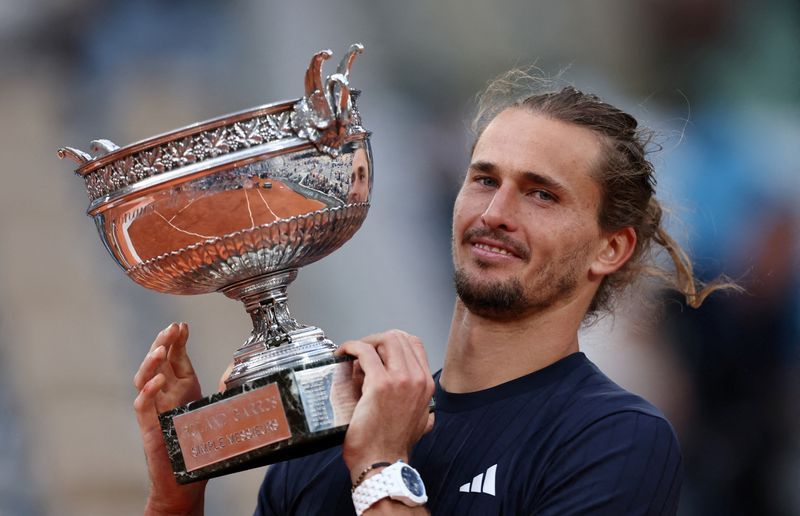
Alexander Zverev, however, now represents perhaps Djokovic's most credible obstacle in pursuit of the crown. The German's maiden Grand Slam triumph at Roland Garros, immediately followed by reaching the Wimbledon final, has catapulted him into the conversation as a genuine major championship contender rather than a perpetual might-have-been. Zverev's combination of power, athleticism, and increasingly refined tactical acumen creates a matchup deeply uncomfortable for Djokovic, whose traditional defensive strengths face mounting pressure when opponents generate pace and aggression from the baseline.
Alcaraz presents a more complicated variable despite his defending champion status. His four-month absence creates genuine uncertainty regarding his physical readiness and competitive rhythm, yet the Spaniard has repeatedly demonstrated an almost supernatural capacity to elevate his performance when the stakes prove highest. His youth, movement, and shot-making brilliance mean he cannot be discounted as a genuine threat, notwithstanding the legitimate concerns surrounding his rustiness after such an extended layoff.
Roger Federer, reflecting from courtside in New York, articulated the reality that remains unchanged: whenever Djokovic enters a tournament draw, a pathway to victory exists. Federer's assessment carried particular weight given his intimate familiarity with Djokovic's capacity to achieve seemingly impossible feats at sport's grandest stages. The six-time U.S. Open champion's endorsement serves as a reminder that age, injury, and statistical disadvantage have repeatedly proven insufficient to eliminate Djokovic from serious contention at major tournaments.
The American contingent arrives with genuine momentum, particularly Ben Shelton, who captured the Canadian Open championship following an underwhelming Wimbledon exit. The Montreal victory suggests renewed consistency, though Shelton's struggle to build momentum through the opening week of major tournaments remains a persistent concern, as noted by fellow American Andy Roddick on his podcast. The 2003 U.S. Open champion cautioned that Shelton's four titles across different surfaces, while impressive, cannot guarantee sustained excellence across the fortnight required to capture a Grand Slam. Taylor Fritz, reaching last year's final, and Cincinnati runner-up Frances Tiafoe both harbour genuine aspirations of ending America's 23-year wait for a homegrown men's champion.
Felix Auger-Aliassime, having reached the semi-finals last year, seeks to build upon his career-best major performance, while emerging talents including Arthur Fils and Rafael Jodar will attempt to announce themselves among tennis's elite. Yet the narrative framework remains fixed upon Djokovic's relentless pursuit of an eighteenth major title that would definitively separate him from Federer and place him four ahead of the previous record holder.
The convergence of circumstances—Sinner's absence, Alcaraz's uncertainty, Zverev's recent breakthrough, and Djokovic's undiminished competitive hunger—creates a rare alignment suggesting the Serbian's window remains partially open. Whether he can transform this opportunity into a record-setting triumph depends upon the very qualities that have sustained him throughout a career that has transcended normal expectations regarding athletic longevity and excellence.

