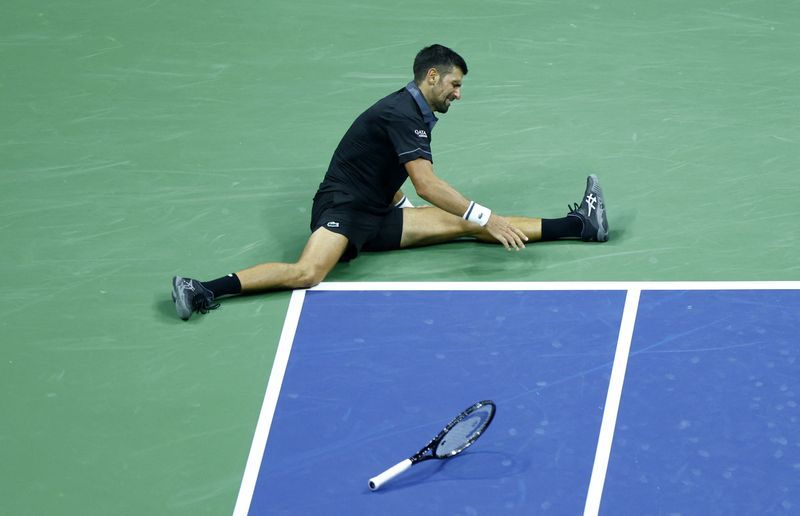
Novak Djokovic's campaign to claim a record 25th Grand Slam crown ended in dramatic fashion on Sunday when the 39-year-old Serbian champion fell to unseeded Argentine Mariano Navone 7-6(5) 5-7 4-6 6-2 6-1 in a punishing first-round encounter at the US Open. The result marked Djokovic's earliest departure from any Grand Slam tournament since the Australian Open in 2006, a striking reversal for a player who has dominated professional tennis for nearly two decades and reshaped expectations around longevity at the sport's highest level.
The match unfolded as a physical and psychological battle that ultimately overwhelmed the fourth seed. Djokovic arrived in New York already carrying questions about his form and condition following a second-round loss to Thiago Agustin Tirante at Cincinnati just two weeks earlier, but few anticipated such a comprehensive collapse. The Serb began promisingly in the opening set, racing to a 3-0 lead in conditions made more challenging by humidity and intermittent rain that eventually forced the closure of the Arthur Ashe Stadium roof. That early advantage proved fleeting. Navone, ranked 49th in the world, methodically clawed back into the set at 4-4, ultimately forcing a tiebreak and seizing the opening frame to the astonishment of the crowd at Flushing Meadows.
Despite appearing visibly uncomfortable throughout the early stages, Djokovic reclaimed control temporarily by taking the second set, suggesting that the initial upset might be averted. However, the third set proved to be a turning point. Midway through, the four-time US Open champion vomited courtside into a bin, an incident that spoke volumes about his deteriorating physical state. Though he managed to recover sufficiently to break Navone at 5-4 and secure the set despite a fraught service game, the damage to his confidence and body had been substantial.
Navone's response in the fourth set was clinical and composed. As Djokovic's serve became increasingly unreliable due to mounting back problems, the Argentine broke through decisively and claimed the set to level the match. The deciding fifth set witnessed Navone maintaining his nerve while Djokovic's physical reserves appeared exhausted. The match concluded after four hours and 36 minutes with Navone's 6-1 victory in the final set, delivering one of the most stunning upsets of the tournament.
In the post-match interview, an emotional Djokovic acknowledged the severity of his physical struggles, revealing a pattern that has haunted him throughout 2024. "It's something that I've been carrying, unfortunately, pretty much every match this year. Vomiting, throwing up, a serious issue there," he explained, his voice strained. "Then my whole body starts to collapse, basically cramping and pain." He described how his back and shoulder gave way in the crucial moments when the match remained in contest, preventing him from closing out opportunities that might have shifted momentum in his favour. The veteran competitor insisted that he had contemplated but ultimately resisted the temptation to retire mid-match, preferring to complete the contest despite knowing victory was slipping away.
Navone's triumph represented the defining moment of his career, a breakthrough victory that will resonate far beyond the tennis courts. The 25-year-old Argentine, who has laboured in relative obscurity on the professional circuit, grappled with the magnitude of his achievement. "Five sets, against the GOAT, it's not something you do every day. I'm very happy," he said on court, his voice carrying a mixture of disbelief and jubilation. Later, speaking to ESPN well after midnight in New York, Navone described the emotional aftermath as surreal, noting that his phone had been ringing incessantly as news of the upset rippled through the sports world and back to Argentina.
The significance of Navone's victory extends beyond merely defeating a legendary opponent. Djokovic has long been regarded as the greatest tennis player of all time by many observers, and the Serbian's pursuit of a 25th Grand Slam title represented a tangible quest for an all-time record that would cement his legacy further. By derailing this bid at its inception, Navone accomplished something that few players manage in their entire careers. For a player ranked outside the top 50, the breakthrough offers genuine hope that sustained success might follow, potentially transforming him from a journeyman competitor into a consistent threat at major tournaments.
The loss also raises pressing questions about Djokovic's immediate future and whether the persistent physical ailments plaguing him this season represent temporary setbacks or more fundamental decline. His struggles with vomiting and pain suggest either an underlying health condition requiring investigation or a body that is beginning to rebel against the extraordinary demands placed upon it by professional tennis at the highest level. At 39, Djokovic remains competitive and hungry, but this defeat at the first hurdle suggests that the window for adding to his Grand Slam total may be narrowing more rapidly than anticipated.
For Malaysian and Southeast Asian observers, the upset carries symbolic weight beyond the immediate sporting drama. Djokovic has been a fixture at Grand Slam tournaments for so long that his presence seemed almost immutable, a guarantor of reaching deep into major competitions regardless of circumstance. His sudden elimination serves as a reminder that even the greatest champions face seasons when form abandons them and bodies cease cooperating with competitive ambition. The lesson transcends tennis: sustained excellence requires not merely talent and determination but also the fortune of remaining injury-free and physically capable of executing at peak levels.

