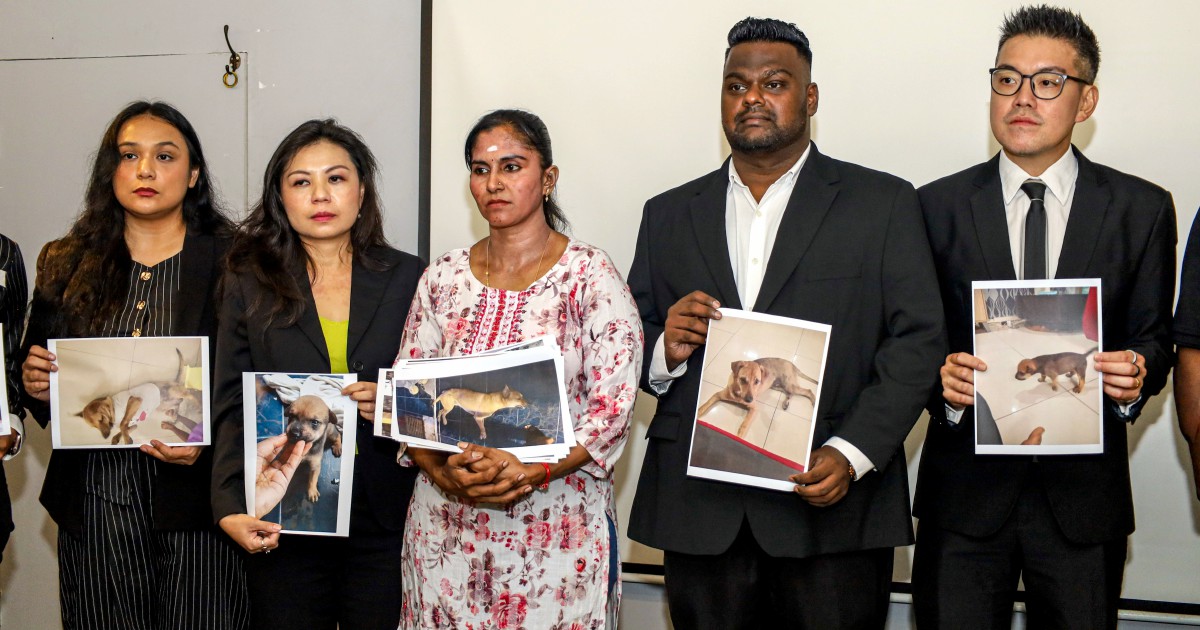
A Petaling Jaya resident has launched a push for public scrutiny following the death of Rocky, a pet dog that was fatally beaten during what authorities described as an operation to apprehend stray animals in the Taman Teluk Gedung Indah neighbourhood of Port Klang. The incident has reignited longstanding concerns about the methods employed by animal control personnel and the safeguards—or lack thereof—designed to protect domesticated pets from harm during such operations.
The case of Rocky highlights a persistent tension in Malaysian urban areas between the need to manage populations of free-roaming dogs and the protection of family pets that may accidentally become caught in enforcement sweeps. Port Klang, as a densely populated port city in Selangor, faces particular challenges in balancing public health concerns with animal welfare obligations. The circumstances surrounding Rocky's death have prompted the owner to demand clear transparency and accountability from the municipal authorities responsible for the dog-catching operation, signalling growing frustration among pet owners over the conduct and outcomes of such activities.
Animal control operations across Malaysia typically fall under the purview of local councils and municipal corporations, which employ contractors or internal teams to capture strays deemed to pose public safety or health risks. However, the procedures governing these operations—including rules of engagement, use of force protocols, and oversight mechanisms—remain largely opaque to the general public. Rocky's case suggests that the standard operating procedures currently in place may be insufficient to prevent tragic outcomes, particularly when operations are conducted in residential areas where pet dogs may be present.
The nature of Rocky's death, involving allegations of beating, raises serious questions about the training and conduct standards expected of animal catchers. In many Southeast Asian countries, including Malaysia, the qualifications and behavioural guidelines for personnel engaged in animal control remain poorly defined or inconsistently enforced. The absence of clear rules about permissible methods of restraint and the use of tools or physical force creates room for misjudgement, panic, or misconduct that can result in animal suffering or death.
For Malaysian pet owners, incidents like Rocky's represent a nightmare scenario: a beloved family companion fatally injured not by traffic or illness, but by the very authorities ostensibly acting in the public interest. This has broader implications for public trust in local governance and animal welfare oversight. Transparent investigation into what happened—including review of the operation's planning, execution, and the specific actions that led to Rocky's death—is essential to rebuild confidence that authorities take their responsibilities seriously.
The demand for a transparent probe also reflects evolving attitudes toward animal welfare in urban Malaysia. As the middle class expands and pet ownership rises, particularly in developed areas like Port Klang, public expectation that animals deserve basic dignity and protection has increased. Residents are no longer willing to accept vague assurances that incidents are regrettable but inevitable; they increasingly expect systems that minimize harm and hold officials accountable when things go wrong.
An effective investigation should examine several dimensions of the incident. First, whether the operation was properly authorised and whether there was prior notification to residents about planned animal control activities in the area. Second, whether dog catchers possessed proper training certification and were equipped with humane restraint tools—many regions now mandate the use of nets, cages, and tranquilisers rather than violence. Third, whether supervisory oversight existed during the operation and whether documented procedures were followed. Fourth, whether any post-incident protocol was activated to report the death, provide compensation, or conduct immediate review.
Malaysia's animal welfare landscape is fragmented, with multiple stakeholders involved—the Malaysian Society for the Prevention of Cruelty to Animals (MSPCA), local authorities, federal oversight bodies, and now increasingly vocal pet owner communities. The fragmentation sometimes creates gaps where accountability slips through the cracks. A serious investigation into Rocky's death could serve as a catalyst for standardised, transparent procedures across all local councils and municipal bodies engaged in animal control.
International best practices increasingly emphasise animal capture methods that prioritise humane handling, including use of modern restraint equipment, trained personnel with animal behaviour certification, and veterinary involvement when necessary. Countries like Singapore and South Korea have implemented more rigorous standards that result in lower mortality rates during capture operations. Malaysia has the opportunity to learn from these examples and upgrade its own standard operating procedures.
The broader policy implication is clear: as urban areas expand and pet ownership increases, Malaysia needs to move beyond the current ad-hoc approach to animal control and establish comprehensive, standardised, publicly accessible guidelines that apply uniformly across all municipalities. These guidelines should include explicit rules about permitted restraint methods, mandatory training and certification for personnel, regular equipment audits, supervisory oversight, incident reporting requirements, and mechanisms for public complaint and review.
Rocky's owner is justified in demanding transparency, and the investigation must be conducted with genuine independence and rigour rather than treated as a routine administrative matter. The outcome will signal whether Malaysian authorities are serious about reconciling the legitimate need for stray animal management with contemporary expectations about animal welfare and government accountability. Pet owners throughout the country will be watching closely to see whether this incident prompts systemic reform or merely superficial gestures.
For now, the Port Klang community awaits the results of the investigation with a mixture of grief and determination that Rocky's death not become just another forgotten incident but instead a turning point for how Malaysia approaches animal control.

