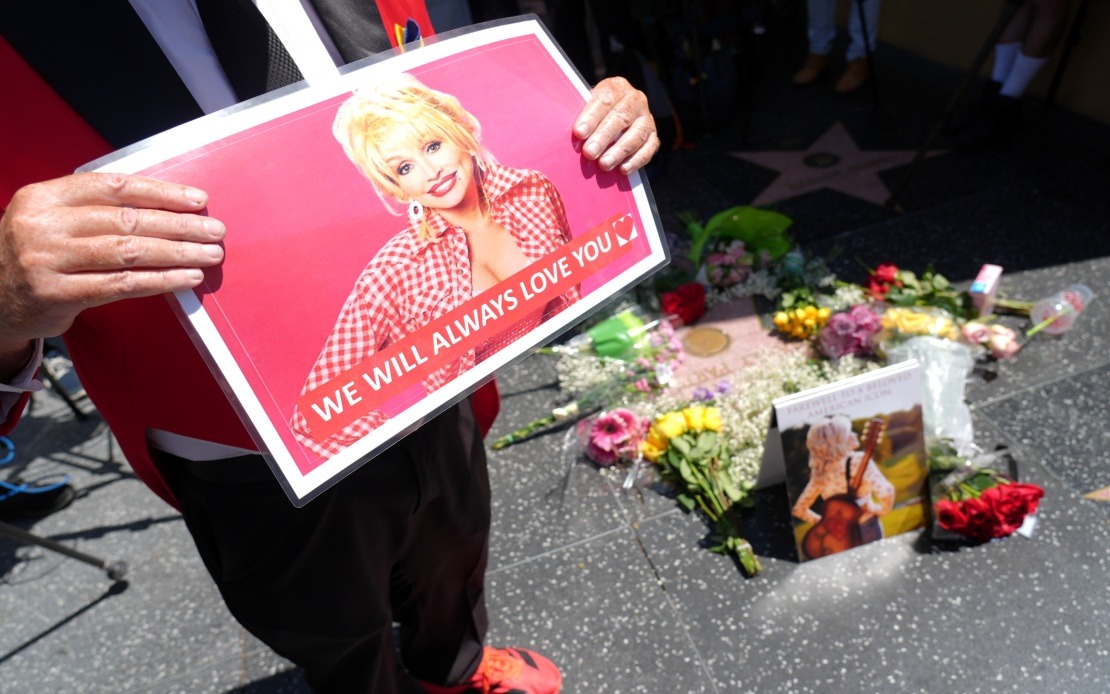
Dolly Parton, one of the most influential voices in American popular music and a transformative figure in country music history, has passed away at the age of 80. The announcement came through video posted to her social media accounts by her nephew Bryan Seaver, acting as a spokesperson for the Parton family. While the exact cause of death remains undisclosed, the family's statement marks the end of a remarkable career that spanned more than six decades and left an indelible mark on global music culture.
In the months leading up to her death, Parton had struggled with health complications that forced significant adjustments to her professional commitments. She cancelled several scheduled performances and was compelled to postpone an ambitious Las Vegas residency that would have represented a major undertaking for an artist in her ninth decade. Nevertheless, just days before her passing, Parton maintained a characteristically positive outlook, informing supporters that she was progressing well through her treatment regimen and responding favourably to medical interventions.
Parton's journey from poverty to international stardom began in the foothills of Tennessee. Born in 1946 in Sevierville, she emerged from a hardscrabble background that would later inform much of her artistic sensibility and philanthropic mission. Her musical precocity became evident early, with radio appearances beginning by age ten and her first commercial recording, "Puppy Love," completed at thirteen. That same pivotal year witnessed her debut performance at Nashville's legendary Grand Ole Opry, an institution that remains central to country music heritage and validation.
The relocation to Nashville in 1964 marked the beginning of Parton's ascent within the music industry's professional structures. Rather than immediately pursuing a solo career, she established herself initially as a songwriter of exceptional quality, creating compositions that other established artists eagerly recorded. This creative foundation proved invaluable as she built industry relationships and honed her songwriting craft. Her visibility expanded substantially when she joined Porter Wagoner's television variety programme in 1967, a partnership that would sustain her prominence until 1974 and introduce her to audiences far beyond traditional country music circles.
The 1970s represented Parton's breakthrough period as a solo artist, yielding a string of compositions that transcended genre boundaries and achieved enduring cultural resonance. "Jolene," with its haunting narrative of romantic displacement and its achingly vulnerable vocal delivery, became emblematic of her ability to translate personal emotion into universal experience. "I Will Always Love You" similarly demonstrated her gift for crafting melodies and lyrics capable of speaking to profound human themes. When Whitney Houston later reinterpreted the latter song for the "The Bodyguard" soundtrack in 1992, it became a global phenomenon, introducing Parton's composition to audiences across continents and generations, thereby cementing her status as a songwriter whose work transcended her own performance of it.
Parton's ambitions extended beyond the recording studio into dramatic performance. Her appearances in films including "9 to 5" and "Steel Magnolias" showcased her ability to command screen presence and demonstrated that her appeal operated across multiple entertainment mediums. These cinematic ventures opened alternative revenue streams and expanded her demographic reach, attracting viewers who might not have otherwise encountered her music. This diversification of her career reflected a sophisticated understanding of entertainment industry dynamics and her own marketability.
Equally significant to her entertainment career was Parton's commitment to philanthropy, particularly through the Imagination Library, her pioneering initiative providing complimentary books to children regardless of economic circumstances. This programme embodied her personal philosophy shaped by childhood deprivation, translating her success into tangible improvements in young people's access to literacy resources. The Imagination Library expanded internationally, reaching jurisdictions across multiple continents and establishing Parton as a figure concerned with social welfare alongside commercial achievement.
The statistical dimensions of Parton's career achievements underscore her exceptional trajectory within the music industry. Her recorded catalogue achieved global sales exceeding 100 million units, placing her among the most commercially successful recording artists in history. Her accolades included eleven Grammy Awards, the highest honour within the American music industry, alongside numerous other recognitions from professional and fan communities. Inductions into the Songwriters Hall of Fame and the Rock and Roll Hall of Fame represented validation from the industry establishment for her contributions to popular music composition and performance.
For Malaysian and Southeast Asian audiences, Parton's legacy offers instructive dimensions beyond her musical achievements. Her trajectory from rural poverty to international prominence demonstrates the transformative potential of artistic talent combined with entrepreneurial acumen and shrewd career management. Her commitment to philanthropy, particularly literacy initiatives, resonates within regional contexts where educational access remains uneven across socioeconomic strata. Furthermore, her successful navigation of multiple entertainment mediums—recording, performance, film, and humanitarian work—provides a model for contemporary artists contemplating career diversification and legacy construction beyond their primary artistic discipline. Her passing represents not merely the loss of a musical figure but the conclusion of an era in popular entertainment history.

