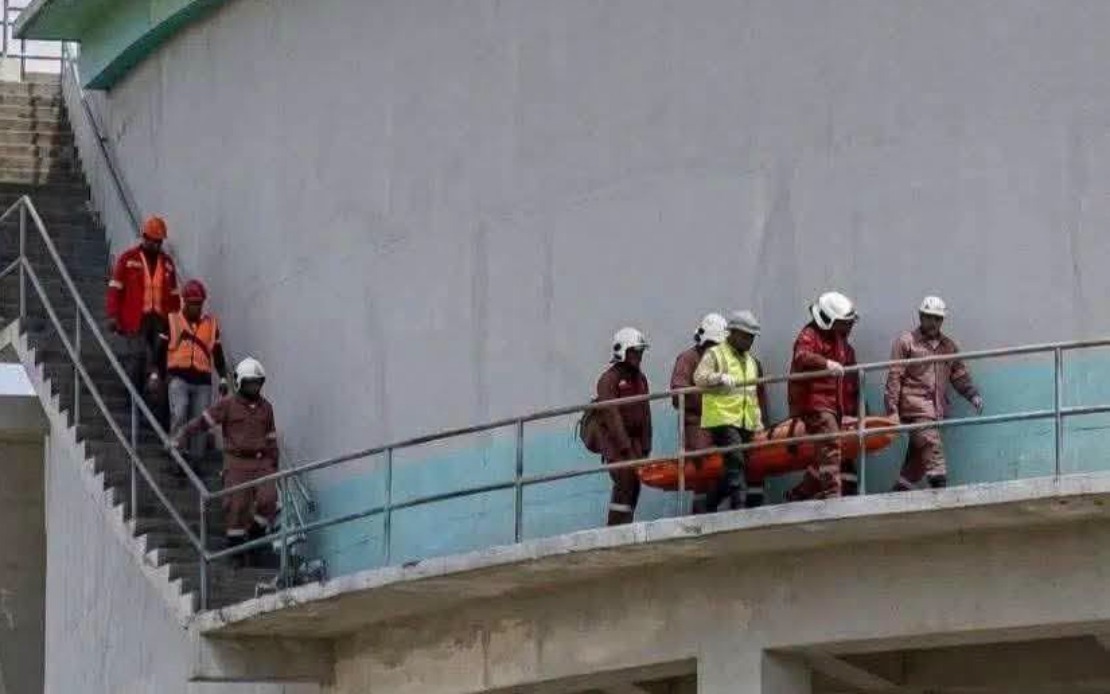
The Department of Occupational Safety and Health (DOSH) has commenced a formal investigation into a workplace fatality that occurred during water tank cleaning operations at Menara Saujana Perdana 1 in Sungai Buloh, Selangor on June 16. An industrial trainee lost his life in what authorities are treating as a serious occupational safety breach, triggering immediate enforcement action and a broader review of confined space work practices across the country. Director-general Hazlina Yon confirmed the incident and detailed the regulatory response in a statement released on June 24.
Occupational Safety and Health inspectors from the Selangor regional office have already visited the location and implemented immediate containment measures. A formal notice has been issued to prevent any disturbance to the accident scene, preserving evidence for the ongoing investigation. This procedural step is standard practice when DOSH suspects violations of workplace safety legislation. The agency is simultaneously gathering testimonies from witnesses present at the facility during the incident, with investigators cross-referencing accounts to establish the sequence of events and identify contributing factors.
The investigation is being pursued under Sections 15, 17 and 18 of the Occupational Safety and Health Act 1994, a legislative framework that explicitly assigns employers, self-employed operators and responsible parties with binding duties to protect the safety, health and welfare of workers and any third parties who might be exposed to workplace hazards. These provisions form the backbone of Malaysia's occupational safety regime and carry significant penalties for non-compliance. Should the inquiry reveal breaches of these statutes, DOSH has signalled its readiness to pursue appropriate enforcement measures, which can range from warnings and improvement notices to prosecution and substantial fines.
Hazlina's statement placed particular emphasis on confined space work, a classification that encompasses water tanks and similar enclosed environments where atmospheric risks, oxygen depletion, toxic gas accumulation and other hazards present elevated danger levels. She reminded all employers and operators that work in such spaces demands strict adherence to established safe work procedures before any personnel are permitted entry. This includes obtaining formal work permits specific to the task, implementing engineering controls to monitor and manage atmospheric conditions, and deploying personal protective equipment and rescue equipment appropriate to the identified risks. The regulatory reminder underscores that confined space work represents high-risk activity that cannot be treated with the same protocols as standard operational tasks.
For industrial trainees and newly recruited workers, the incident highlights a critical vulnerability in workplace safety systems. Hazlina emphasised that employers bear responsibility for ensuring that younger or less experienced personnel receive comprehensive occupational safety and health training tailored to their assigned tasks, supplemented by detailed briefings that communicate specific hazards relevant to the work site. More importantly, such workers must be placed under the direct supervision of competent supervisors who possess both theoretical knowledge and practical experience in the particular work environment. This supervisory requirement is not merely administrative; it reflects the principle that inexperience amplifies risk and demands proportionally higher levels of oversight and intervention.
The regulatory framework requires employers to undertake comprehensive risk identification and assessment before commencing any work activity, with particular rigour applied to high-risk operations. Water tank cleaning represents precisely this category, combining confined space entry, atmospheric contamination potential, and exposure to residual chemical or biological contaminants. Employers must document their risk assessments, establish control hierarchies prioritising engineering solutions over administrative measures, and ensure that control mechanisms are functioning before workers approach the location. The failure to conduct proper risk assessment, or to conduct one inadequately, represents a fundamental violation that can trigger enforcement action and liability findings.
The practical implications of this incident extend beyond the immediate investigation. Facilities operators across Malaysia that conduct similar work must immediately review their confined space procedures, verify that work permits systems are in place and actively used, and assess whether supervisory arrangements meet the competency standards outlined in the DOSH guidance. Contractors and vendors engaged for specialised maintenance tasks like tank cleaning should provide documentation of their safety management systems and relevant certifications. Organisations have a duty to verify that external service providers meet occupational safety standards equivalent to those applied internally; DOSH has explicitly stated that employers cannot delegate their safety obligations to contractors, even when work is outsourced.
The incident also raises questions about site-specific induction and hazard communication. When industrial trainees are deployed to unfamiliar work sites, they require detailed orientation that goes beyond generic safety training. Site supervisors must brief trainees on location-specific hazards, emergency procedures, and the whereabouts of first aid facilities and emergency contact points. For confined space work, this induction must include explanation of atmospheric testing procedures, rescue protocols, and the specific symptoms of exposure to common hazards in that environment. Documentation of such briefings protects both workers and employers by creating an accountability record.
MAYSIAN occupational safety culture has evolved considerably over recent decades, yet fatal incidents like this suggest that implementation gaps persist in practice. Regulatory agencies, employer associations and industry bodies have collectively developed comprehensive frameworks and guidelines addressing confined space work, yet real-world compliance rates remain imperfect. Some organisations view safety measures as cost burdens rather than investments that reduce operational disruption and liability exposure. Others lack awareness of updated standards or struggle with resource constraints that prevent full implementation. Hazlina's statement implicitly appeals to this broader audience, emphasising that the cost of non-compliance—measured in human tragedy, regulatory penalties and operational shutdown—far exceeds the investment required to establish robust safety systems.
The investigation's outcomes will likely inform DOSH's enforcement priorities and guidance issuances in the coming months. If the inquiry reveals specific violations at the Sungai Buloh facility, the findings will be publicised to alert the broader industrial and facilities management sectors to risks they may similarly face. DOSH may issue additional technical guidance on confined space work or revise existing protocols based on findings from this case. For workers and their representatives, the incident reinforces the importance of understanding their right to refuse unsafe work, to request independent review of risk assessments, and to participate in safety committee processes where these exist.
The pathway forward requires multiple stakeholders to strengthen their commitment to occupational safety. Employers must recognise that investing in competent supervision, thorough training, proper permits and equipment represents prudent business practice, not bureaucratic burden. Workers and trainees must cultivate awareness of their own safety responsibilities while exercising vigilance to identify hazards before they cause harm. Regulatory agencies like DOSH must maintain consistent enforcement while providing clear technical guidance that helps organisations understand and meet their obligations. Industry associations can facilitate knowledge-sharing about best practices and early warning systems that alert members to emerging risks. Only through sustained commitment across these dimensions can Malaysia reduce the frequency of fatal workplace incidents and protect the thousands of workers engaged in essential but hazardous occupations.