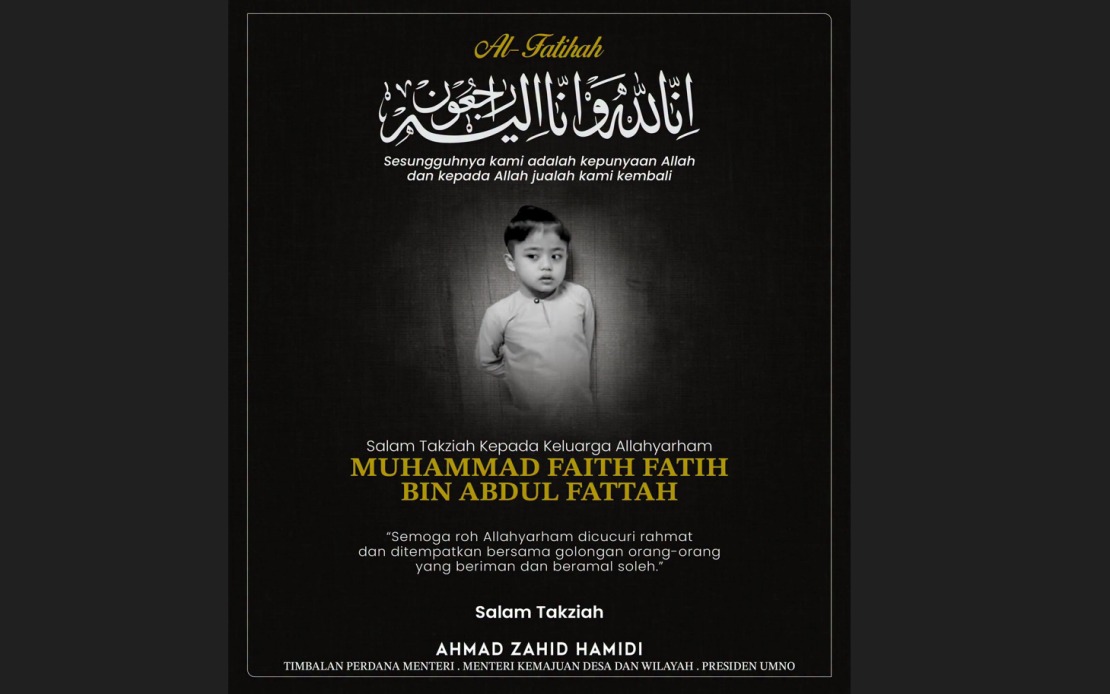
Deputy Prime Minister Datuk Seri Dr Ahmad Zahid Hamidi has offered his condolences to the family of Muhammad Faith Fatih Abdullah Fattah, a six-year-old boy with autism whose body was discovered in an oil palm plantation area near Sungai Sumun in Hutan Melintang, Perak, on July 1. The tragic incident has drawn attention to safety concerns affecting vulnerable children in rural communities throughout Malaysia, particularly those with special needs who require heightened supervision and protective measures.
The child went missing from his home on June 30 and was last seen in the family's living room before his absence was noticed. A search and rescue operation was immediately launched following a police report filed at approximately 4.54 pm on the same day. The search efforts ultimately located the boy's body in a drain within the sprawling oil palm plantation at 10.08 pm, ending hours of anxious searching by family members, police, and rescue personnel.
Ahmad Zahid, who serves as Member of Parliament for Bagan Datuk, shared his sympathies through a Facebook statement, describing the loss as deeply troubling given the child's young age and special needs status. His public expression of support reflects the broader national concern surrounding the safety of disabled children in Malaysia, where cases of vulnerability and tragic incidents have sparked ongoing discussions about adequate protective frameworks and community awareness.
In his statement, the Deputy Prime Minister acknowledged the profound grief that accompanies the loss of a child, emphasizing that no parent should endure such suffering. He noted that the passing of a young person with special needs represents a particularly acute form of family devastation, as such children often require intensive parental care and emotional investment throughout their formative years. The sentiment resonates across Malaysian society, where extended family networks traditionally play crucial roles in child-rearing and protection.
The Bagan Datuk police chief, Superintendent Mohammad Ali Mohd Jali, provided details of the discovery and initial investigation. The recovery of the child's body from the drain suggests potential circumstances requiring further investigation regarding how the boy came to be in such a location and whether any preventable factors contributed to the tragedy. Police investigations into missing child cases typically examine factors including supervision lapses, environmental hazards, and whether any third parties were involved.
This incident underscores persistent challenges within Malaysian communities regarding infrastructure safety around plantations and rural development areas. Oil palm estates sprawl across significant portions of Perak and other peninsular states, creating environments where drainage systems, water bodies, and industrial equipment pose genuine risks to unattended children. The proximity of such facilities to residential areas raises questions about zoning regulations and safety standards intended to protect vulnerable populations.
For families with autistic or otherwise disabled children, the challenges of ensuring safety extend beyond typical parenting concerns. Children with autism spectrum disorder may lack typical awareness of danger, may wander without clear direction, and may struggle to communicate their location or distress to rescuers. These characteristics demand heightened vigilance and environmental modification, yet many Malaysian families lack access to specialized support services, training, or community resources that could mitigate such risks.
The recovery efforts that located the child involved coordination between police, rescue services, and community members, highlighting how search operations mobilize across local networks. In rural Perak communities, where extended family ties remain strong and collective responsibility for child safety is traditionally emphasized, such tragic incidents prompt reflection on whether existing social structures adequately protect society's most vulnerable members. The incident may prompt discussions among parents, schools, and local authorities regarding child safety protocols.
Ahmad Zahid's invocation of religious comfort through Al-Fatihah and calls for divine mercy reflect the Islamic framework through which many Malaysian families process grief and loss. Such public statements carry cultural weight in Malaysia's Muslim-majority society and acknowledge the spiritual dimensions of mourning that accompany tragic deaths. His remarks also implicitly recognize the broader emotional toll on extended family networks and community members who participated in the unsuccessful search effort.
The death raises systemic questions about child protection frameworks in Malaysia, particularly regarding special needs children in rural areas with limited access to social services, monitoring systems, or community support networks. Government agencies, non-governmental organizations, and community leaders may review existing child safety measures, early warning systems, and parental support services to identify gaps that could prevent similar tragedies. The incident serves as a sobering reminder that vulnerability in Malaysia extends beyond urban poverty to encompass rural children whose geographic isolation compounds their exposure to environmental dangers.
Moving forward, the incident may catalyze broader conversations about inclusive community design that accounts for disabled children's needs, parental support systems for families managing autism and developmental disabilities, and environmental safety standards applicable to industrial plantation areas adjoining residential communities. Such preventative measures represent crucial investments in child welfare that transcend individual family circumstances to address structural vulnerabilities affecting Malaysia's most defenseless population segments.

