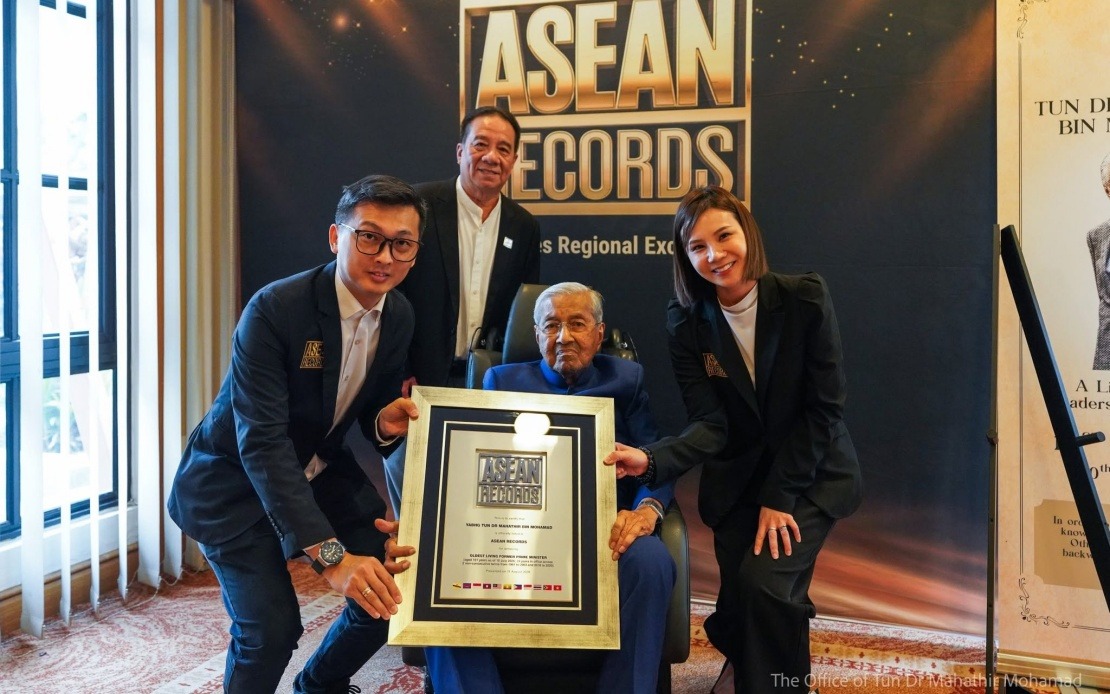
Former Prime Minister Tun Dr Mahathir Mohamad and his wife Tun Dr Siti Hasmah Mohd Ali have been honoured with three record certifications acknowledging their remarkable longevity and historic status as a political couple in Southeast Asia. The recognition ceremony, held at the Perdana Leadership Foundation in Kuala Lumpur, underscores the exceptional nature of their achievements as both have crossed the significant threshold of 100 years old.
Dr Mahathir, who turned 101 in July, has been certified by ASEAN Records as the oldest living former prime minister in the region, a distinction that reflects not only his advanced age but also the extended tenure and influence he wielded during his two periods leading Malaysia. The certification process involved rigorous verification to ensure no comparable figure held this status across ASEAN member nations. This recognition places him among a rare global cohort of former heads of government who have attained such longevity while maintaining public prominence and engagement.
Dr Siti Hasmah, who celebrated her 100th birthday on July 12, has earned her own distinctive record as the oldest living spouse of a former prime minister. Her recognition reflects both her personal longevity and the significant role she has played as a former First Lady of Malaysia, having supported her husband throughout his political career spanning multiple decades. The certification acknowledges her independent standing as an exceptional figure in the region's modern history.
The couple's joint certification represents perhaps their most historic achievement: being the first former head of government and spouse in the Asia-Pacific region to both become living centenarians simultaneously. The ASIA Records adjudication panel verified that no similar achievement has been publicly documented across ASEAN and major Asian markets, making this a genuinely unprecedented milestone. This recognition celebrates not merely individual longevity but the shared journey of two individuals who have maintained their partnership through seven decades of marriage.
The timing of these certifications holds particular significance within the calendar of milestones the couple has experienced this year. Dr Mahathir's 101st birthday on July 10 was followed just two days later by Dr Siti Hasmah's centennial celebration on July 12. Subsequently, on August 5, they marked their 70th wedding anniversary, demonstrating the continuity and strength of their relationship across seven decades. This condensed sequence of major life events within a single month has elevated public awareness of their remarkable longevity.
The presentations were made by Tan Sri Danny Ooi, chairman of the ASEAN Records Advisory Board, alongside chief adjudicators Gillian Ooi and Eldrick Koh, who serve as directors of both the ASEAN and ASIA Records bodies. The formal nature of the certification process, involving independent verification teams, lends credibility to the achievement and distinguishes it from informal recognition. The involvement of established records bodies ensures these distinctions meet internationally recognised standards.
For Malaysia specifically, this recognition carries broader implications. The achievement highlights the country's improvements in healthcare and living standards that have contributed to increased life expectancy across the population. Dr Mahathir and Dr Siti Hasmah's longevity occurs against the backdrop of Malaysia's development as a middle-income nation with advancing medical and social support systems. Their vitality at advanced ages speaks to both personal resilience and the benefits of access to quality healthcare infrastructure.
The couple's continued prominence in public discourse also reflects changing attitudes toward ageing and retirement in Malaysia. Rather than fading from public view, both individuals have maintained engagement with current affairs and social contributions well into their second century of life. Dr Mahathir, in particular, has remained vocal on political and economic matters, demonstrating that advanced age need not entail disengagement from civil society. This model of active ageing may influence public perceptions about the potential for continued contribution and relevance among Malaysia's growing elderly population.
The ASEAN-wide recognition also positions Malaysia within regional conversations about demographic change and longevity. As Southeast Asian nations experience rising life expectancies, the records achieved by Dr Mahathir and Dr Siti Hasmah establish benchmarks that may be challenged or matched in future years. Their achievement reflects broader trends in the region toward improved health outcomes and increased potential for extended lifespans across all populations.
From a cultural perspective, the formal celebration of their wedding anniversary within the context of their centenarian status offers a counterpoint to narratives often focused on individual achievement. The emphasis on their 70-year partnership highlights enduring commitment and shared experience across a lifetime. In the Malaysian context, where family and marital longevity carry significant cultural weight, this public recognition resonates beyond mere statistical achievement.
The records also serve as documentation of a significant period in Malaysia's recent history. Dr Mahathir served as Prime Minister during transformative decades for the nation, and his extended life has allowed him to observe and comment upon developments spanning multiple generations of political leadership. Dr Siti Hasmah's longevity means she has witnessed the entire arc of Malaysia's post-independence development alongside her husband. Their continued presence thus provides living continuity with Malaysia's modern founding era.
Looking forward, these certifications may prompt broader discussions about longevity research, healthcare access, and quality of life for Malaysia's ageing population. As the country faces demographic shifts with an increasingly elderly citizenry, the visible example of two prominent figures maintaining vitality and relevance well into their second century may influence policy conversations around aged care, healthcare investment, and social support systems. Their achievement becomes not merely a personal accomplishment but a reference point for national aspirations regarding healthy ageing.

