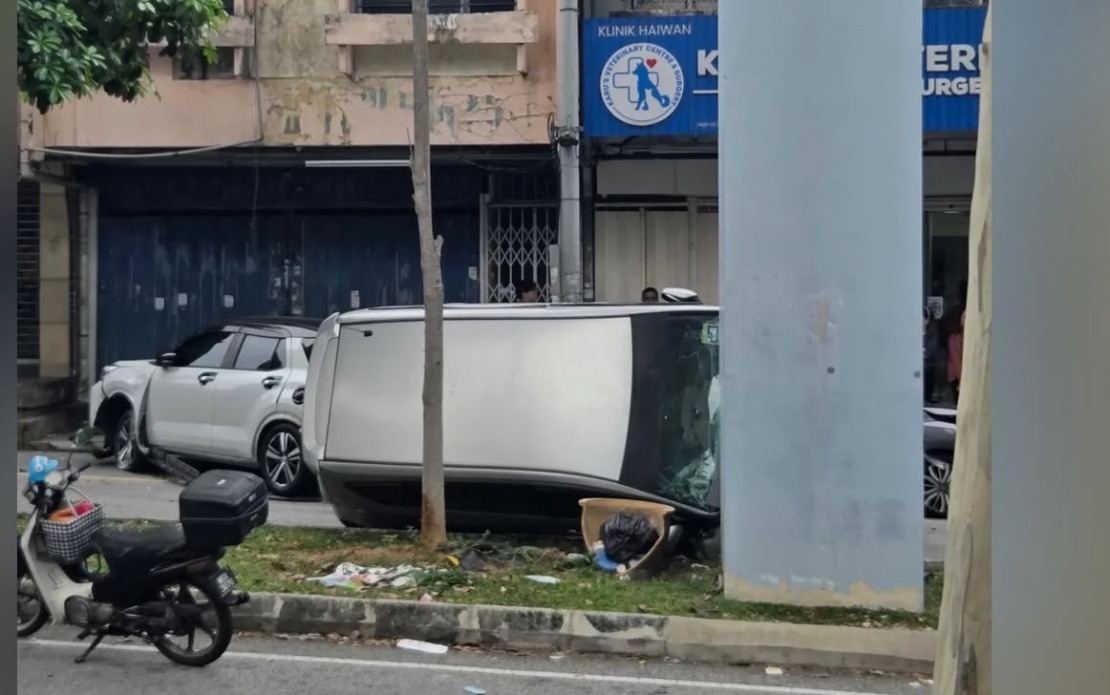
A medical emergency transformed into a traffic incident in Kuala Lumpur's Cheras neighbourhood on Tuesday morning when a 28-year-old driver suddenly suffered a seizure, steering his BMW 320i directly into a line of parked vehicles. The collision occurred at approximately 8.30 am along Jalan Midah 1 near Taman Midah 1, leaving six stationary cars damaged but fortunately claiming no casualties.
According to Kuala Lumpur's Traffic Investigation and Enforcement Department, the driver was en route from his residence to his workplace when the medical episode struck without warning. ACP Mohd Zamzuri Mohd Isa, who heads the JSPT, explained that the sudden onset of the seizure rendered the motorist incapable of maintaining vehicle control. The BMW veered across the roadway and struck the line of parked vehicles positioned along the left shoulder, a scenario that underscores the unpredictable hazards posed by drivers experiencing sudden health complications.
The vehicles targeted in the collision belonged to a diverse group of residents. Four women aged between 29 and 43 owned individual cars, while a 39-year-old man was responsible for another vehicle. A sixth car involved in the incident was registered to a commercial enterprise. The fortunate aspect of this accident is that none of the affected vehicles carried occupants at the time of impact. Had any persons been present inside these cars, the consequences could have proved significantly more severe.
Initial investigations revealed that the BMW driver carried a medical history extending back approximately ten years, during which he had experienced recurrent seizure episodes. This established pattern of seizures raises important questions about fitness to drive and the regulatory framework governing individuals with chronic neurological conditions. While driving regulations typically accommodate those whose conditions are medically controlled, seizures that manifest suddenly present particular challenges for traffic safety management systems.
Police conducted a standard alcohol screening on the driver immediately following the incident. The breathalyser examination returned a clean result, registering zero milligrammes per 100 millilitres, definitively eliminating intoxication as a contributing factor. This negative reading confirmed that the collision stemmed entirely from the medical episode rather than from any substance impairment on the driver's part.
The traffic authorities classified the incident under Rule 10 of LN 166/59, which pertains to traffic regulations in Malaysia. This classification determines how the matter will proceed through the investigative and potentially legal frameworks. While formal charges or penalties may depend on whether the driver violated any driving regulations related to medical fitness, the classification itself suggests the incident will receive thorough examination.
The Kuala Lumpur Traffic Investigation and Enforcement Department continues gathering evidence and witness statements to establish a complete account of the morning's events. Investigators are particularly interested in accounts from residents who may have witnessed the sequence of events, particularly those who might provide details about the driver's behaviour or vehicle movement immediately preceding the collision. Such eyewitness testimony can prove invaluable in reconstructing precisely how the seizure manifested and when control of the vehicle was lost.
For members of the public who observed the incident or possess relevant information, the authorities have established multiple channels for reporting. The Tun H.S. Lee traffic police station, accessible at 03-2071 9999, stands ready to receive information from witnesses. Alternatively, individuals may contact their nearest police station, ensuring that no potential evidence or testimony is overlooked during the investigative process.
This incident highlights broader concerns regarding road safety and medical emergencies on Malaysian highways. While seizure disorders affect a significant portion of the driving population, public health authorities and traffic regulators must balance the rights of individuals with controlled conditions against community safety imperatives. The case serves as a reminder that even conscientious drivers with established medical histories face the inherent risk of sudden health crises while operating vehicles. Moving forward, this incident may prompt discussions among relevant agencies about enhanced monitoring mechanisms, driver education programmes, and whether additional safeguards should apply to individuals with documented seizure histories.
The aftermath of such collisions extends beyond immediate damage assessment. Affected vehicle owners must navigate insurance claims and repair processes, while the community experiences disruption to normal traffic patterns. The incident also carries psychological weight for the driver involved, who now faces both medical management and potential regulatory scrutiny regarding future driving privileges. Such compound consequences underscore why preventing similar occurrences remains a priority for traffic safety authorities throughout the region.

