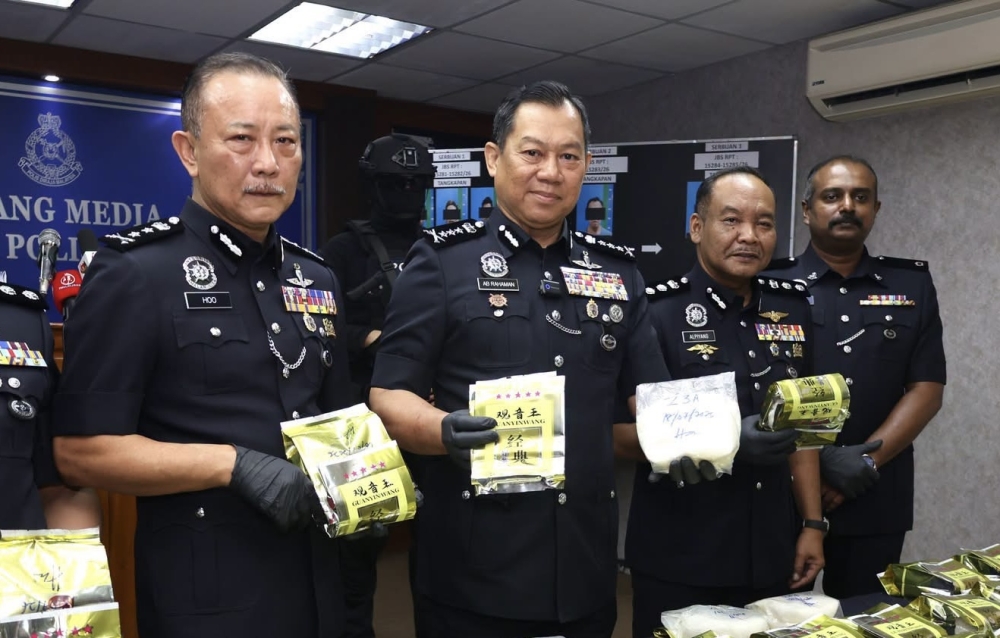
Police in Johor Bahru have successfully dismantled what authorities describe as a coordinated synthetic drug trafficking operation, culminating in the arrest of eight individuals across multiple locations in the southern state. Among those detained is a 16-year-old boy, marking a concerning development in what police characterise as an increasingly brazen attempt to distribute designer drugs through the heartland of Johor. The raids, which took place in the early hours of July 22, represent the latest in a series of enforcement operations targeting the production and distribution networks supplying stimulants and hallucinogens to users across Malaysian Peninsular.
The teenage suspect allegedly played a central role in the distribution apparatus, utilising his grandfather's vehicle as a mobile storehouse and delivery point for the contraband. This repurposing of a family car underscores a troubling tactical shift among drug networks seeking to evade detection—by embedding distribution operations within ostensibly ordinary domestic vehicles and family relationships, traffickers attempt to exploit law enforcement's natural reluctance to conduct invasive searches of vehicles operated by the elderly. The grandfather's apparent lack of knowledge regarding the illicit use of his automobile speaks to a vulnerability that organised trafficking groups actively exploit when recruiting younger operatives into their supply chains.
The comprehensive nature of the enforcement action reflects intensified police focus on dismantling supply chains rather than pursuing isolated drug users. By conducting coordinated raids across multiple premises simultaneously, authorities sought to prevent the network from dispersing assets, destroying evidence, or alerting connected cells operating elsewhere in the region. This sophisticated approach to drug enforcement has become increasingly standard throughout Malaysia's law enforcement agencies, particularly following parliamentary directives to prioritise organised trafficking operations over street-level possession cases.
The involvement of a minor in what appears to be a significant trafficking operation raises urgent questions about recruitment strategies employed by Malaysian drug syndicates. Adolescents present attractive targets for trafficking organisations because they typically face reduced sentencing considerations under juvenile justice provisions, possess greater mobility, and often carry less accumulated surveillance attention from law enforcement databases. Furthermore, the use of family vehicles and intergenerational trust relationships creates additional obfuscation layers that sophisticated criminal enterprises actively cultivate when grooming younger participants.
Johor's status as a major transit point for narcotics destined for both domestic consumption and international markets has long positioned the state as a critical battleground in Malaysia's broader war against trafficking. The state's geographic proximity to Singapore, its extensive port infrastructure, and its position along established transnational smuggling corridors have conspired to create persistent supply-side pressures. Recent years have witnessed an acceleration in the availability and potency of synthetic drugs throughout Johor, with law enforcement agencies repeatedly documenting increasingly sophisticated laboratory setups and distribution networks operating with greater operational security.
The synthetic drug category encompasses diverse chemical compounds, ranging from amphetamine-type stimulants to novel psychoactive substances that constantly evolve their molecular structure to circumvent existing regulatory frameworks. These substances typically command higher street values than traditional narcotics, generating substantial profit margins that incentivise organised criminal investment in their production and distribution. The proliferation of online procurement channels for precursor chemicals has further enabled distributed manufacturing operations that reduce single-point-of-failure risks for trafficking organisations.
Police investigations into the dismantled ring are expected to extend beyond the eight individuals currently in custody, as authorities attempt to map upstream suppliers, downstream distribution networks, and financial beneficiaries within the broader organisational structure. The recovery of materials, finished products, and documentation from the raided locations will provide crucial intelligence regarding the operational scale, geographic reach, and criminal sophistication of the network. Such investigations frequently reveal surprising connections to seemingly legitimate businesses, corrupt officials, or financial institutions that facilitate money laundering arrangements.
The presence of the teenage suspect in what authorities characterise as a significant trafficking operation underscores persistent challenges within Malaysia's youth-oriented intervention and prevention programmes. While schools and community organisations operate various drug awareness initiatives, their deterrent effect appears insufficient against the combination of peer pressure, economic incentive, and sophisticated recruitment tactics deployed by organised criminal enterprises. The expansion of prevention funding and the revision of school-based intervention curricula to address contemporary recruiting methods have become increasingly urgent policy priorities.
For Malaysian readers, the dismantling of this Johor-based operation represents one chapter in an ongoing enforcement narrative that extends across the entire region. The sophisticated operational tactics identified—vehicle-based distribution, intergenerational exploitation, and synthetic drug specialisation—reflect patterns increasingly evident in trafficking operations throughout Southeast Asia. As borders become more porous and international criminal networks become more coordinated, Malaysian law enforcement agencies face mounting pressure to enhance intelligence-sharing mechanisms with regional partners, modernise detection capabilities, and develop more effective prevention strategies capable of disrupting the pipeline of new recruits flowing into organised trafficking networks.

