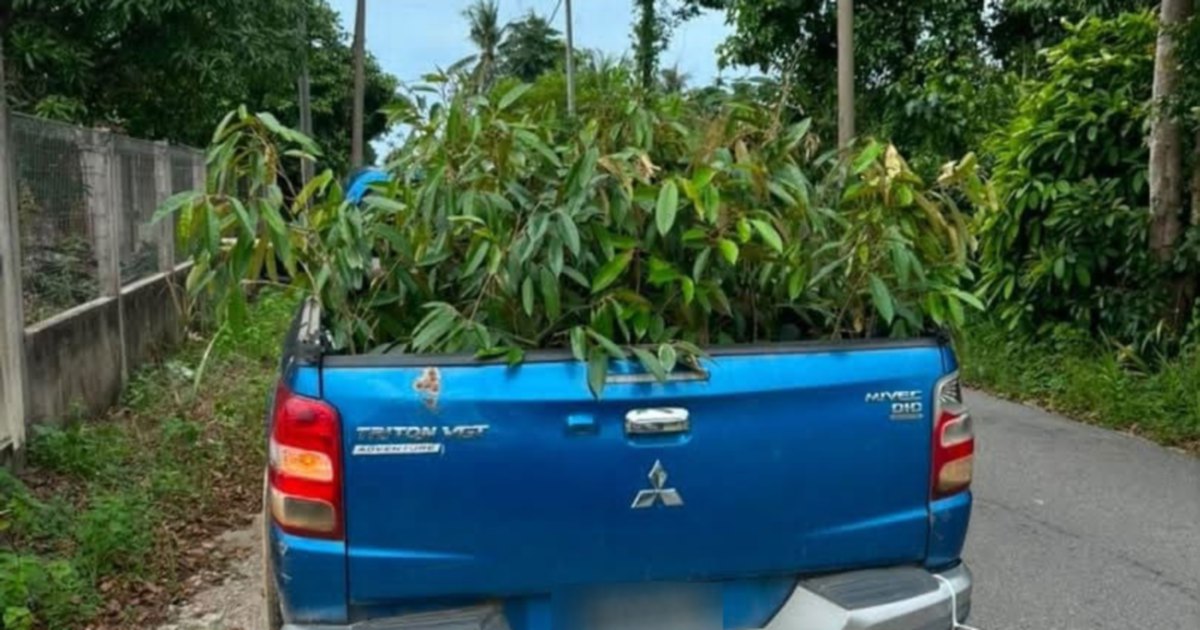
Malaysian law enforcement has dealt a significant blow to an apparent agricultural smuggling operation in Kelantan, with the General Operations Force apprehending a 55-year-old male suspect and seizing 52 durian saplings during a coordinated operation in Tumpat yesterday. The interception represents a growing concern among border security agencies about illicit cross-border trafficking in horticultural products, which has become increasingly lucrative as demand for premium durian varieties surges across Southeast Asia.
The seized saplings are believed to have originated from Thailand, where numerous certified nurseries cultivate durian varieties destined for both domestic consumption and export markets. The apparent attempt to smuggle young plants into Malaysia highlights vulnerabilities in enforcement mechanisms along the porous Kelantan-Thailand border, a region historically susceptible to unauthorised cross-border movement of goods and livestock. Durian saplings are particularly attractive targets for smuggling operations because they represent significant value concentration in relatively compact and transportable form, making them ideal for illicit traders seeking to avoid detection.
The General Operations Force, tasked with maintaining security across Malaysia's maritime and terrestrial boundaries, has intensified surveillance and checkpoint operations in response to rising incidences of agricultural smuggling. This particular seizure underscores the need for enhanced coordination between multiple agencies—including customs authorities, agricultural inspectors, and local police—to intercept contraband before it reaches domestic markets. The interception in Tumpat, a strategic location near the Thailand border, suggests that enforcement teams have successfully implemented intelligence-led operations targeting known smuggling routes and patterns.
From a horticultural perspective, the smuggling of durian saplings raises concerns about biosecurity and the introduction of unvetted plant material into Malaysia's agricultural ecosystem. Unlike regulated import channels, which subject incoming plants to rigorous health inspections and quarantine protocols, clandestine shipments bypass these safeguards entirely. This poses potential risks including the inadvertent introduction of plant diseases, pests, or invasive species that could compromise domestic durian cultivation and threaten the livelihoods of licensed farmers across Peninsular Malaysia and East Malaysia.
The motivations underlying such smuggling operations are economically rational given Malaysia's substantial durian industry and the premium prices commanded by certain cultivars. Thailand's durian sector has developed sophisticated horticultural expertise, and smugglers may be attempting to supply local growers—particularly in Kelantan, a traditional durian-producing state—with desirable genetic material without incurring legal import costs or adhering to government certification requirements. Such illicit activity undermines the interests of legitimate agricultural businesses that invest substantially in obtaining approved planting materials through official channels.
The arrest of the 55-year-old suspect marks a development in what may be a larger criminal network. Authorities will likely investigate the suspect's connections, supply sources, and intended distribution network to determine whether this represents an isolated incident or part of an organised smuggling enterprise. Intelligence gathered from this operation could prove valuable in identifying weaknesses in border security infrastructure and informing future preventive strategies.
Kelantan's border vulnerabilities reflect broader challenges facing Southeast Asia's agricultural security. The region's extensive land borders, combined with significant economic disparities between neighbouring countries and the high value of certain crops, create persistent incentives for cross-border smuggling. Malaysia, as a major producer and consumer of durians, faces particular pressure as traffickers recognise opportunities to exploit demand and regulatory gaps.
The incident also reflects regulatory asymmetries between Malaysia and Thailand regarding plant health standards, certification procedures, and trade regulations. While both nations maintain import protocols, the existence of smuggling operations suggests that the compliance costs and bureaucratic procedures associated with legal channels make unlicensed importation an attractive alternative for profit-driven operators. Strengthening bilateral cooperation on agricultural trade standards and enforcement could help address these systemic vulnerabilities.
Authorities have not yet disclosed whether the suspect faces charges under the Animal and Plant Quarantine Act, customs legislation, or related statutes. The severity of charges and subsequent penalties will depend on whether this constitutes a first offence or whether the individual has a history of smuggling-related violations. Prosecution outcomes will also influence deterrent effects and the credibility of Malaysia's enforcement posture.
Looking ahead, this seizure underscores the importance of sustained investment in border security technology, inter-agency communication systems, and intelligence-gathering capacity. As agricultural smuggling becomes increasingly sophisticated, regulatory authorities must continuously adapt their strategies to intercept contraband effectively. Enhanced cooperation between Malaysian and Thai authorities, potentially including information sharing on trafficking networks and joint training initiatives, could significantly improve interdiction rates and raise operational costs for smuggling syndicates.

