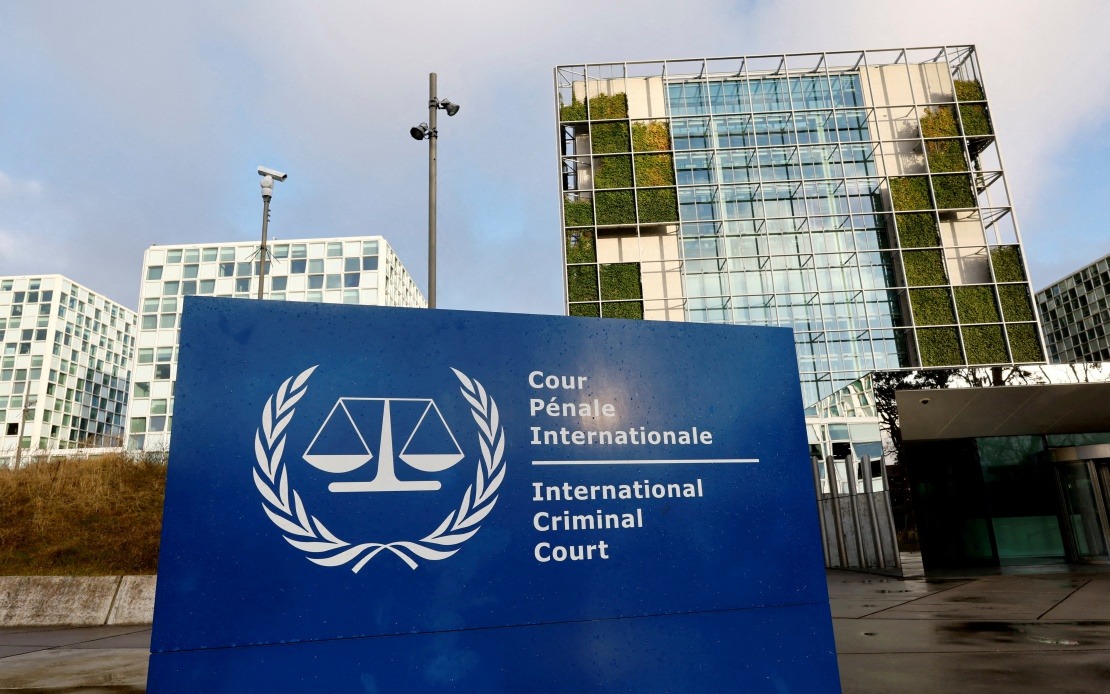
The United States' aggressive push to undermine the International Criminal Court has provoked sharp rebuke from Dutch legal academics, who contend the strategy fundamentally threatens the architecture of international law that has underpinned global stability for decades. The criticism comes as tensions between Washington and The Hague-based institution escalate, with American officials declaring the court an existential threat to national sovereignty and the protection of American personnel abroad.
On July 13, the US Department of State unveiled a comprehensive campaign designed to neutralise what officials characterised as the ICC's overreach in claiming authority to investigate and prosecute American service members and government officials. The department's statement portrayed the court as representing "an intolerable threat" to American interests, framing the dispute in terms of jurisdictional boundaries rather than the substantive question of accountability for alleged atrocities. This rhetorical framing has become central to Washington's argument that the institution operates beyond appropriate legal constraints.
Alette Smeulers, a professor of international crimes at the University of Groningen, directly challenged this American narrative during a recent interview, arguing that the campaign represents a fundamental misrepresentation of how the ICC actually functions. She emphasised that the court operates under strict jurisdictional limitations, capable of prosecuting only the gravest offences and solely when crimes occur within territories of states party to the Rome Statute or involve nationals of such states. This clarification matters substantially for understanding the dispute: the ICC possesses far less expansive power than American officials suggest, and its checks are already significantly constrained.
Smeulers went further in her analysis, articulating what she sees as the deeper danger embedded in Washington's strategy. The professor warned that attempting to dismantle international legal institutions would propel the world backward toward a system where military and economic power determines outcomes rather than established legal principles. This dystopian vision—a return to raw might-makes-right governance—represents perhaps the most profound concern animating Dutch scholarly opposition. For a small nation like the Netherlands, dependent on multilateral institutions for protection and influence, such a transformation would prove catastrophic.
The American pressure campaign has already moved beyond diplomatic rhetoric into concrete punitive action. Last December, the United States imposed economic sanctions on two ICC judges, accusing them of pursuing what Washington termed "politicised actions" specifically targeting Israel. The move represented an extraordinary escalation, using financial weapons typically reserved for state actors deemed threats to national security against judicial officials exercising their professional functions. This precedent has alarmed international law observers across Europe.
Kyra Wigard, an assistant professor of law at Utrecht University, characterised the sanctions against judges as fundamentally absurd and inappropriate. Wigard pointed out that sanctions represent tools deployed against alleged terrorists or hostile states engaged in armed conflict—employing them against judicial officers operating within their lawful mandate inverts their intended purpose entirely. The move signals that Washington regards the ICC's judicial independence itself as an affront to American interests, rather than viewing the institution as a legitimate forum for addressing mass atrocities.
Beyond immediate institutional impacts, Smeulers identified another alarming dimension of the American campaign: Washington has signalled intentions to pressure other nations into withdrawing from the Rome Statute altogether and terminating their ICC membership. Such a strategy would not merely constrain the court's operations but could fundamentally fragment the international legal consensus that has slowly developed since the tribunal's establishment. The implications for Southeast Asian nations, several of which are ICC members, deserve careful consideration as American pressure mounts.
For Malaysia and the broader Southeast Asian region, this American campaign presents a thorny dilemma. On one hand, countries in the region have significant security relationships with the United States and depend heavily on American military and economic engagement. On the other hand, strengthening the ICC and robust international legal mechanisms offers small and medium-sized nations meaningful protection against powerful actors, whether state or non-state. The Dutch scholars' warnings therefore carry particular resonance for Malaysia, which has long advocated for respect for international law as a counterweight to great power dominance.
The fundamental question animating this dispute extends beyond jurisdictional technicalities or even questions about the ICC's current functioning. The Dutch academics have identified what amounts to a test case for whether the international legal order can survive pressure from powerful nations that find its constraints inconvenient. The American campaign implicitly asserts that states should retain unlimited discretion to protect their officials and military personnel from international scrutiny, regardless of the nature of alleged conduct. Accepting this principle would eviscerate the entire human rights framework laboriously constructed after 1945.
The Dutch perspective, rooted in centuries of experience as a trading nation dependent on predictable legal frameworks and respect for established rules, contrasts sharply with the American assertion of exceptionalism. Netherlands scholars understand viscerally that without binding international law, smaller nations become vulnerable to arbitrary action by larger powers. This explains why their warnings about Washington's campaign contain such urgency and conviction—they perceive in American strategy a threat not merely to one court but to the foundational principles enabling coexistence among unequal powers.
As this confrontation between the United States and the ICC intensifies, the question becomes whether other nations will align with the Dutch position and defend the court's independence, or whether American pressure will prove effective in rolling back international legal accountability mechanisms. The answer will largely determine whether the world moves toward the rules-based order that smaller nations desperately need, or drifts toward the power-based system that only the strongest can survive.

