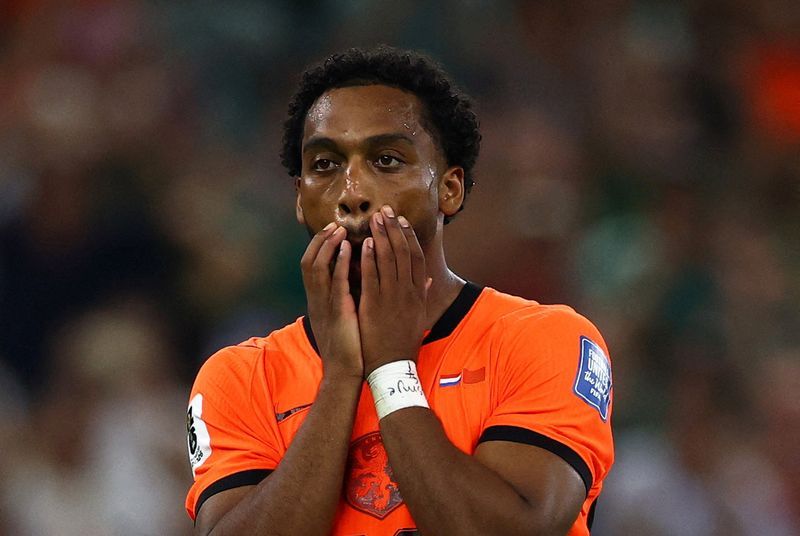
The Dutch national football team has been forced to confront a troubling surge in online racism directed at its players following Morocco's stunning 3-2 penalty shootout victory over the Netherlands in the World Cup last-32 encounter held in Monterrey. The match, which ended 1-1 after extra time, saw Justin Kluivert, Quinten Timber and Crysencio Summerville all fail to convert their penalty attempts, making them the targets of a barrage of discriminatory and hateful comments across social media platforms in the immediate aftermath of the defeat.
The Dutch football association (KNVB) confirmed the incidents on Tuesday and indicated it would pursue formal action against those responsible for the abuse. The organisation stated it would lodge a complaint with Meld Online Discriminatie, the Netherlands' designated body for reporting online discrimination cases. This institutional response represents a structured effort to translate public outrage into concrete legal consequences, mirroring approaches adopted by other European football authorities facing similar challenges.
The mechanism through which the KNVB intends to seek justice involves multiple procedural layers. Once Meld Online Discriminatie receives the report, its legal team will evaluate whether the comments constitute criminal offences under Dutch law. Should this threshold be met, the case can be escalated to the Public Prosecution Service, which possesses the authority to initiate criminal investigations and potentially bring formal charges against perpetrators. This multi-stage process reflects the complexities of prosecuting online speech in jurisdictions with robust free expression protections.
The incident serves as a sobering reminder of a pattern that has become distressingly familiar in international football. Just two years prior, English players Marcus Rashford, Bukayo Saka and Jadon Sancho endured similar torrents of racist abuse following England's heartbreaking loss to Italy in the 2021 European Championship final. That episode prompted a vigorous law enforcement response, with British police conducting extensive investigations that resulted in criminal convictions, including prison sentences for two individuals and a suspended sentence for another. The scale of the British operation suggested that determined prosecution efforts could indeed hold perpetrators accountable.
The circumstances surrounding the English players' experience demonstrated that institutions could mobilise effectively against online racial hatred when the political will existed. The wave of arrests and prosecutions that followed the Euro 2020 final loss sent a signal that such conduct would not be tolerated. However, the persistence of similar abuse following the Morocco-Netherlands match indicates that institutional consequences, while important, have not yet achieved sufficient deterrent effect across different online communities and jurisdictions.
For Malaysian and Southeast Asian observers, these incidents highlight broader challenges confronting the region's own football communities as digital connectivity expands. The exportation of racial abuse through global social media platforms means that athletes across Asia increasingly risk exposure to transnational harassment patterns. As football continues to grow in prominence throughout Southeast Asia, with rising investments in domestic leagues and youth development programmes, the region's football associations would be wise to develop their own robust frameworks for addressing online discrimination.
The KNVB's response also underscores a critical principle increasingly central to discussions about football's role in society. The association articulated this perspective clearly, noting that football's fundamental purpose lies in bringing together people across diverse backgrounds and identities. Racism and discrimination, by this logic, represent not merely violations of behavioural codes but direct assaults on football's core social function. This framing positions the fight against online abuse as inseparable from football's broader mission to serve as a unifying force across communities.
The challenge of prosecuting online racism remains formidable despite growing legal frameworks. Social media platforms operate across jurisdictional boundaries, and perpetrators often employ anonymity to shield themselves from accountability. Even when identification occurs, questions about appropriate punishment levels, the balance between free expression and protection from harassment, and the practical feasibility of enforcement create genuine complications for authorities. The fact that some individuals face prison sentences while others receive only suspended sentences reflects ongoing societal uncertainty about how to calibrate responses proportionately.
The timing of this episode also carries significance within the World Cup narrative. Morocco's victory represented a historic achievement for the North African nation and for the broader African continent in the tournament. Yet the racist abuse directed at Dutch players who missed penalties introduces a discordant note that threatens to overshadow genuine sporting accomplishment with reminders of persistent intolerance. This pattern, repeated across major tournaments, suggests that substantial educational and cultural work remains necessary beyond legislative responses.
Moving forward, the KNVB's decision to pursue formal action through established reporting mechanisms will provide valuable data about the effectiveness of such institutional processes. The outcomes of these cases—whether they result in criminal charges, platform-level sanctions, or other consequences—will offer important lessons for other football associations contemplating similar circumstances. As Southeast Asian nations develop stronger digital governance frameworks, the approaches adopted by European authorities in addressing online racism will likely inform regional best practices.
The broader implications extend beyond individual criminal accountability. The incidents involving Dutch, English and other players point toward a systemic problem requiring coordinated responses from social media platforms, national authorities, sporting organisations and communities themselves. Until technological solutions, effective moderation, legal consequences and genuine cultural shift combine to make online racial abuse genuinely risky and socially costly for perpetrators, such incidents will likely recur whenever high-stakes sporting outcomes disappoint passionate fan bases.

