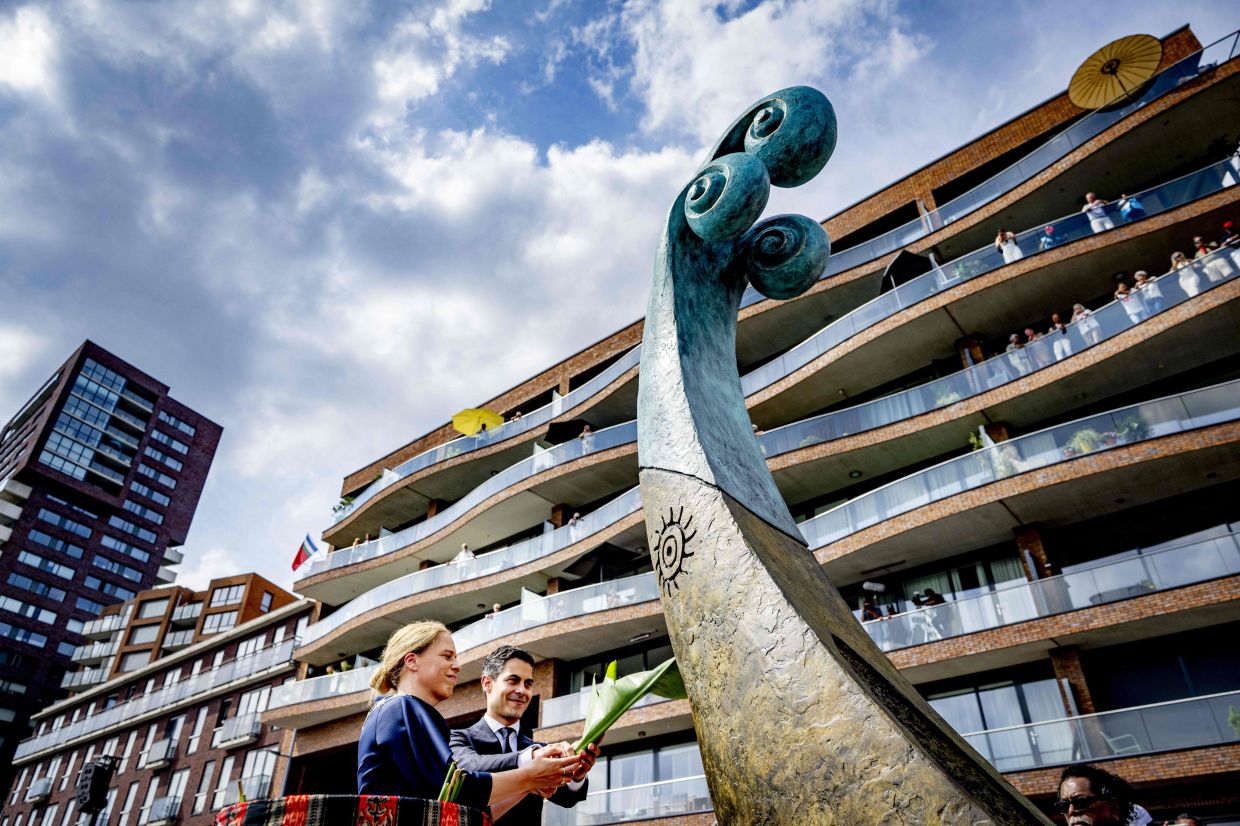
Dutch Prime Minister Rob Jetten delivered a formal state apology to the Moluccan community on Sunday, acknowledging seventy years of systematic mistreatment and broken government commitments that left thousands displaced from Indonesia's eastern spice islands. The ceremony, held in Rotterdam where the first transport ships arrived in 1951, marked a significant moment of reckoning for the Netherlands as it confronted one of the more troubling chapters of its post-colonial history. Jetten, visibly emotional before hundreds of Moluccans gathered for the occasion, declared it "high time" to offer recognition and what he termed "historical justice" for wrongs that had festered across generations.
The roots of this displacement trace back to the armed struggle for Indonesian independence immediately following World War II. Approximately 12,500 Moluccans, predominantly from the Maluku archipelago in eastern Indonesia, had served in the Dutch colonial military during this conflict. When Indonesia secured independence in 1949 following protracted negotiations, these soldiers faced an existential threat—many feared severe reprisals from Indonesian nationalists who viewed collaboration with the Dutch as a betrayal of the independence cause. The Dutch government, recognising this vulnerability, offered what appeared to be a temporary solution: a state-organised transfer to the Netherlands ostensibly lasting only long enough for tensions to cool and safe conditions to be restored in the homeland.
That promise of temporary refuge became a lifetime exile. The Dutch government reneged on its commitment to repatriate the Moloccans, leaving them stranded in a foreign land with few resources or genuine integration efforts. Upon arrival in the Netherlands, those with military service were immediately discharged from the armed forces, abandoning them without pension security or employment prospects. The newly arrived Moluccans were housed in appalling conditions, many transferred directly to former Nazi concentration camps that had been repurposed as temporary accommodation. Authorities made minimal effort to provide meaningful employment pathways or facilitate their integration into broader Dutch society, effectively isolating an entire community in institutional limbo.
The generational trauma that followed proved particularly acute. First-generation Moluccans endured the psychological torment of indefinite displacement, harbouring expectations of return that never materialised. Their children, born or raised in the Netherlands yet denied genuine belonging to either their ancestral homeland or their adoptive country, grew increasingly frustrated by what they perceived as institutional abandonment and broken faith. This sense of betrayal culminated during the 1970s in a series of violent confrontations orchestrated by second-generation Moluccans, including train hijackings and occupation protests that shocked Dutch society and drew international attention to their plight.
For Southeast Asian readers, this historical episode carries particular relevance. The Moluccan experience reflects broader dynamics of how post-colonial transitions often displaced those who had sided with departing colonial powers, creating vulnerable populations caught between two worlds. The decades-long failure to adequately address this displacement reflects how wealthy nations sometimes handle inconvenient historical legacies—through avoidance, minimal support, and institutional neglect rather than genuine reconciliation. Malaysia and other ASEAN countries that experienced similar colonial transitions may recognise parallels in how communities formed during colonial periods faced uncertain futures after independence.
Jetten's apology, delivered at the unveiling of the Ulu Kora monument on Lloydkade—the exact location where the first transport ships docked—acknowledged the multifaceted nature of the injustice committed. His statement addressed not only inadequate housing and employment discrimination, but also the psychological dimension of displacement: the enduring homesickness, the fractured family ties, and the cumulative grief across decades. By specifically naming these elements, the Dutch government moved beyond generic acknowledgment toward what many Moluccans view as genuine recognition of their suffering.
Yet Jetten himself recognised the profound limitations of apology as a remedial instrument. His candid assertion that "the injustice cannot be suddenly removed with apologies" and that "we cannot change the course of history and the reality of today with a few sentences" reflected mature acknowledgment of reconciliation's complexity. For the many Moluccans present holding photographs of deceased relatives who never returned home, words alone could scarcely compensate for lived losses. The apology served more as formal recognition than as practical restitution, though it potentially opened pathways toward more comprehensive governmental responses including possible compensation and enhanced support for remaining Moluccan communities.
The ceremony carried symbolic weight beyond the Netherlands itself. It demonstrated how nations increasingly confront neglected dimensions of post-colonial history decades after events occurred. For a wealthy European nation to formally acknowledge failure to fulfill commitments to a vulnerable migrant community represents a significant shift from earlier patterns of historical silence. Yet it also underscores how long such recognition typically requires—the Dutch government waited over seventy years to formally apologise, meaning most first-generation Moluccans had already died without hearing such acknowledgment from their adopted country.
For the contemporary Moluccan community in the Netherlands, now numbering tens of thousands including descendants of those original arrivals, the apology provided formal validation of narratives long told within families and community organisations. Many had grown up hearing stories from parents and grandparents about promises made and abandoned, about displacement that was supposed to be temporary but became permanent. The monument itself functions as a physical reminder that their experiences, long marginalised in Dutch historical consciousness, now occupy official recognition.
Moving forward, the apology may catalyse broader conversations about reparative justice for post-colonial displacements throughout Europe and beyond. As countries grapple with colonial legacies—whether addressing descendants of enslaved peoples, colonial subjects, or those disadvantaged through specific policy failures—the Moluccan case provides instructive precedent. It suggests that meaningful reconciliation requires not merely words but sustained institutional commitment, possibly including compensation frameworks, educational reforms, and cultural recognition.
For Southeast Asia, the Moluccan apology also raises questions about how regional nations address comparable historical injustices. Some countries have grappled with communities formed during colonial periods; others have experienced similar displacement patterns through political upheaval or military conflict. The Dutch government's eventual willingness to formally acknowledge systematic failure offers a model—imperfect though it remains—for how nations might confront uncomfortable histories and extend recognition to communities whose suffering extended far beyond independence celebrations.