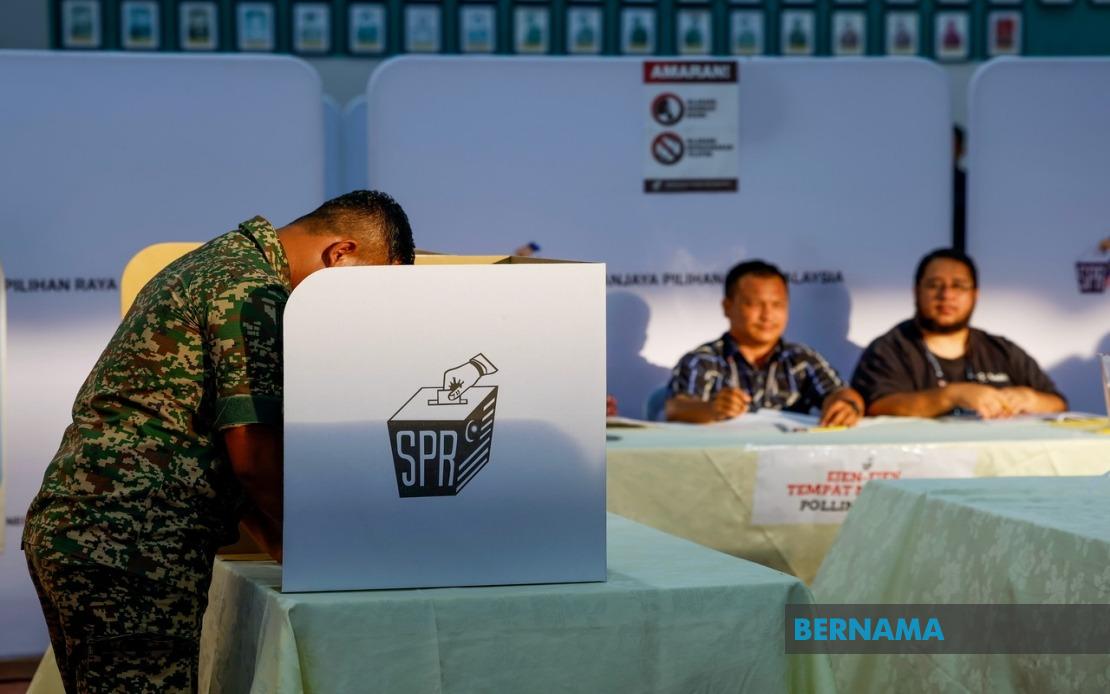
The 16th Negeri Sembilan state election witnessed solid early voting momentum on July 28, with the Election Commission recording that 14.31 per cent of designated early voters had already exercised their franchise by 9 am. This early surge reflects organised participation from military and security personnel, traditionally among the first cohorts to vote during Malaysian elections, signalling strong civic engagement ahead of the general polling phase scheduled for the same day.
The early voter cohort comprised 1,431 military personnel and 925 police officers, together with their respective spouses, who had registered to cast ballots in advance. This grouping of armed forces and law enforcement—along with their families—represents a critical demographic in Malaysia's electoral cycle, as their duties often preclude participation during standard polling hours. The arrangements for early voting underscore the Election Commission's commitment to ensuring that security personnel, essential to maintaining order during election day itself, are not disenfranchised by their operational responsibilities.
Thirty-eight polling centres opened their doors simultaneously at 8 am to facilitate this early voting phase. The coordinated opening across multiple locations demonstrated logistical preparation by electoral administrators to handle the anticipated volume of early voters. These centres collectively served 22,389 registered early voters who sought to participate before general polling commenced, indicating that the Election Commission had established sufficient infrastructure to process demand without bottlenecks. The distribution of voting centres reflected an attempt to bring polling facilities closer to eligible participants, reducing travel burdens and time constraints.
The staggered closure schedule between noon and 5 pm represented a practical approach to managing polling operations across different constituencies. Rather than a uniform closing time, the Election Commission calibrated shutdowns according to each centre's specific circumstances—accounting for geographic location and the volume of registered voters assigned to each station. This flexibility acknowledged the varying demands placed on individual polling centres and sought to prevent congestion while ensuring all eligible early voters had adequate opportunity to participate.
The broader electoral context involved 103 candidates competing for 36 state assembly seats in Negeri Sembilan, a contest reflecting significant political competition at the state level. This multi-candidate field meant the election carried stakes for various political factions vying to secure representation and influence in the state legislature. The presence of more than one hundred candidates across three dozen seats indicated robust democratic participation, with multiple viewpoints and party affiliations seeking to contest for voter support.
Beyond the early voting phase, general polling on July 28 was poised to involve 889,490 registered voters across Negeri Sembilan. This substantial voter base suggested significant public interest in determining the state's political direction. The scale of general polling dwarfed the early voting numbers, indicating that the vast majority of the electorate would participate during standard polling hours rather than through advance mechanisms. The coordination required to process nearly 900,000 voters across numerous constituencies on a single day represented a substantial undertaking for election officials and supporting personnel.
For Malaysian observers and regional analysts, the Negeri Sembilan election carried implications beyond state boundaries. Results would signal prevailing electoral sentiment in a geographically central Malaysian state, offering insights into voter preferences and political momentum heading into any subsequent national contest. The turnout patterns and voting behaviour documented in Negeri Sembilan would provide benchmarks for understanding broader peninsular political dynamics and the effectiveness of different political strategies in mobilising support.
The early voting mechanics illustrated how Malaysian electoral frameworks accommodate the schedules and duties of security personnel. By enabling military and police officers to vote before their regular operational duties intensify, the system acknowledges practical constraints while preserving the democratic right to participate. This accommodation reflects a balance between maintaining electoral integrity and recognising the legitimate demands placed on essential services during elections themselves.
The election also demonstrated the Election Commission's organisational capacity to manage complex polling operations. Coordinating 38 simultaneous polling centres with staggered closures, processing data in real time, and maintaining electoral security across hundreds of voting locations required substantial planning and execution capability. The timely release of voting statistics to the public through the Commission's official Facebook page indicated transparency in the process, allowing stakeholders to monitor participation levels and electoral momentum as voting progressed.
As early voting concluded and general polling commenced, the Negeri Sembilan election would unfold against broader patterns of political competition, demographic change, and voter sentiment in Malaysia. The strong early voting turnout suggested organisational effectiveness among both electoral authorities and participating voters, setting a positive tone for the remainder of the polling day and potentially influencing overall turnout figures that would ultimately determine the state election's outcome.

