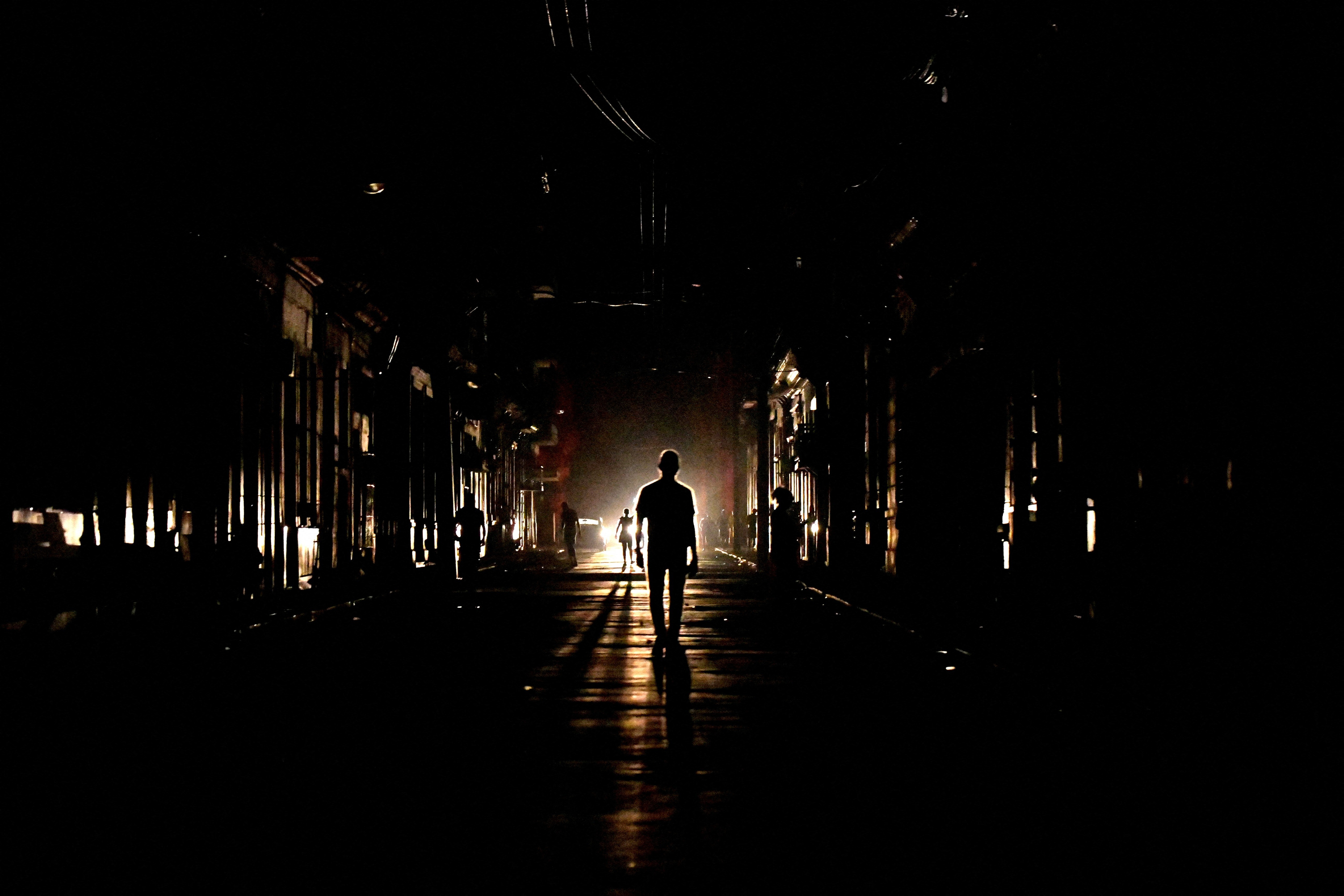
A sweeping electrical blackout descended upon eastern Libya on Thursday evening, casting major population centres including the city of Benghazi and surrounding towns into darkness. The power failure highlighted the region's vulnerability to infrastructure collapse and underscored the mounting challenges facing Libya's fragmented governance structure. Footage from affected neighbourhoods showed streets and residential areas without lighting, whilst local media confirmed that the outage extended across a broad swath of the eastern territory, disrupting daily life for hundreds of thousands of residents already struggling with chronic service deficiencies.
The scale of the blackout encompassed significant portions of Benghazi, Libya's second-largest city and the de facto capital of the eastern-based government. The affected districts included both central and southern neighbourhoods, suggesting a systemic failure within the power generation or distribution network rather than a localised incident. Additional reports documented similar conditions in the town of Marj and numerous other communities scattered across the eastern region, indicating that the disruption was neither isolated nor limited to a single city. The simultaneous nature of outages across such dispersed locations pointed towards problems originating from critical generation or transmission infrastructure rather than failures at individual substations.
Libya's Electricity Ministry, operating under the authority of the House of Representatives-appointed eastern government, moved swiftly to address the emergency. Officials announced that several generation units had been brought back online, enabling a phased restoration of electricity supplies to the affected region. The ministry prioritised critical infrastructure, confirming that power had been restored to Benghazi's largest hospital facility, a 1,200-bed medical centre that serves as a lifeline for residents requiring emergency care. Beyond hospital operations, authorities also re-energised select neighbourhoods in Benghazi's southern districts, demonstrating a deliberate strategy to restore services incrementally rather than attempting simultaneous restoration across the entire grid.
Technical recovery teams deployed across generation, transmission, and distribution networks continued their restoration efforts throughout the evening and into subsequent hours. Ministry officials cautioned that loads were being reintroduced to the electrical system with careful deliberation, a procedure necessary to prevent destabilising the grid further and potentially triggering cascading failures across remaining operational segments. This measured approach reflected lessons learned from previous infrastructure crises and acknowledged the fragility of Libya's power systems, which have deteriorated significantly over the past decade amid chronic underinvestment and conflict-related damage. Investigators simultaneously began examining the underlying causes of the outage, though preliminary findings were not immediately disclosed.
The blackout arrives amidst a broader deterioration of Libya's public infrastructure and security environment. Recent weeks have witnessed escalating violence in western cities including Zawiya and Sorman, where competing armed factions have clashed repeatedly. Drone attacks targeting oil production and export facilities in Zawiya have compounded economic pressures, disrupting the revenue streams that fund essential services including electricity generation and maintenance. The electricity crisis has become chronic rather than cyclical, with rolling blackouts and complete outages now commonplace rather than exceptional events. For Malaysian observers and regional stakeholders, Libya's infrastructure collapse exemplifies the consequences of prolonged state fragmentation and the inability of competing authorities to coordinate essential services.
Libya's political paralysis directly underpins its service delivery crisis. The nation remains fractured between two rival administrations claiming legitimacy over the entire country. Prime Minister Abdul Hamid Dbeibah leads the internationally recognised Government of National Unity, headquartered in Tripoli and controlling western Libya. Simultaneously, an alternative government appointed by the House of Representatives and headed by Osama Hammad operates from Benghazi, claiming authority over the eastern portion of the country. This bifurcation prevents unified national policymaking on critical infrastructure investment, maintenance protocols, and resource allocation. Each administration prioritises its own territorial interests, leaving nationwide systems like the electricity grid without coherent management or sufficient funding.
The United Nations Support Mission in Libya (UNSMIL) has invested considerable diplomatic effort attempting to bridge these competing centres of power and facilitate comprehensive political settlement. The UN body views long-delayed national elections as essential to resolving the underlying political disputes that perpetuate the division and the accompanying instability. Democratic elections could theoretically produce a unified government with legitimacy across all territory and the political capital necessary to undertake major infrastructure rehabilitation. However, disagreements over electoral laws, candidate qualifications, and constitutional frameworks have repeatedly derailed electoral timelines. Libyans increasingly frustrated with deteriorating living conditions, particularly regarding electricity availability and basic services, harbour expectations that elections might finally break the cycle of division and enable meaningful governance reform.
The electrical crisis reflects Libya's broader infrastructure emergency, which extends far beyond power generation. Water systems, healthcare networks, educational institutions, and transportation infrastructure all suffer from chronic underinvestment and maintenance deficits. The blackout's impact cascaded across multiple sectors simultaneously: hospitals struggled to operate with generators, water treatment plants faced operational constraints, communication networks experienced disruption, and businesses shuttered their operations. For residents already enduring economic hardship and insecurity, another major blackout represented not merely an inconvenience but a serious threat to public health, safety, and economic survival. The incident underscores how political fragmentation translates into tangible suffering for ordinary citizens.
Regional analysts monitoring Libya's situation from neighbouring countries and international capitals recognise the blackout as symptomatic of deeper state dysfunction. Southeast Asian nations including Malaysia maintain diplomatic relationships with Libya's competing administrations and observe the country's trajectory with concern, given the precedent Libya's fragmentation sets for international law and conflict resolution. The extended failure to restore national unity despite years of international diplomatic engagement demonstrates the limitations of external intervention when internal political actors remain unwilling to compromise. Libya's experience offers cautionary lessons regarding the long-term consequences of allowing state institutions to fragment and the difficulty of reconstruction once public infrastructure has substantially deteriorated.
Moving forward, restoring Libya's electrical capacity demands not only technical interventions and equipment replacement but also political agreement on governance structures capable of managing nationwide systems equitably. The gradual restoration currently underway addresses immediate humanitarian concerns but does not resolve underlying systemic vulnerabilities. Without coordinated national planning and unified budgetary authority, future blackouts remain virtually inevitable. International observers and regional powers continue urging Libya's competing leadership structures to prioritise national reconciliation and institutional rebuilding, recognising that continued fragmentation perpetuates infrastructure collapse and public suffering.

