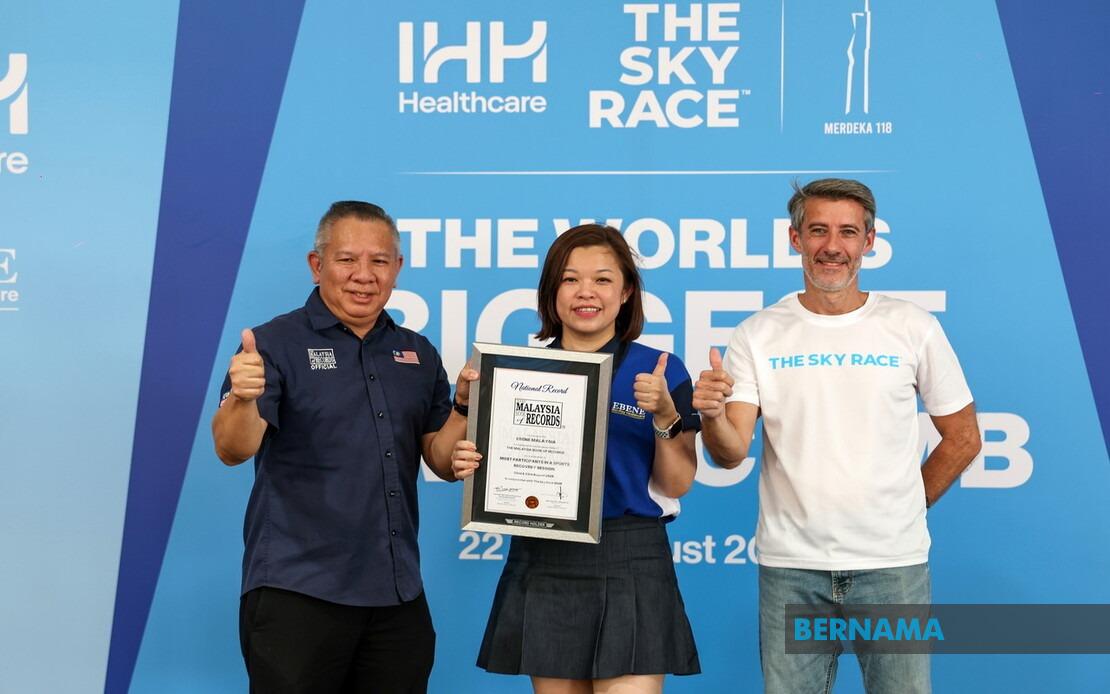
EBENE Bio-Ray Healthcare has used the Sky Race 2026 tower-running event to push forward an ambitious Malaysia Book of Records attempt, seeking to establish the benchmark for the "Most Participants in a Sports Recovery Session." The initiative reflects a strategic shift within the health support industry towards emphasising recovery and preventive care rather than waiting for injury or discomfort to prompt intervention. By exceeding its initial target of 1,000 participants, the company has demonstrated substantial appetite among Malaysian athletes for structured recovery programmes, signalling a maturing wellness market in the region.
The push to set this record serves a dual purpose for EBENE, functioning simultaneously as both a marketing milestone and an educational campaign about the often-overlooked dimension of athletic training. Marketing and E-Commerce Director Goh Sa Ki explained that the record attempt aligned with the company's broader mission to normalise recovery as an integral part of an active lifestyle, particularly among running communities in Malaysia. This positioning distinguishes EBENE's approach from competitors who traditionally focus only on performance enhancement or injury treatment, instead arguing that ongoing support throughout an athlete's lifecycle—before, during, and after activity—creates sustainable engagement with physical pursuits.
Tower running, the discipline at the heart of Sky Race 2026, presents a particularly compelling case study for recovery advocacy. Unlike road running or casual fitness activities, ascending multiple flights of stairs at competitive pace generates intense, concentrated stress on specific body regions. The knees, lower back, and leg muscles absorb tremendous force during both the ascent and descent phases, creating cumulative trauma that extends well beyond the competition itself. Goh highlighted how this physical demand necessitates comprehensive support strategies, with EBENE's knee guards and compression socks functioning as both protective equipment during exertion and recovery aids in the hours and days following participation.
The company's partnership with Sky Race 2026 extended beyond simple product placement, manifesting in a dedicated Sports Recovery Zone that provided hands-on support to the approximately 8,000 runners and fitness enthusiasts who participated across August 22 and 23. This zone offered sports massage and guided stretching sessions, creating a physical space where recovery transitioned from abstract concept to tangible experience. The availability of immediate, professional recovery support likely contributed to the record-breaking participation figures, as attendees could directly experience the benefits of structured recovery protocols rather than merely hearing about them theoretically.
For Malaysian readers engaged in urban fitness trends, the emphasis on preventive care carries particular relevance. The Malaysian healthcare system, while comprehensive, often operates reactively rather than proactively when addressing musculoskeletal issues. EBENE's messaging encourages a paradigm shift whereby individuals proactively implement knee care strategies before discomfort develops, rather than waiting for pain to necessitate medical intervention or lifestyle modification. This approach aligns with broader global wellness movements emphasising personal agency in health maintenance, particularly appealing to younger, digitally-engaged demographics who increasingly seek preventive solutions.
The timing of this initiative intersects with growing awareness across Southeast Asia of lifestyle-related health challenges. As urbanisation accelerates and sedentary employment becomes dominant, enthusiasm for compensatory physical activities has surged. Running clubs, obstacle-course competitions, and tower-racing events have proliferated across Malaysian cities over the past half-decade, indicating substantial demographic demand. However, this expansion has outpaced public understanding of proper training protocols, recovery methodology, and injury prevention. EBENE's record attempt addresses this knowledge gap by using a high-profile, community-based event to broadcast recovery science to audiences who might not otherwise engage with specialised health content.
The partnership between EBENE and Malaysian Book of Records adds institutional credibility to the initiative, transforming what could be perceived as purely commercial promotion into a documented achievement within Malaysia's formal record-keeping system. This legitimacy matters significantly within Malaysian consumer culture, where official recognition carries weight and influences purchasing decisions. The record itself becomes a marketing asset that persists indefinitely, providing ongoing visibility and reinforcing EBENE's positioning as a leader in sports recovery innovation within the Southeast Asian market.
Beyond immediate sales implications, the Sky Race 2026 activation represents the fifth iteration of EBENE's "Move with EBENE" campaign series, indicating sustained corporate commitment to lifestyle-centred messaging. Rather than episodic promotional bursts, this sequential branding approach builds cumulative awareness and reinforces core messaging about the interconnection between movement, support, and sustained physical participation. Each iteration builds on previous activations, creating a narrative arc that encourages consumers to perceive EBENE not as a transactional vendor but as a partner in long-term lifestyle choices.
The company's three decades of experience in the healthcare support category provide substantive foundation for these claims. Longevity in a competitive market requires genuine product efficacy and customer satisfaction; EBENE's survival and apparent growth suggest that knee guards and compression solutions genuinely deliver perceived value to users. This track record distinguishes the brand from newer entrants and provides reassurance to consumers evaluating recovery products for the first time.
For the broader Malaysian sporting ecosystem, EBENE's emphasis on recovery infrastructure and preventive support creates positive externalities. As more athletes adopt structured recovery practices, injury rates may decline, participation sustainability may increase, and overall quality of life for active individuals may improve. The normalisation of recovery as fundamental to athletic participation, rather than optional luxury, could catalyse systemic changes in how Malaysian running clubs, fitness facilities, and sports organisations approach training programme design. When recovery becomes a cultural expectation rather than an afterthought, individual athletes benefit from reduced injury risk and enhanced performance longevity.

