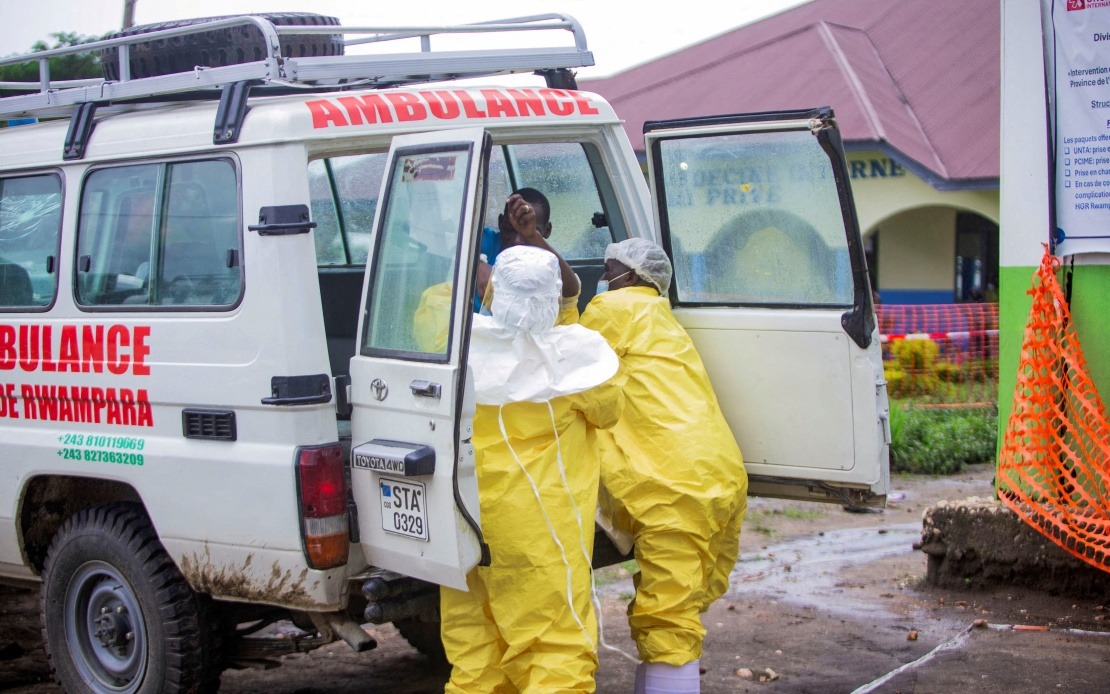
The Ebola outbreak ravaging the Democratic Republic of the Congo has now claimed 1,873 confirmed cases across an expanding geographical footprint, with health authorities confirming cases across five provinces as of mid-July. The death toll from the epidemic stands at 672, according to the country's health ministry report released Sunday, signalling a major public health crisis that continues to intensify despite containment efforts.
The five affected provinces identified in the most recent epidemiological assessment are Ituri, North Kivu, South Kivu, Haut-Uele and Tshopo. The inclusion of Haut-Uele and Tshopo represents a troubling expansion of the outbreak's reach, suggesting the virus has breached initial containment zones and is circulating through previously unaffected communities in the DRC's challenging operating environment.
Investigative epidemiology has traced the emergence of cases in Haut-Uele and Tshopo directly back to the original outbreak epicentre in Ituri province through established chains of human contact and cross-provincial population movements. This pattern of transmission underscores the difficulties facing health authorities in a region characterised by fluid border dynamics, significant mobility between communities, and limited surveillance infrastructure. Understanding these transmission pathways is critical for designing targeted interventions that address both direct contact and broader population flows.
The strain on healthcare infrastructure is becoming increasingly acute. Treatment facilities are operating at 95.1 percent bed occupancy, indicating that available isolation and treatment capacity is nearly exhausted across the DRC's health system. Currently, 763 patients requiring intensive supportive care are either isolated or receiving active hospital treatment, placing enormous pressure on medical staff and resources already stretched by competing health demands across the nation.
While the situation remains grave, there are modest signs of recovery efforts succeeding. To date, 306 individuals have recovered and been discharged from treatment, demonstrating that clinical intervention and supportive care can lead to positive outcomes for infected patients. However, this figure pales against the cumulative caseload, highlighting the scale of the challenge facing health authorities and international response teams working within the DRC.
The identification of 299 suspected cases adds a layer of uncertainty to current outbreak measurements. With 91 deaths already recorded among the suspected cases, these individuals represent potential vectors for further transmission and underscore how quickly suspected cases can progress to confirmed status. The pipeline of suspected cases suggests the outbreak's momentum remains strong and that case counts may continue climbing in coming weeks.
The Ebola outbreak is being caused by the Bundibugyo ebolavirus, one of the less commonly encountered species within the Ebola virus genus. The outbreak was formally declared on May 15, meaning the epidemic had been circulating for weeks before official recognition, a pattern common in remote regions where initial cases may be misclassified or unreported. This lag between initial transmission and formal declaration underscores the importance of robust early warning systems in preventing major outbreaks.
For regional observers and neighbouring Southeast Asian nations, the DRC Ebola situation carries important implications for global health security preparedness. The expansion into five provinces demonstrates how rapidly filoviruses can establish foothold across vast territories, particularly in contexts where healthcare systems lack diagnostic capacity, isolation facilities are limited, and population mobility is high. These conditions exist in various forms across several developing regions worldwide, making the DRC case a instructive example for pandemic prevention planning.
The international dimensions of the outbreak merit close attention, particularly regarding air travel connections from the DRC to major regional hubs. While the Bundibugyo species is typically less transmissible than other Ebola strains, the sheer caseload means the probability of international exportation remains meaningful. Regional health authorities across Africa and beyond must maintain vigilant border screening and disease surveillance protocols to detect any cases arriving from the affected DRC provinces.
Sustained international support will be essential for bringing this outbreak under control. The DRC's health ministry requires assistance with isolation facility construction, personal protective equipment procurement, healthcare worker training, and community engagement initiatives that build trust and encourage reporting. The geographic spread across five provinces means response efforts cannot be concentrated in a single location but must instead function as a distributed network of interventions coordinated across a vast territory.
The road ahead for containing this outbreak remains challenging but not impossible. History demonstrates that even large Ebola outbreaks can be controlled through systematic application of proven public health measures: rigorous contact tracing, safe burial practices, community sensitisation, and adequate clinical care. However, success hinges on sustained commitment, adequate resourcing, and cooperation among health authorities operating across borders and between provinces where mobility and cross-border movement patterns naturally facilitate virus transmission.

