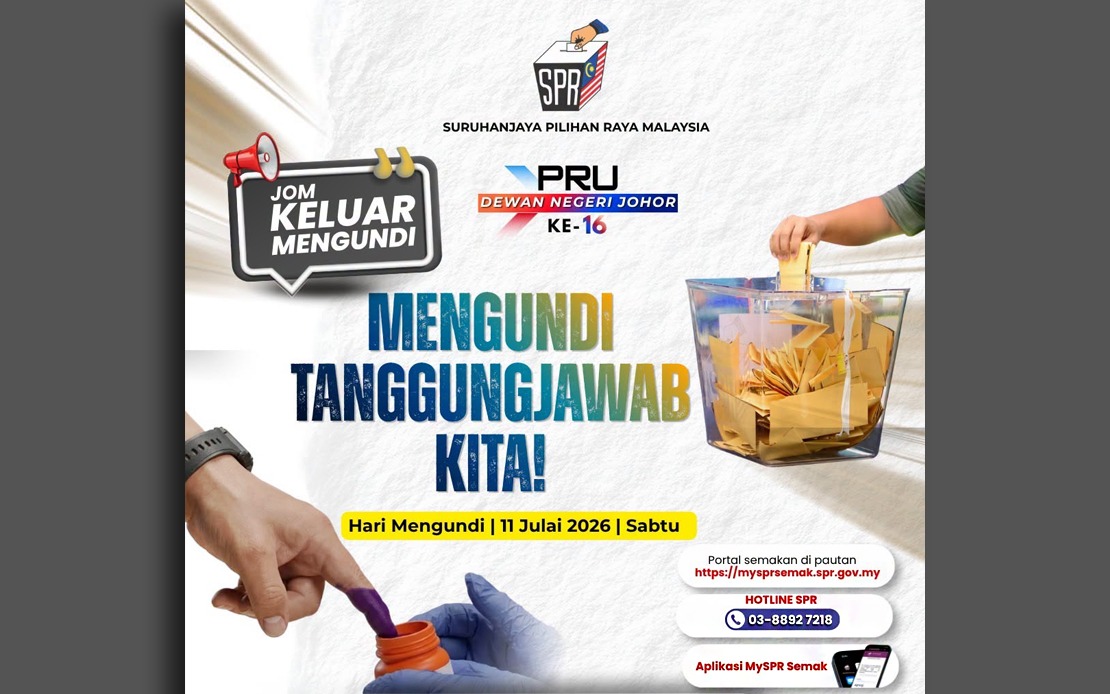
The Election Commission has escalated its push to protect workers' voting rights ahead of Saturday's Johor state election, issuing a formal notice to employers that they face potential criminal sanctions if they prevent or discourage staff from casting ballots. The directive comes amid growing public concern that workplace pressures may be hampering voter participation, a perennial challenge in Malaysian elections where workplace obligations and voting duties can conflict.
Datuk Khairul Shahril Idrus, the EC's secretary, made explicit that employers operate under a clear legal framework that prioritises citizens' democratic responsibilities. Under Section 25 of the Election Offences Act 1954, employers are prohibited from taking any punitive action—whether through wage deductions, financial penalties, or other forms of retaliation—against workers who take time off to fulfil their voting obligations. This statutory protection represents a fundamental safeguard ensuring that employment status does not become a barrier to political participation.
The commission's intervention addresses a practical reality facing many Malaysian workers, particularly those in service sectors, small manufacturing, and retail operations where staffing constraints make granting leave contentious. When multiple staff members wish to vote on the same day, some employers have historically resisted by suggesting workers take unpaid leave, threatening work schedules, or creating workplace resentment against those departing to vote. Such tactics, while perhaps subtle, effectively discourage participation by making voting costly or socially uncomfortable for employees.
Violations of voting rights carry considerable legal consequences under Malaysian law. Employers convicted of either directly refusing reasonable voting time or using indirect pressure—such as scheduling critical meetings, threatening performance reviews, or assigning heavy workloads to voting days—face fines reaching RM5,000, imprisonment of up to one year, or both penalties combined. This escalated enforcement signal reflects the Election Commission's determination to clamp down on workplace interference that historically suppresses voter turnout, particularly among lower-wage workers who have less flexibility to defy employer preferences.
The Johor state election represents a significant electoral event, with 172 candidates competing for 56 seats across the state. Higher voter participation directly influences election legitimacy and ensures that elected representatives genuinely reflect public preference rather than a self-selected subset of citizens with flexible work arrangements. By emphasising employer obligations now, the EC seeks to level the playing field between workers with sympathetic employers and those facing workplace pressure.
Malaysia's experience with workplace voting impediments is not unique to Johor. Previous elections have generated complaints from workers in various sectors reporting that employers made voting difficult through scheduling conflicts, lack of paid leave accommodation, or workplace cultures discouraging political participation. The Election Commission's proactive stance reflects lessons learned from these previous cycles and demonstrates institutional awareness that legal rights mean little if practical obstacles prevent their exercise.
For Malaysian businesses, the EC's reminder carries important implications. Employers operating in competitive labour markets understand that workforce morale and employee satisfaction influence productivity and retention. Sophisticated employers increasingly recognise that supporting voting rights—by offering reasonable paid time off, adjusting work schedules around election day, and creating workplace cultures that respect civic participation—actually benefits organisational culture and employee loyalty. Progressive companies view voting day accommodation as part of corporate citizenship rather than an inconvenient regulatory burden.
The timing of this announcement, just days before the election, targets employers still deciding how flexibly to interpret voting day requests. Many businesses have already established their approach, but some may adjust procedures if they understand the legal risks clearly. Workers facing actual obstacles now have explicit EC validation that their rights are protected and that they can lodge complaints against non-compliant employers, either during or after the election.
Regional context strengthens the significance of this enforcement push. Southeast Asian democracies face ongoing challenges maintaining voter engagement amid modernisation pressures and competing demands on citizens' time. Malaysia's approach—explicitly criminalising workplace voting interference—represents a stronger legal protection than some regional counterparts provide. This positions Malaysia as relatively committed to protecting voting access, though implementation effectiveness remains the critical test.
The broader implication extends beyond this single election. By consistently enforcing voting rights protections and publicising employer obligations, the Election Commission helps normalise the principle that democratic participation supersedes routine workplace demands. Over time, such consistent messaging shapes employer behaviour and worker expectations, gradually embedding the principle that voting constitutes a protected civic responsibility that employment relationships cannot legitimately constrain.
Saturday's election will test whether this message penetrates workplace decision-making. EC monitoring of complaints regarding voting obstruction will provide measurable indicators of compliance. Should violations prove rampant despite the warning, the commission may need escalated enforcement strategies. Conversely, widespread employer cooperation would vindicate the approach of clear legal explanation combined with penalty emphasis as sufficient to secure compliance without requiring intrusive monitoring or prosecution.
Workers themselves should understand that the EC's statement provides them concrete reassurance and legal backing. Any worker facing employer resistance to voting time can cite the Election Commission's explicit statement and Section 25 protections, converting an individual workplace dispute into a matter of legal right rather than employer discretion. This informational element may prove as important as the legal penalties in changing workplace dynamics around voting access.

