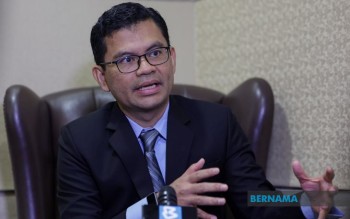
The Economy Ministry has set preliminary development expenditure targets for 2027 at approximately RM58 billion, according to Economy Minister Akmal Nasrullah Mohd Nasir, with the bulk of resources—roughly 70 per cent—channelled towards fundamental infrastructure programmes. The forecast reflects the government's continuing emphasis on sustaining capital investment momentum and underpinning long-term economic expansion through physical development initiatives. However, the proposal remains in draft form and has not yet been formally submitted to the Finance Ministry for incorporation into the national budgeting process.
Speaking at a press conference in Putrajaya on 27 July, Akmal Nasrullah explained that the projection rests on preliminary analysis conducted within the Economy Ministry. The final development roadmap for 2027 will undergo internal refinement at senior leadership level before advancing to the Finance Ministry for detailed examination and coordination with broader fiscal considerations. This staged approach reflects the complexity of aligning sectoral development priorities with macro-economic constraints and revenue forecasting.
The allocation framework represents continuity with established budgeting conventions. Malaysia has maintained a consistent policy of reserving approximately 70 per cent of total development expenditure for what government classifies as basic development—typically encompassing infrastructure, utilities, and essential public facilities. This proportion has proven durable across recent budget cycles. In 2026, basic development absorbed RM57.6 billion, representing 71 per cent of total development allocation, compared with RM55.67 billion or 65 per cent in 2025, indicating both absolute increases and growing emphasis on foundational investment.
The projected 2027 allocation serves multiple strategic objectives, according to Akmal Nasrullah. Maintaining pipeline continuity for existing development projects prevents disruption to implementation timelines and preserves institutional momentum. Sustaining economic growth requires consistent capital formation, particularly given Malaysia's reliance on infrastructure-driven expansion. Accelerating physical development across the nation underpins competitiveness and supports the government's broader modernisation agenda, from transport networks to digital connectivity.
Critically, the Economy Ministry's development planning operates within a narrower remit than whole-of-government fiscal strategy. While the ministry concentrates on development expenditure projections, the Finance Ministry maintains responsibility for comprehensive budget assessment, including operational spending, debt servicing, and macro-economic calibration. Questions regarding oil price assumptions for 2027 budgeting—potentially significant given Malaysia's petroleum-dependent revenue base—fall squarely within Finance Ministry domain, Akmal Nasrullah noted. This institutional separation ensures that development ambitions are tempered by fiscal sustainability considerations.
Economic backdrop influences the 2027 projections. Malaysia achieved 5.8 per cent gross domestic product growth in the second quarter of 2026, pushing first-half expansion to 5.6 per cent—exceeding Bank Negara Malaysia's earlier forecast range of 4 per cent to 5 per cent. However, Akmal Nasrullah cautioned against complacency. The robust first-half performance creates a high statistical base, making equivalent growth rates in subsequent quarters mathematically demanding. Moreover, external headwinds persist. Unfolding global disruptions and climate phenomena such as El Niño introduce downside risks to economic activity and demand forecasting confidence.
The government's investment trajectory reflects strategic choices about economic structure. By consistently allocating roughly 70 per cent of development spending to basic infrastructure rather than discretionary or sectoral projects, policymakers signal long-term commitment to foundational capacity. For Malaysia, this prioritisation typically supports transport corridors, power infrastructure, water systems, and digital backbone—investments with multiplier effects and lengthy asset lives. Such allocation discipline constrains funding for other development categories but arguably reflects economic realities: competitive advantage increasingly depends on efficient infrastructure rather than short-term subsidies or consumption smoothing.
Regional dimensions merit consideration. Malaysia operates within Southeast Asian context where infrastructure competition intensifies. Neighbouring economies pursue assertive capital investment strategies. Vietnam, Thailand, and Indonesia all maintain substantial development budgets. For Malaysia to sustain regional investment attractiveness and support growing manufacturing and services sectors, infrastructure modernisation cannot be deferred. The RM58 billion projection, while substantial in absolute terms, must be assessed against peer comparisons and domestic demand for improved transport, energy, and connectivity infrastructure.
The 2027 budget timeline remains on schedule. Prime Minister Datuk Seri Anwar Ibrahim, who additionally holds the Finance portfolio, will present the comprehensive Budget 2027 to parliament's lower house on 9 October 2026. This timeline allows roughly two months for Finance Ministry assessment of sector proposals, including the Economy Ministry's RM58 billion development estimate. Whether the projection survives intact through final budgeting processes depends on broader fiscal space assessment, competing ministerial priorities, and macro-economic assumptions underlying deficit and debt targets.

