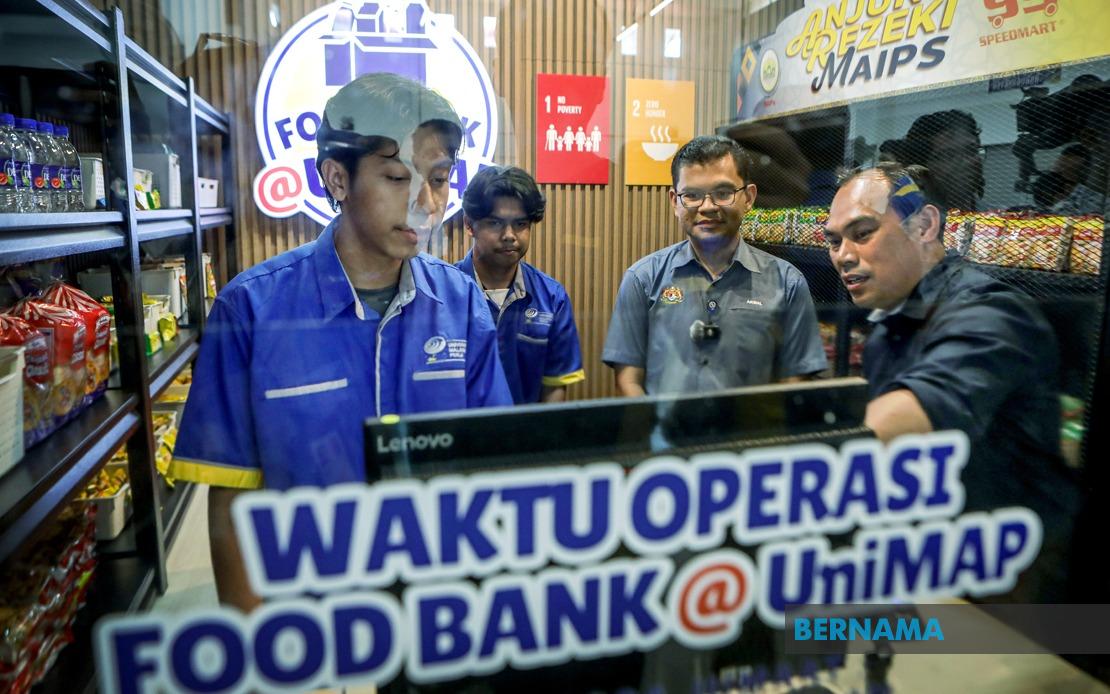
The Malaysian Economy Ministry is moving to secure continued funding for the People's Income Initiative – Food Entrepreneur Initiative (IPR-INSAN), a scheme designed to provide economic opportunities for lower-income B40 entrepreneurs while simultaneously improving food access for university students. Following a working visit to Universiti Malaysia Perlis (UniMAP) in Arau on July 10, Economy Minister Akmal Nasrullah Mohd Nasir announced that the ministry will formally request an extension from the Ministry of Finance, signalling confidence in the programme's effectiveness after initial implementation phases.
The vending machine model at the heart of IPR-INSAN represents a targeted approach to addressing multiple policy objectives simultaneously. Rather than relying on traditional subsidy mechanisms or cash transfers, the initiative creates a self-sustaining marketplace where entrepreneurs gain direct access to campus-based consumers. This approach removes intermediaries and reduces transaction costs, allowing participants to retain higher margins on their sales while customers benefit from competitive pricing. For university administrators, the scheme offers a way to tackle food security concerns among students without placing additional budgetary strain on institutional resources.
During his campus visit, Akmal Nasrullah observed the two active vending machine locations at Tuanku Abdul Rahman Residential College and Tuanku Tenguk Fauziah Residential College, where he gained firsthand insight into the operational mechanics and real-world outcomes. The minister's observation-based approach signals that the government is moving beyond policy announcements to validate schemes through ground-level verification. This methodical approach may address concerns about programme efficacy that have occasionally hampered past initiatives in Malaysia's entrepreneurship and poverty-alleviation landscape.
The financial performance data presented by UniMAP provides compelling evidence for the programme's viability. Entrepreneur Norleyana Nordin, operating through the Tuanku Abdul Rahman facility, achieved average monthly sales of RM2,178.80, with a peak of RM4,905 in January. Her peer at the Tuanku Tengku Fauziah location, Noor Hasfalela Mohd Noor, demonstrated even stronger results with average monthly revenues of RM4,595, reaching RM10,012 in January before moderating to RM5,049 in February and RM4,868 in April 2026. These figures, while modest in absolute terms, represent meaningful income supplements for individuals typically operating in Malaysia's informal food sector with minimal capital and limited access to prime retail locations.
The income levels achieved through IPR-INSAN are particularly significant when contextualised against typical earnings in the B40 demographic. For entrepreneurs previously selling from street-side stalls or operating without formal business registration, monthly revenues in the range of RM2,000 to RM4,500 can translate to meaningful improvements in household cash flow and economic security. The vending machine platform effectively democratises access to high-foot-traffic retail spaces that would otherwise require substantial capital investment or family connections to secure. This accessibility dimension addresses a fundamental constraint that has historically limited entrepreneurial participation among lower-income Malaysians.
Beyond individual entrepreneur outcomes, the programme generates spillover benefits for university communities and broader food systems. Students gain access to home-prepared food options at prices substantially below commercial food court or canteen rates, potentially reducing food-related budget pressures that can affect academic performance and student welfare. The fact that IPR-INSAN emphasises home-based entrepreneurs rather than corporate food service providers also supports cultural preferences for traditional cuisines and supports artisanal food preparation methods that dominate household cooking across Malaysia. This alignment with consumer preferences and cultural values enhances programme sustainability compared to more generic food provision models.
The extension request carries implications for how Malaysia approaches inclusive economic policy more broadly. IPR-INSAN demonstrates that targeted technology adoption—in this case, automated vending machines—can effectively bridge supply and demand for informal sector participants without requiring heavy-handed regulation or expensive subsidy programmes. The model is potentially replicable across other university campuses, government offices, and institutional settings throughout Malaysia, suggesting scalability potential that ministry planners may be evaluating as they prepare extension applications. Such expansion could eventually create a national network of formalised micro-entrepreneurship opportunities accessible to tens of thousands of B40 individuals.
The ministry's decision to involve UniMAP directly in programme implementation and evaluation reflects a broader trend of government reliance on academic and institutional partners for policy delivery. By anchoring the initiative within a university framework, the government gains access to monitoring infrastructure, trusted relationships with student populations, and administrative capacity that might not exist through purely governmental channels. This institutional partnership model reduces implementation risk and provides natural touchpoints for data collection and programme refinement—critical advantages when seeking extension approvals from finance ministries concerned with demonstrating measurable returns on public expenditure.
Akmal Nasrullah's public acknowledgment of contributions from student volunteers and private sector partners underscores the multi-stakeholder nature of programme success. The visibility given to these collaborators suggests intentional positioning of IPR-INSAN as a national initiative transcending purely government administration. This narrative approach may be designed to build political support for extension funding by framing the programme as embodying broader values around corporate social responsibility and student civic engagement. Such framing can prove decisive when competing for budget allocations during ministry finance negotiations.
The Food Bank and MADANI Dapur Siswa (student kitchen) facilities observed during the visit represent complementary initiatives addressing food security from different angles. While IPR-INSAN provides income-generation opportunities for entrepreneurs, these other programmes directly address student food access through donation networks and subsidised meal services. The integrated approach suggests that the Economy Ministry is employing multiple policy instruments simultaneously rather than relying on single-solution interventions. This comprehensive strategy may account for why initial pilot results appear sufficiently positive to warrant extension requests.
For Malaysian policymakers monitoring this development, IPR-INSAN offers lessons about programme design and implementation that extend beyond food entrepreneurship specifically. The scheme demonstrates that B40 populations possess entrepreneurial capacity when given appropriate access to markets and operational infrastructure. Rather than framing low-income individuals as passive recipients of assistance, the vending machine model positions them as active economic participants whose success generates mutual benefits for wider communities. This dignifying approach aligns with stated government commitments to inclusive growth and human capital development articulated in national economic frameworks.
The extension application now awaiting Ministry of Finance consideration will likely incorporate data from the UniMAP pilot alongside cost-benefit analyses and scaling projections. If approved, expansion could see IPR-INSAN vending machines deployed across Malaysia's network of public universities, potentially reaching hundreds of additional entrepreneurs. Alternatively, extension might involve scaling to government offices, hospitals, and other institutional settings where captive consumer populations exist and vending infrastructure can be readily installed. The exact expansion pathway will depend on ministry capacity assessment and financial constraints, but the preliminary success metrics suggest that bureaucratic and resource barriers are surmountable.
From a Southeast Asian perspective, Malaysia's IPR-INSAN model may interest policymakers in neighbouring countries wrestling with informal sector formalisation and youth unemployment challenges. The scheme offers a low-technology, replicable approach to economic inclusion that does not depend on advanced digital infrastructure or sophisticated financial intermediaries. This relative simplicity and lower technical barriers mean neighbouring economies could potentially adapt the model to their own contexts, creating a potential demonstration effect across the region. As Malaysia seeks to position itself as a development leader within ASEAN, initiatives like IPR-INSAN that yield positive social outcomes while demonstrating policy innovation carry considerable diplomatic value alongside their domestic benefits.

