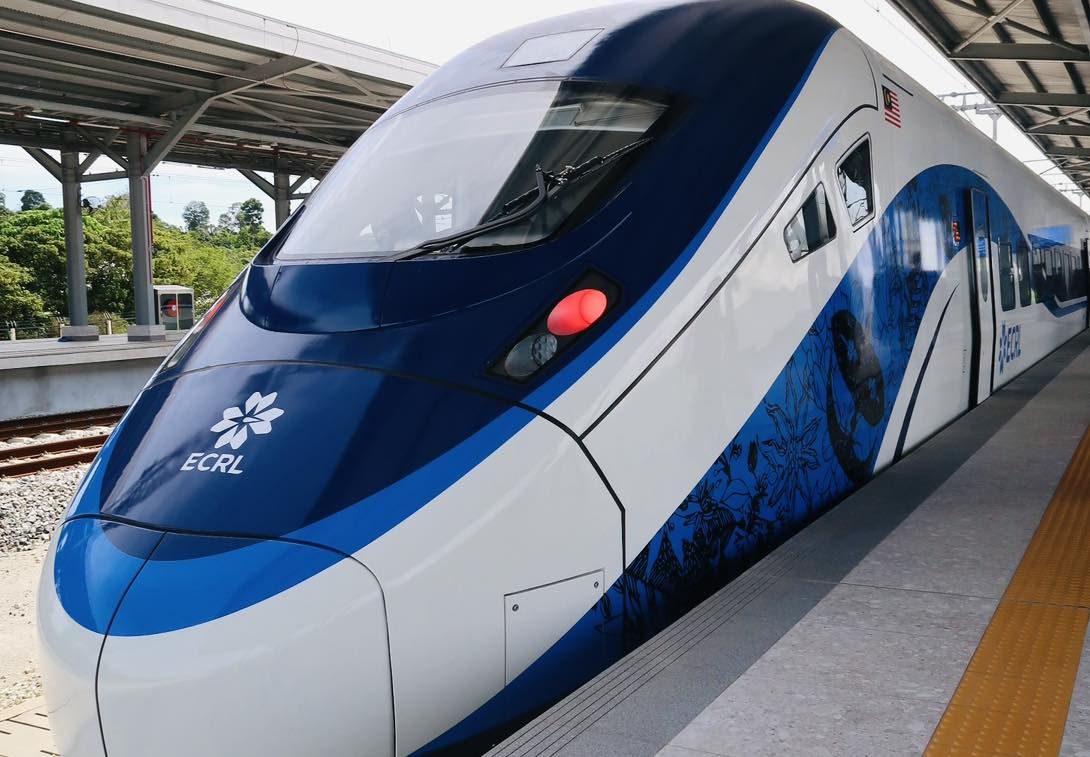
The East Coast Rail Link (ECRL), one of Southeast Asia's most ambitious transportation megaprojects, is poised to become a significant economic engine for Malaysia, with officials projecting cumulative additions of between RM80 and RM90 billion to the nation's gross domestic product over the next two decades. The projection underscores how the 665-kilometre railway infrastructure, far from being merely a transportation artery, is being positioned as a transformative platform for regional development and industrialisation across Peninsular Malaysia's eastern corridor.
Deputy Economy Minister Datuk Mohd Shahar Abdullah provided the economic outlook during recent remarks, emphasising that the ECRL's value will stem fundamentally from 21 Economic Accelerator Projects (EAPs) strategically positioned along the entire rail corridor. These initiatives are designed to unlock economic potential in regions historically undersupported by major infrastructure investments, particularly in Kelantan, Terengganu, and Pahang—three states that have long sought to narrow the development gap separating them from the more industrialised west coast.
Three logistics hubs have already been identified as pivotal nodes within this emerging economic network. The Pasir Puteh station in Kelantan will encompass 213 acres (86.2 hectares), while Kemaman in Terengganu and Temerloh in Pahang will respectively occupy 68 acres (27.5 hectares) and 50 acres (20.2 hectares). These designated zones represent a deliberate strategy to convert railway nodes into modern supply-chain centres that can facilitate cargo movement, warehousing, and value-added manufacturing activities throughout the region. Such logistics infrastructure has become increasingly critical in Southeast Asia's competitive landscape, where nations are vying to position themselves as regional trade hubs.
Mohd Shahar stressed that the ECRL transcends its primary function as a rail transport system, instead functioning as a multiplier for sustainable investment flows and employment creation. By concentrating infrastructure investment in previously underdeveloped areas, the project aligns with the government's broader MADANI Economy framework, which prioritises inclusive growth that distributes opportunities across different regions and demographic segments. This development philosophy reflects recognition that Malaysia's long-term competitiveness depends not merely on maintaining prosperous urban centres, but on cultivating productive capacity nationwide.
The Perodua logistics hub at Paya Besar in Kuantan exemplifies this integrated approach. The automotive component manufacturer's facility, scheduled for first-phase completion by 2029, will leverage the ECRL's freight capacity to strengthen supply chains for Malaysia's automotive sector while simultaneously anchoring employment in a corridor requiring economic diversification. For Mohd Shahar, who represents Paya Besar in parliament, the convergence of private-sector facility development with public infrastructure completion represents a practical manifestation of public-private partnership thinking.
The minister's remarks also addressed a significant perception challenge facing the ECRL within Malaysia's logistics community. Some stakeholders have expressed concern that the rail project might cannibalise existing shipping routes or disrupt established maritime trade patterns. Mohd Shahar countered this narrative by framing the ECRL as a complementary addition to Malaysia's logistics ecosystem rather than a competitive threat to established transport modes. The railway's particular advantages—including reliability, consistency, and environmental efficiency—position it to absorb inland cargo flows and regional trade movements that might otherwise congest roads or prove uneconomical via air freight.
Closing geographical disparities between Malaysia's economically developed west coast and its less-industrialised east coast remains a persistent policy objective. The ECRL, by dramatically improving freight and passenger connectivity, creates material conditions for private investment to flow eastward. Better transport connections reduce operating costs for manufacturers and distributors, making east coast locations increasingly viable for facilities that previously clustered near Kuala Lumpur and Port Klang. This spatial redistribution of economic activity could represent the project's most significant long-term contribution to reducing regional inequality.
Official project guidance indicates the ECRL will commence operations in January 2027, following completion of the RM50.27 billion infrastructure investment by December 2026. The railway is equipped with 11 six-car electric multiple unit (EMU) trainsets for passenger services and 12 electric locomotives (E-Loco) dedicated to freight operations, reflecting a balanced design addressing both traveller mobility and cargo transportation. This dual-purpose architecture distinguishes the ECRL from transport projects emphasising passenger volume alone.
Implementation of the EAPs and logistics development falls within the framework of Malaysia's 13th Malaysia Plan, which employs the Malaysia Development Composite Index and MyRMK system to allocate resources according to measurable development needs. This methodology represents an attempt to move beyond politically-driven infrastructure spending toward evidence-based investment targeting areas demonstrating genuine absorption capacity and economic multiplier potential. The systems theoretically ensure that ECRL-related development funds reach communities and sectors where impact will prove most substantial.
For Malaysian policymakers and regional observers, the ECRL's projected RM80 to RM90 billion GDP contribution by 2047 hinges critically on whether the 21 Economic Accelerator Projects actually materialise and attract sufficient private investment. The gap between infrastructure completion and sustained economic return often proves wider than initially anticipated, particularly when regional development depends on factors beyond government control, such as investor confidence and global supply-chain decisions. Success will require not merely finishing the railway by 2027, but cultivating the ecosystem of logistics facilities, manufacturing clusters, and distribution networks that transform transport capacity into genuine economic activity.

